A Portrait Steeped in Symbolism and Technique
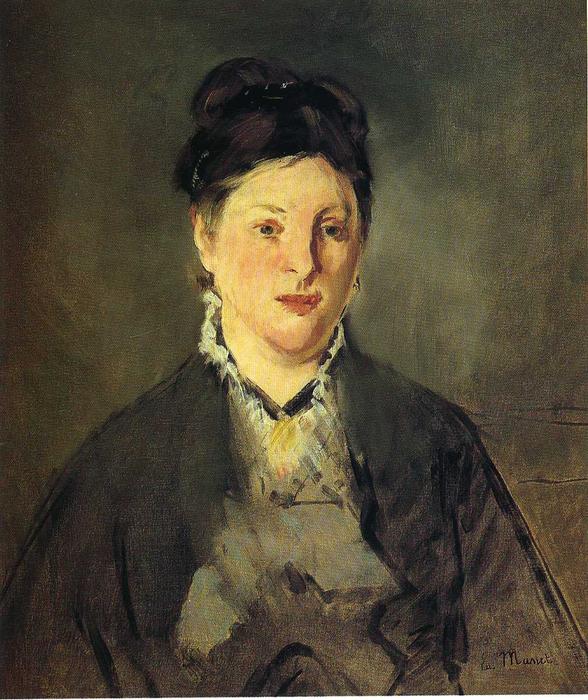
Édouard Manet’s “Portrait of Suzanne Manet,” completed in 1870, stands as a pivotal work within the Impressionist movement—a defiant assertion against academic tradition and an unflinching gaze at the complexities of bourgeois femininity. Painted during a period marked by societal shifts and burgeoning artistic experimentation, this canvas transcends mere likeness; it embodies a profound engagement with both visual language and psychological nuance.
The Style and Technique: Embracing Impressionistic Light
Unlike the polished surfaces and meticulous detail favored by the École des Beaux-Arts, Manet employed loose brushstrokes—a hallmark of Impressionism—to capture fleeting moments of light and color. He eschewed blending pigments extensively, allowing individual strokes to retain their vibrancy and texture. This technique is particularly evident in the depiction of Suzanne’s hair and dress, where subtle variations in hue convey a sense of movement and luminosity.
Historical Context: Challenging Artistic Conventions
The Franco-Prussian War had just concluded, leaving France reeling from defeat and prompting an urgent reconsideration of national identity. Simultaneously, Parisian society was undergoing rapid transformation—the rise of the middle class fueled aspirations for social advancement and artistic innovation. Manet’s refusal to adhere to established norms resonated with artists and intellectuals alike who sought to liberate art from restrictive dogma.
Symbolism Within the Frame: The Woman as Embodiment
Suzanne Manet herself was a celebrated beauty—a muse for her husband, Édouard Manet—and her portrait serves as an emblem of idealized femininity. However, Manet’s approach is deliberately ambiguous. Suzanne’s gaze directs outwards, suggesting contemplation and introspection rather than passive acceptance of the viewer's presence. The muted palette—dominated by browns and blacks—contrasts sharply with the vibrant hues of her dress, symbolizing both restraint and inner radiance.
Emotional Impact: Capturing a Moment of Quiet Reflection
“Portrait of Suzanne Manet” lingers in the memory long after viewing, inviting contemplation on themes of beauty, identity, and artistic freedom. It’s not merely a depiction of a woman; it's an exploration of psychological states—a testament to Manet’s ability to convey emotion through subtle visual cues. This enduring resonance speaks to the power of Impressionism to capture the essence of human experience and to challenge viewers to confront their own perceptions.