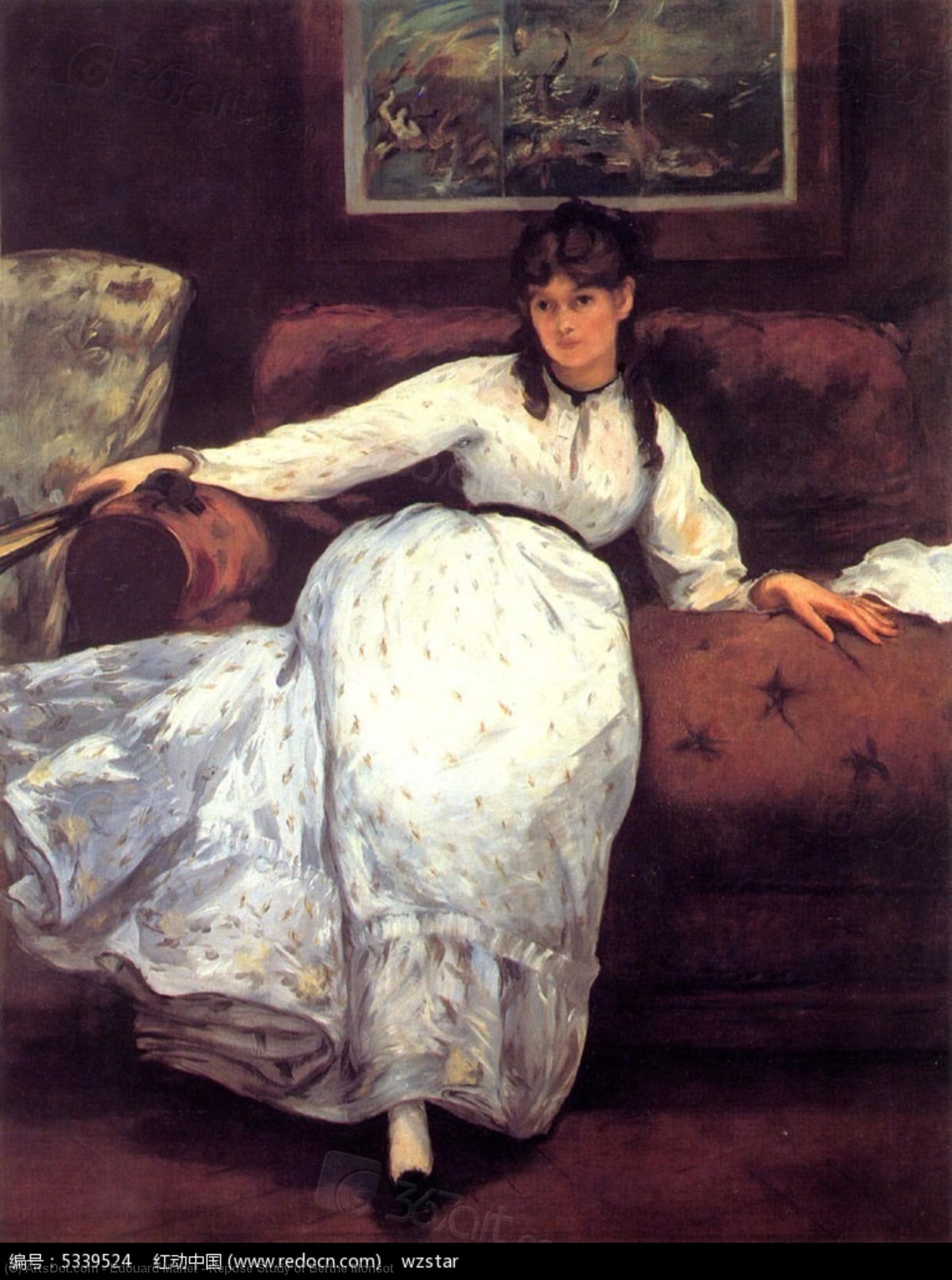
Repose Study of Berthe Morisot: A Moment Frozen in Impressionist Light
Édouard Manet’s “Repose,” completed around 1870, isn't merely a portrait; it’s an exquisitely crafted distillation of the Impressionist ethos—a fascination with capturing fleeting sensations and psychological nuance. Held at the Rhode Island School of Design Museum in Providence, this canvas offers more than just a depiction of Berthe Morisot, a fellow artist and Manet’s wife, but rather a profound meditation on stillness and contemplation within the vibrant tapestry of Parisian life.
- Subject Matter: The painting portrays Morisot seated on a sofa with her legs crossed, radiating an aura of serene repose. Her gaze drifts off to the right, suggesting introspection—a deliberate departure from the formal portraiture conventions prevalent at the time.
- Style & Technique: Manet employed loose brushstrokes and subtle tonal variations characteristic of Impressionism. The muted palette – dominated by creams, reds, and browns – prioritizes atmosphere over precise representation. Notice how light dances across Morisot’s dress and reflects in the polished surface of the sofa, demonstrating Manet's masterful command of chiaroscuro.
- Historical Context: Created during a period of artistic experimentation and social upheaval, “Repose” embodies the Impressionists’ rejection of academic rigidity. They sought to depict everyday life as it unfolded organically—a reaction against the idealized narratives favored by the Salon establishment. The inclusion of a Japanese print above Morisot's head speaks to the burgeoning interest in Eastern aesthetics within Parisian culture.
Beyond its visual beauty, “Repose” resonates with deeper symbolic significance. The posture itself embodies tranquility and acceptance—a quiet defiance of the pressures inherent in artistic ambition. Manet’s intention wasn't simply to record Morisot’s appearance but to convey her inner state—a subtle suggestion that true artistry lies not just in observation but in capturing the essence of human experience.
- Symbolism: The Japanese print serves as a counterpoint to Morisot’s stillness, representing dynamism and exotic allure. This juxtaposition underscores Manet's exploration of contrasting forces—the tangible world versus inner reflection—a theme that echoes throughout his oeuvre.
- Emotional Impact: “Repose” evokes feelings of peace and serenity—a testament to Manet’s ability to translate psychological depth into visual form. It invites viewers to pause, consider, and appreciate the beauty of quiet contemplation—a timeless message conveyed with remarkable sensitivity.
“Repose Study of Berthe Morisot” stands as a cornerstone of Impressionist art, demonstrating Manet’s unwavering commitment to capturing the spirit of his era. Its enduring appeal lies in its ability to transport us back to a moment frozen in time—a beautifully rendered tableau that speaks volumes about human emotion and artistic innovation.