A Symphony of Petals and Light
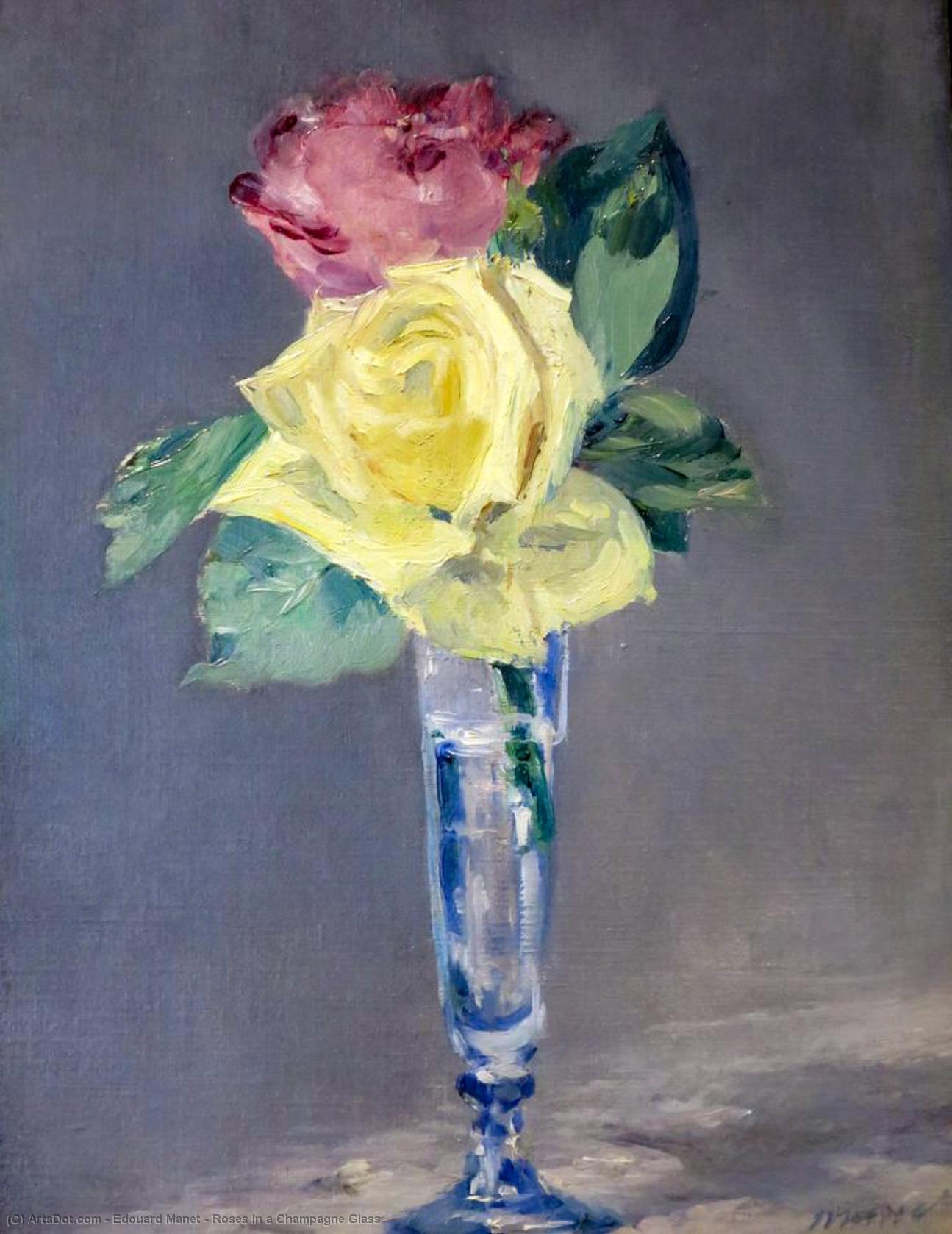
In the quiet intimacy of Édouard Manet’s “Roses in a Champagne Glass,” we are invited into a world where time seems to pause, suspended in the delicate tension between beauty and decay. Painted around 1882, this exquisite still life is far more than a mere arrangement of flora; it is a profound meditation on the ephemeral nature of existence. The composition centers on two velvety roses—soft hues of pink and sun-kissed yellow—nestled within the crystalline confines of a partially filled champagne flute. As light dances through the liquid and reflects off the glass, Manet captures a moment that feels both profoundly present and hauntingly fleeting. For the discerning collector or interior designer, this piece offers a sense of serene elegance, acting as a focal point that breathes life and sophisticated tranquility into any curated space.
The technical mastery on display in this work reveals Manet’s unique position at the crossroads of Realism and Impressionism. Eschewing the rigid, polished perfection demanded by the academic salons of his era, Manet employs a brushwork that is loose, visible, and vibrantly alive. There is a deliberate lack of microscopic detail, replaced instead by a masterful command of light and atmosphere. By utilizing subtle variations in tone and soft, blended edges, he creates a luminous effect that allows the roses to appear almost tactile, as if one could reach out and feel the delicate texture of their petals. This technique draws upon the dramatic chiaroscuro traditions of masters like Velázquez, yet Manet infuses it with a modern sensibility, prioritizing the sensory experience of light over the mere documentation of form.
The Spirit of Modernity and Elegance
To understand this painting is to understand the pulse of late 19th-century Paris. Manet was a quintessential rebel of his time, a painter who sought to find the extraordinary within the ordinary. During a period of immense artistic upheaval, he turned his gaze away from grand mythological narratives toward the simple, honest beauty of everyday objects. The champagne glass—a symbol of Parisian leisure and bourgeois refinement—serves as a vessel for this modern spirit. There is an inherent symbolism in the choice of subject; the roses, in their peak bloom, represent the height of vitality, yet their placement in a glass of wine suggests the inevitable passage of time. It is a memento mori reimagined for a modern age, wrapped in the luxury of a celebratory toast.
For those looking to adorn a home or gallery with a piece that evokes deep emotion, a high-quality reproduction of this masterpiece provides an unparalleled opportunity. The painting’s ability to harmonize soft, romantic tones with a sophisticated, structured composition makes it a versatile choice for various interior aesthetics, from classical European elegance to contemporary minimalist luxury. Owning a hand-painted tribute to Manet is not merely about decorating a wall; it is about bringing a piece of art history into the domestic sphere—a way to invite the quiet, reflective brilliance of the Impressionist era into the modern daily ritual.