A Glimpse into Belle Époque Paris
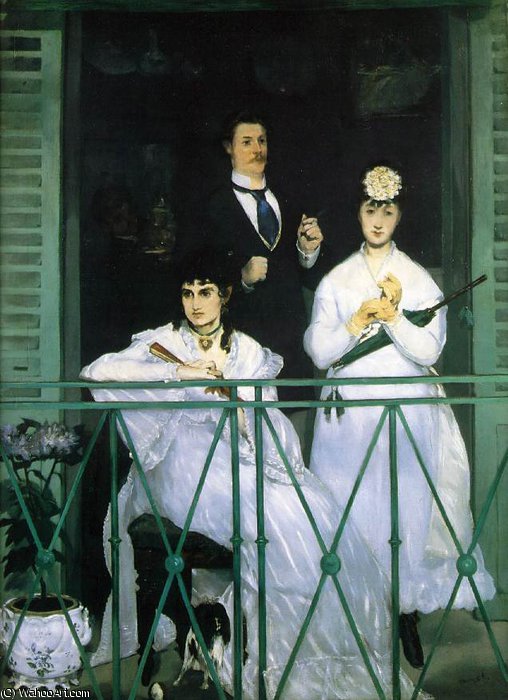
Édouard Manet’s “The Balcony,” painted in 1869, isn't merely a depiction of three figures on an outdoor space; it’s a carefully constructed tableau capturing the essence of Parisian life during the late 19th century – a period of rapid transformation and burgeoning modernity. This intimate scene, housed within the Musée d’Orsay, offers a poignant glimpse into the social dynamics and subtle anxieties of a society grappling with its own evolving identity. The painting immediately draws the eye to the figures themselves: a man in a dark tie, a woman adorned in white, and a violinist, all positioned on a richly detailed balcony overlooking an unseen cityscape. The setting, though shrouded in shadow, hints at the vibrant energy of Paris – a city pulsating with commerce, art, and social change.
A Revolutionary Composition: Challenging Academic Conventions
Manet’s decision to paint a group portrait, rather than a traditional narrative scene, was itself a radical departure from the prevailing artistic norms of the time. He deliberately eschewed the idealized forms and historical subjects favored by the French Academy, opting instead for a snapshot-like realism that captured his contemporaries in their everyday attire. The figures are not posed dramatically; they’re caught in a moment of quiet contemplation, seemingly detached from each other and the world beyond the balcony. This deliberate lack of interaction is key to understanding the painting's underlying theme – a sense of isolation and alienation within a rapidly modernizing society. Manet’s use of loose brushstrokes and flattened perspective further contributes to this feeling of immediacy and spontaneity, rejecting the meticulous detail characteristic of academic art.
Color, Light, and Symbolism: Decoding Manet's Palette
The painting’s color palette is strikingly evocative. The dominant greens of the shutters and balustrade create a cool, shadowed backdrop that contrasts sharply with the bright whites of the women’s dresses. This juxtaposition immediately draws attention to their figures, highlighting their elegance and sophistication. Manet masterfully employs light and shadow to sculpt form and create depth, imbuing the scene with a sense of atmosphere. The subtle variations in tone suggest a hazy afternoon light, adding to the painting's dreamlike quality. Notice also the deliberate use of color – the dark tie of the man, the vibrant blue of the hydrangea, all contribute to a carefully orchestrated visual experience.
A Window into Parisian Society and Manet’s Legacy
“The Balcony” offers a fascinating window into the social dynamics of Belle Époque Paris. The figures represent a segment of the bourgeois class – comfortable, well-dressed, and seemingly detached from the struggles faced by many Parisians at the time. Manet's work is considered a pivotal bridge between Realism and Impressionism, foreshadowing the radical shifts in artistic style that would characterize the late 19th century. His willingness to depict modern life with unflinching honesty paved the way for subsequent generations of artists who sought to capture the fleeting moments and subjective experiences of contemporary existence. Reproductions of “The Balcony” continue to resonate today, offering a timeless reflection on the complexities of urban life and the enduring power of art to provoke thought and emotion.