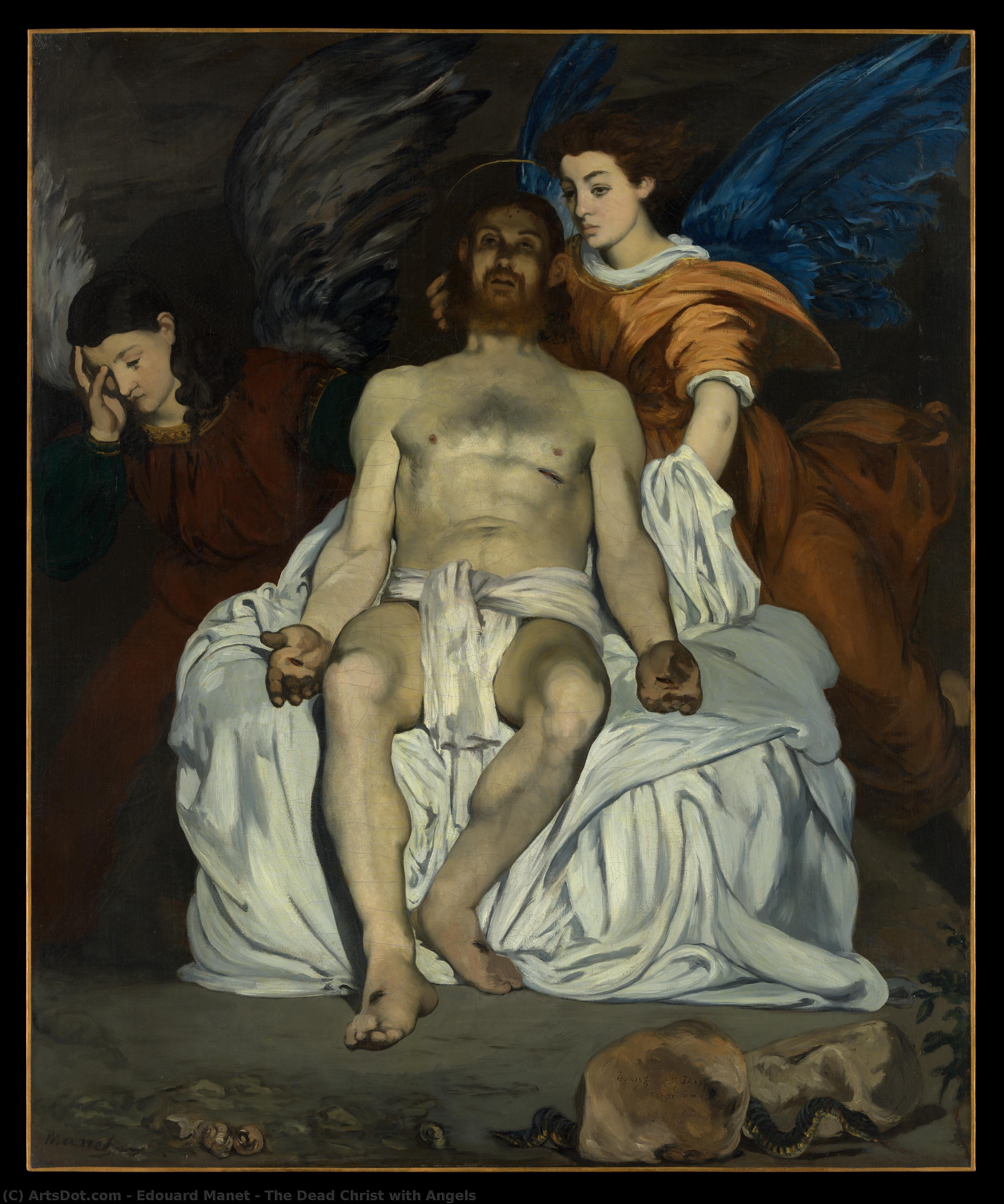
A Stark Meditation on Mortality: Manet’s “The Dead Christ with Angels”
Édouard Manet's "The Dead Christ with Angels," painted in 1864, isn’t merely a depiction of the resurrected body; it’s a deliberate provocation, a radical departure from established religious iconography and a profound exploration of grief, doubt, and the unsettling realities of modern life. This arresting canvas, now housed at the Metropolitan Museum of Art in New York, immediately confronts the viewer with an image that resists easy interpretation – a hallmark of Manet's artistic approach and a key to understanding its enduring power.
The painting’s genesis lies not within sacred texts but in a specific passage from Saint John’s Gospel. However, Manet, ever the iconoclast, dramatically altered this narrative, presenting Christ’s body as shockingly devoid of glory, stripped bare and laid upon a simple linen cloth. The wound, conspicuously positioned on the left side – the opposite of its traditional placement – further underscores this rejection of idealized representation. This wasn't an attempt to faithfully recreate a biblical scene; it was a deliberate act of artistic rebellion, a challenge to the conventions of religious art that had dominated European painting for centuries.
A Study in Realism and Shadow
Manet’s technique is remarkably grounded in observation. He eschewed the smooth, polished surfaces favored by his academic contemporaries, opting instead for a rougher, more tactile approach to paint application. The canvas itself appears almost bruised, reflecting the somber mood of the scene. The meticulous rendering of Christ's cadaverous body – the pallor of his skin, the tautness of his muscles, the subtle details of the wounds – is executed with an unflinching realism that was both shocking and compelling to audiences of the time. This commitment to anatomical accuracy, influenced by artists like Caravaggio and Velázquez, served not to glorify Christ but to confront viewers with the brutal reality of death.
- Color Palette: Dominated by muted browns, grays, and whites, creating a sense of profound stillness and melancholy.
- Brushwork: Visible brushstrokes contribute to the painting’s raw and immediate quality.
- Composition: The arrangement of figures – Christ at the center, surrounded by three angels – draws the eye directly to the central subject while subtly suggesting a broader narrative of loss and mourning.
Symbolism and the Angels' Silent Witness
The inclusion of the angels is crucial to understanding Manet’s intent. Each angel carries its own symbolic weight. The angel on the left, holding a skull, represents mortality – a stark reminder of the transient nature of life and the inevitability of death. The middle angel gently touches Christ's head, offering a gesture of compassion and perhaps even a hint of solace. Finally, the angel on the right gazes down upon the scene with an expression of profound contemplation, suggesting a recognition of the tragedy unfolding before them. These figures aren’t simply observers; they are witnesses to humanity’s darkest hour.
The painting's impact was immediate and divisive. Critics, including Charles Baudelaire, were appalled by Manet’s departure from traditional religious iconography, accusing him of deliberately “giving the malicious something to laugh at.” Yet, despite this initial backlash, "The Dead Christ with Angels" remains a powerful testament to Manet’s artistic vision – a bold and unsettling meditation on faith, mortality, and the complexities of human experience.
A Timeless Masterpiece for Reproduction
ArtsDot.com offers meticulously crafted hand-painted reproductions of “The Dead Christ with Angels,” allowing you to bring this iconic artwork into your home or office. Our skilled artisans faithfully recreate Manet’s nuanced brushwork, rich color palette, and evocative composition, ensuring that the painting's emotional impact is preserved in stunning detail. Whether you are an art collector, a design enthusiast, or simply someone seeking a piece of history to admire, our reproduction provides an authentic and captivating representation of this seminal work.