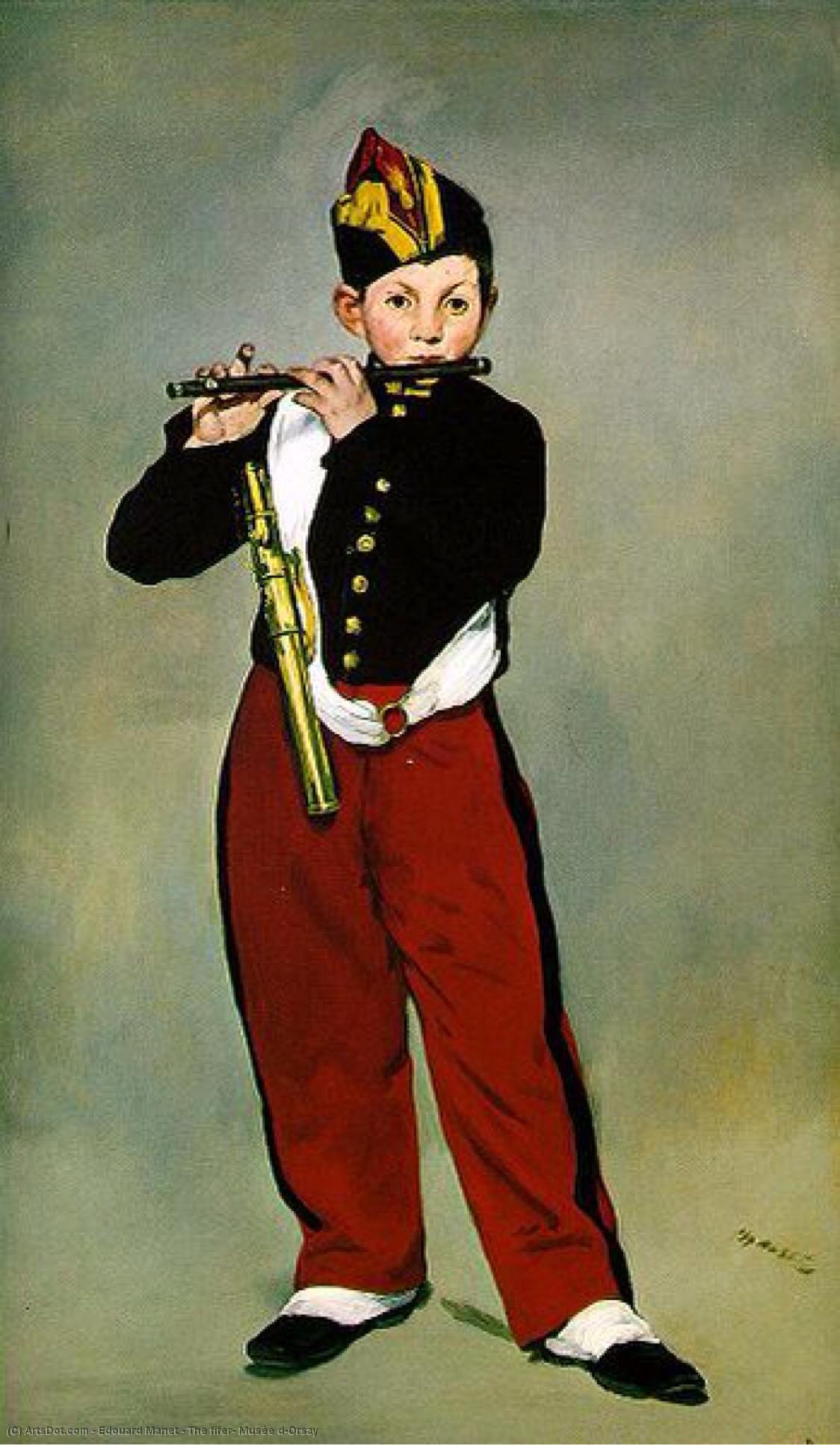
The Fifer: A Snapshot of Modernity Captured by Manet
Édouard Manet’s “The Fifer,” completed in 1866 and currently residing within the Musée d'Orsay, isn’t merely a depiction of a young soldier; it’s a pivotal moment in artistic history—a defiant assertion of realism against the prevailing academic tradition. Painted shortly after Manet’s influential journey to Spain where he absorbed the bold stylistic innovations of Diego Velázquez, this artwork embodies Manet’s unwavering commitment to portraying contemporary life with unflinching honesty.
- Composition and Technique: The painting's stark simplicity is deceptive. Against a muted monochrome backdrop—a deliberate echo of Velázquez’s masterful use of tonal gradation—Manet focuses intently on the figure of a young musician, dressed in military uniform. He employs an impasto technique, layering thick brushstrokes to create palpable texture and depth, mirroring Velázquez's approach but rejecting its idealized rendering. The sharp delineation of colors – black for the jacket and shoes, red for the pants—immediately draws the eye, highlighting the subject’s presence against the subdued background.
- Influence of Velázquez: Manet’s fascination with Velázquez is undeniable. As he himself confessed to his friend Fantin-Latour, Velázquez's work captivated him with its audacious color palette and compositional daring. “The Fifer” consciously adopts these elements, rejecting the polished surfaces and theatrical poses favored by academic painters of the time. This stylistic choice reflects a broader shift toward capturing the everyday realities of Parisian life—a movement that would ultimately propel Impressionism to prominence.
- Symbolism and Emotional Impact: Beyond its formal innovations, “The Fifer” carries subtle symbolic weight. The musician’s posture – upright, attentive, yet slightly detached – speaks to a preoccupation with the human condition amidst the burgeoning industrial landscape of mid-Victorian Paris. Manet's deliberate omission of detail—the lack of expressive emotion or narrative context—forces viewers to confront the subject directly, prompting contemplation about identity and purpose. It’s a painting that lingers in the mind long after viewing, conveying a sense of quiet dignity and understated observation.
- Reception and Legacy: Rejected by the Salon jury of 1866, “The Fifer” sparked considerable controversy among critics and intellectuals alike. Emile Zola famously championed Manet’s artistic vision, arguing that it represented “the most astonishing piece of painting ever done.” Despite initial disapproval, the painting gained recognition as a cornerstone of modern art—a testament to Manet's courage in challenging conventions and paving the way for Impressionism.
If you’re captivated by Manet’s masterful portrayal of modernity, ArtsDot offers exquisite reproductions crafted by skilled artisans. Explore more at https://ArtsDot.com and discover the enduring beauty of “The Fifer.”