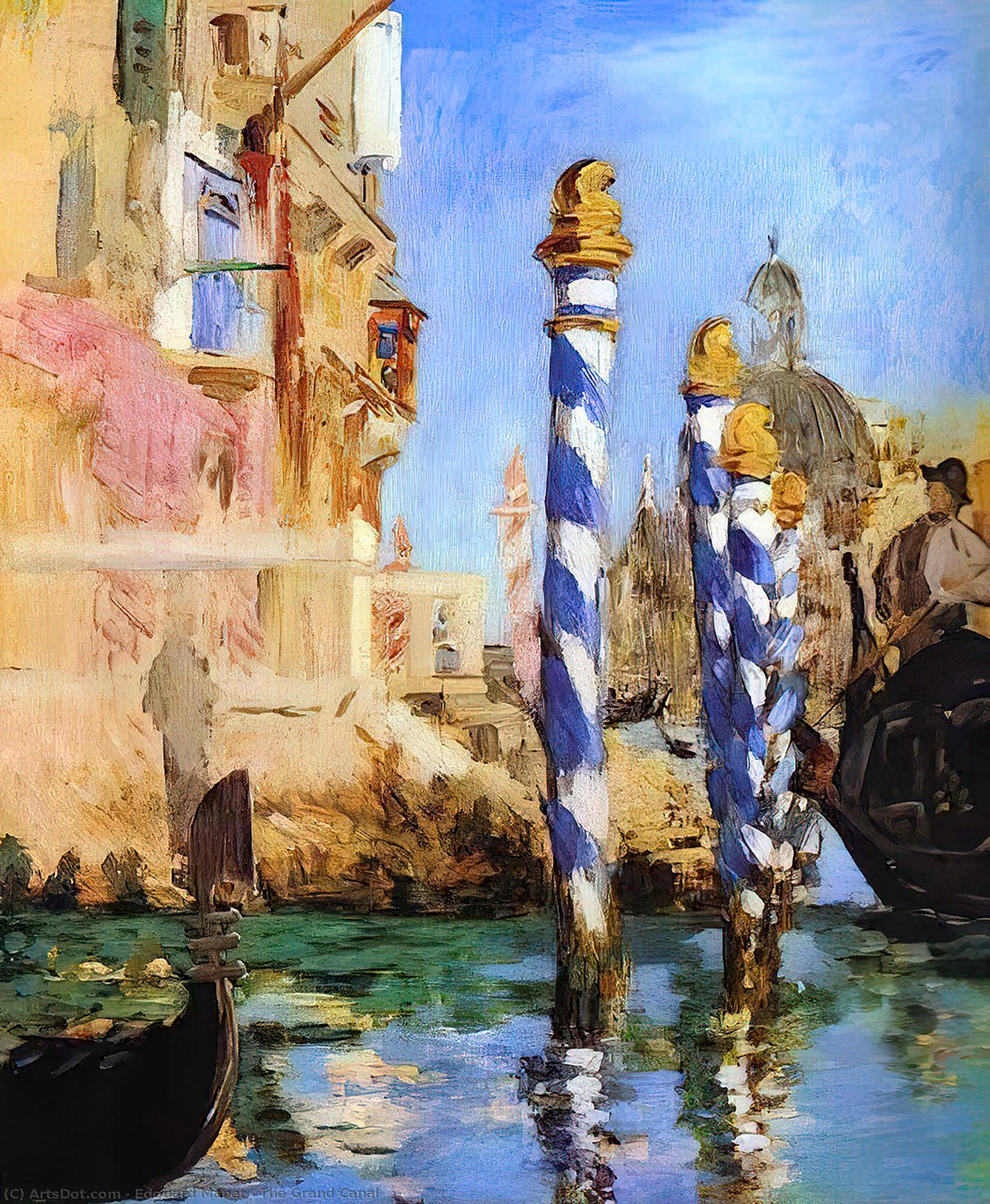
The Grand Canal: A Venetian Masterpiece by Édouard Manet
- Title: The Grand Canal
- Artist: Édouard Manet
- Date: 1875
- Medium: Oil on Canvas
- Dimensions: 57 x 48 cm
A Captivating Impression of Venice
Édouard Manet's "The Grand Canal" is a stunning representation of Venice’s iconic waterway, capturing the essence of the city with an innovative and modern approach. Created in 1875, this oil on canvas masterpiece exemplifies the burgeoning Impressionist movement. The painting depicts two blue and white striped poles standing prominently on either side of the canal, framing the bustling scene. Buildings line both banks, their facades reflecting in the shimmering water. Several boats navigate the canal, adding a sense of life and activity to the composition. A solitary figure stands near the center-right, seemingly absorbed by the beauty of the surroundings.
Historical Context and Artistic Significance
Manet's visit to Venice occurred during a pivotal period in his artistic development. Having spent time with Claude Monet in Argenteuil, Manet was increasingly embracing outdoor painting and exploring the effects of light and atmosphere – hallmarks of Impressionism. The Grand Canal itself is a vital artery of Venice, a major water-traffic corridor forming a distinctive reverse-S shape through the city's central districts. Manet’s decision to depict this well-known scene demonstrates his ability to transform familiar subjects into something fresh and modern. While he initially struggled with capturing the Venetian light, the resulting painting showcases a departure from his earlier Realist style, embracing looser brushstrokes and brighter colors characteristic of Impressionism.
Technique and Symbolism
Manet’s technique in "The Grand Canal" is notable for its visible brushwork and vibrant color palette. The use of broken strokes creates a sense of movement and shimmering light on the water's surface, conveying the dynamism of Venetian life. The striped poles serve as visual anchors, drawing the viewer's eye into the scene while also hinting at the practical aspects of navigating the canal. While not overtly symbolic, the painting evokes feelings of tranquility, beauty, and a sense of timelessness associated with Venice. The solitary figure adds a touch of human presence, inviting viewers to contemplate their own connection to this historic city.
Emotional Impact and Legacy
"The Grand Canal" is more than just a depiction of a famous location; it's an emotional response to the beauty and atmosphere of Venice. Manet’s innovative approach captures the fleeting moments of light and color, creating a vibrant and engaging scene that resonates with viewers even today. This work stands as a testament to Manet’s artistic evolution and his significant contribution to the Impressionist movement, solidifying his place as a pivotal figure in modern art history.