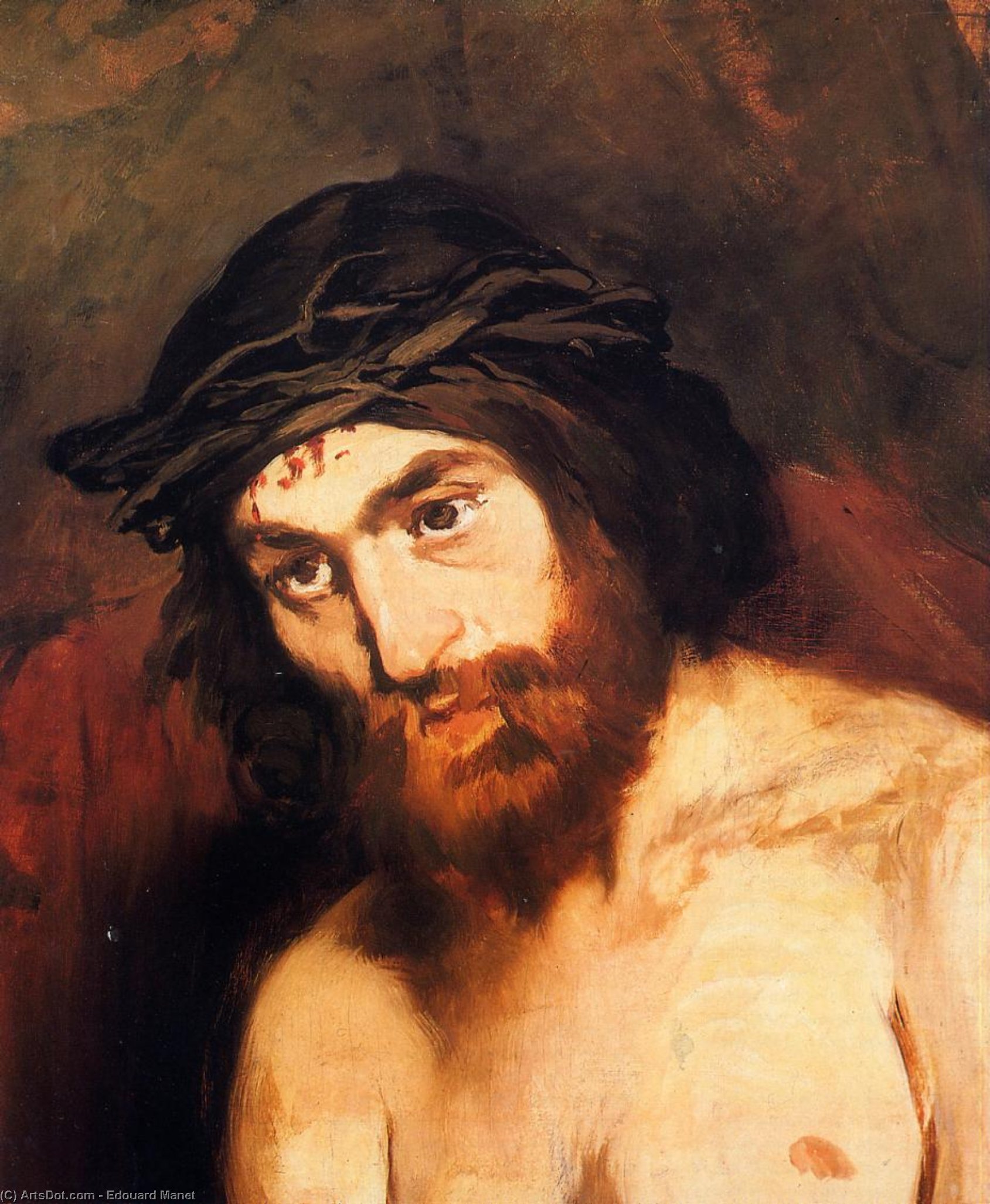
Édouard Manet’s ‘The Head of Christ,’ painted in 1864, embodies Realism’s commitment to truthful representation. This oil on canvas depicts Jesus Christ with a crown of thorns, conveying profound sorrow through meticulous detail and dramatic lighting—a cornerstone of modern art.
The
Head of Christ is a captivating oil on canvas painting created by the renowned French artist
Edouard Manet in 1864. This masterpiece is a prime example of
Realism, a style that emphasizes the accurate and detailed representation of everyday life. The painting measures and is currently part of a private collection.
Composition and Technique
The
Head of Christ showcases Manet's exceptional skill in capturing the subtleties of light and shadow. The subject, Jesus Christ, is depicted with a beard and long hair, wearing a black hat and gazing directly at the viewer. The use of chiaroscuro, an artistic technique that uses strong contrasts between light and dark, adds depth and volume to the painting. You can find more information about
Edouard Manet and his works on
https://ArtsDot.com.
Historical Context
The
Head of Christ was painted during a time of great change in the art world. Manet, along with other artists, was pushing the boundaries of traditional representation and exploring new ways to depict reality. The
Staatliche Museen zu Berlin, a group of museums in Berlin, Germany, holds an extensive collection of European paintings from the 13th to the 18th centuries, including works by Manet's contemporaries. You can learn more about the
Staatliche Museen zu Berlin on
/art/list/?Filter=A@D3BCSB-Discover-the-Staatliche-Museen-zu-Berlin-Germany.
Handmade oil painting reproductions of the
Head of Christ are available on
https://ArtsDot.com, allowing art enthusiasts to own a piece of history.
The
Head of Christ is a testament to Manet's skill and innovative approach to art, making it a captivating and thought-provoking piece that continues to inspire artists and art lovers today.