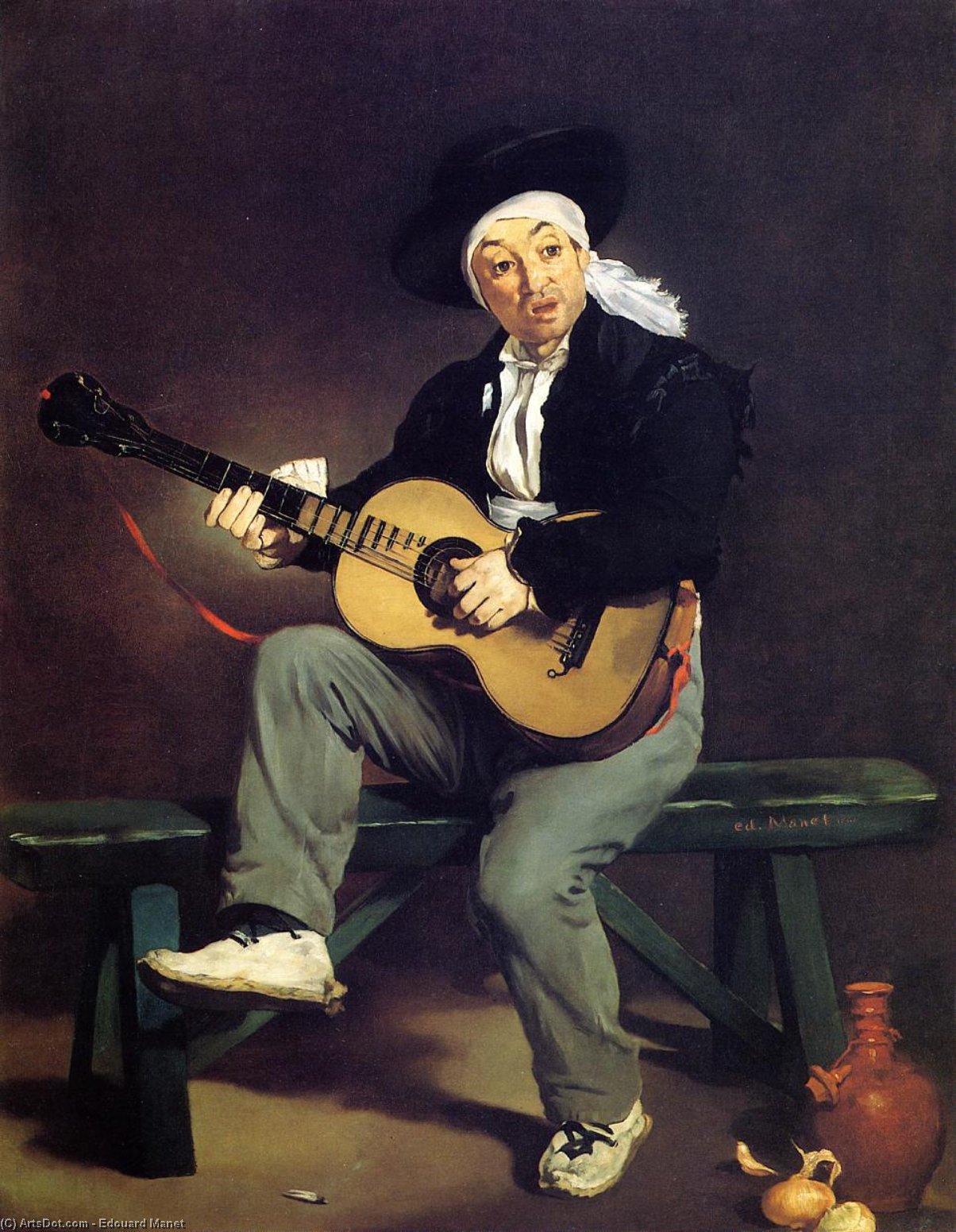
Delve into Édouard Manet's iconic 'The Spanish Singer,' exploring its realism, cultural influences—particularly Spanish art—and groundbreaking technique at the Metropolitan Museum of Art.
Explore Édouard Manet (1832-1883), a pivotal figure bridging Realism & Impressionism. Discover iconic works like 'Le Déjeuner sur l'herbe' and 'Olympia,' and his lasting impact on modern art.
Explore The Metropolitan Museum of Art: 5,000 years of art from around the world! Discover masterpieces, ancient artifacts & immersive exhibitions – a global art destination awaits.
The Spanish Singer (also known as Guitarrero): A Portrait of Leisure and Artistic Rebellion
Édouard Manet’s *The Spanish Singer*, painted in 1860, stands as a pivotal work within the Impressionist movement—a bold assertion against academic conventions and an intimate glimpse into Parisian life during the Second Empire. Initially met with critical acclaim for its realistic depiction of a musician playing guitar, the painting quickly became embroiled in debates about artistic merit and stylistic innovation, cementing Manet’s legacy as a pioneer of modern art. Its current residence at the Metropolitan Museum of Art ensures that this captivating image continues to inspire awe and scholarly discussion.
Subject Matter and Composition: Capturing Parisian Idleness
The scene depicts a man seated on a bench in Montmartre, absorbed in playing guitar while wearing a hat and bandanna. This seemingly simple composition belies Manet’s meticulous attention to detail—a hallmark of his artistic approach. Two bottles flank the guitarist, subtly suggesting indulgence and relaxation, mirroring the prevailing mood of leisure within Parisian society at the time. The artist deliberately eschewed grand narratives or allegorical symbolism, opting instead for a portrait that captures a fleeting moment of everyday life, reflecting Manet’s fascination with capturing authentic experiences rather than idealized representations.
Technique and Style: Impressionistic Brushstrokes and Color Palette
Manet employed a distinctive technique characterized by loose brushstrokes—a departure from the smooth surfaces favored by academic painters—to convey texture and luminosity. He utilized a restrained color palette dominated by earthy tones, punctuated by splashes of crimson and ochre, mirroring the influence of Velázquez’s masterful use of light and shadow. The artist's deliberate choice to depict the guitar with visible brushstrokes underscores his commitment to capturing the immediacy of observation—a core principle of Impressionism. Furthermore, Manet skillfully rendered the subject’s face with remarkable precision, conveying subtle nuances of emotion through delicate shading and expressive eyes.
Historical Context: Echoes of Spanish Culture and Artistic Debate
The painting's genesis coincided with a surge of interest in Spanish culture within Paris—a trend fueled by Romantic fascination with Iberian traditions and artistic grandeur. Manet’s inclusion of Spanish attire and musical instruments served as a deliberate nod to this cultural influence, mirroring the broader aesthetic concerns of the era. However, *The Spanish Singer* also ignited considerable controversy among critics who questioned its stylistic legitimacy and challenged established artistic standards. Discussions centered on whether Manet's technique truly captured the essence of his subject or merely imitated superficial appearances—a debate that continues to resonate within art history today.
Symbolism: Beyond Representation – An Artist’s Reflection
Beyond its surface realism, *The Spanish Singer* operates on a deeper symbolic level. The guitarist embodies not only leisure but also artistic contemplation—Manet himself meticulously crafted the scene as an exercise in observation and stylistic experimentation. As noted by art historian Linda Nochlin, “Among Gilles’s roles is that of artist’s double: The Clown Prince of Melancholy stands in for the Painter Prince of Evocation, simultaneously vulnerable and narcissistic at the same time.” This duality reflects Manet's own artistic journey—a quest to break free from academic constraints while retaining a profound connection to tradition.
Conclusion: An Enduring Legacy
*The Spanish Singer* remains an enduring testament to Manet’s artistic vision—a masterpiece that encapsulates the spirit of Impressionism and its rejection of convention. Its masterful composition, innovative technique, and subtle symbolic resonance continue to captivate audiences worldwide, securing its place as one of the most iconic images of the 19th century.