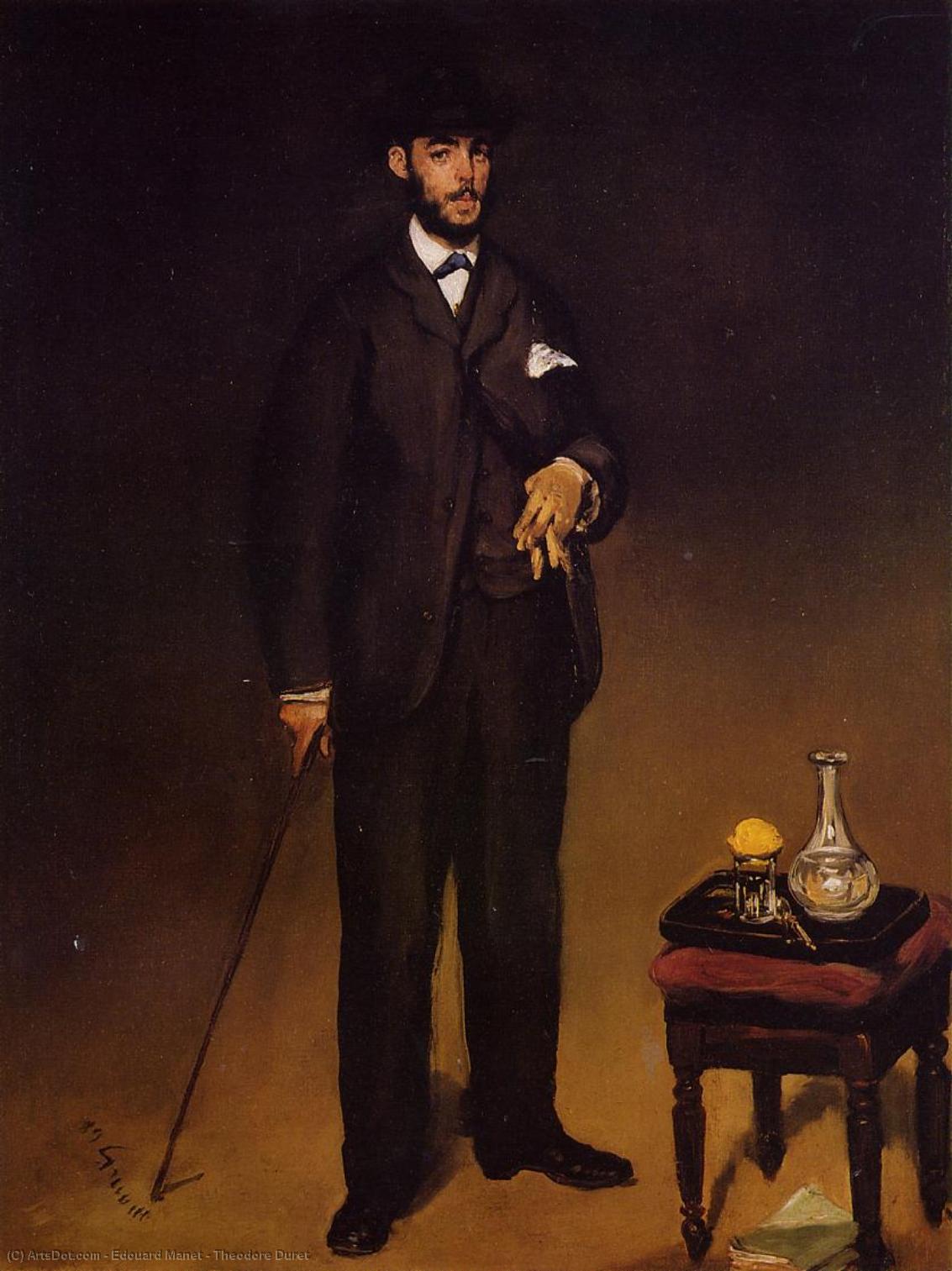
Captured in Manet’s Impressionistic style, this portrait depicts a dignified gentleman against a simple tabletop setting—a bold departure from academic tradition. Exploring themes of urban life and observation, Édouard Manet's masterpiece invites you to experience the beauty of modern Paris.
A Snapshot of Parisian Modernity: Examining Édouard Manet’s Theodore Duret
The painting “Theodore Duret,” executed in 1868 by Édouard Manet, isn't merely a portrait; it’s a carefully constructed distillation of the anxieties and aspirations simmering beneath the surface of Belle Époque Paris. Captured with remarkable precision and imbued with subtle emotional resonance, this artwork offers a fascinating glimpse into the artistic landscape of its time—a period marked by fervent debates about representation and the role of art in reflecting society.
- Subject Matter: The portrait depicts Theodore Duret, a prominent French sculptor known for his monumental works celebrating heroism and patriotism. Manet’s decision to portray Duret in a relatively informal setting—seated beside a table laden with bottles—contrasts sharply with the idealized depictions favored by academic painters of the era.
- Style & Technique: Manet's style is distinctly Impressionistic, prioritizing capturing fleeting moments and atmospheric effects over meticulous detail. Unlike his predecessors who painstakingly rendered surfaces with smooth brushstrokes, Manet employed loose, visible brushwork—particularly in the depiction of drapery and skin tones—to convey a sense of immediacy and spontaneity. The muted palette contributes to this effect, emphasizing tonal variations rather than vibrant colors.
Historical Context: “Theodore Duret” emerged during a pivotal moment in artistic history – the burgeoning Impressionist movement was challenging the established conventions of the Salon, Paris’s official art exhibition. Artists like Monet and Renoir were rejecting academic idealism for plein air painting and capturing the sensory experience of modern life. Manet himself navigated this turbulent environment with unwavering conviction, refusing to compromise his vision despite facing criticism from conservative critics who deemed his work unfinished and lacking in polish. The Salon rejected Duret several times before it was accepted by the Société Nationale des Beaux-Arts.
Symbolism & Emotional Impact: Beyond its formal stylistic choices, “Theodore Duret” speaks volumes about the anxieties of the era. The bottles on the table could symbolize conviviality and celebration—a nod to French national pride—yet they also hint at underlying tensions surrounding social status and artistic ambition. Manet’s masterful use of light and shadow creates a sense of psychological depth, conveying Duret's quiet contemplation amidst the bustle of Parisian life. The artist subtly captures not just the physical likeness of his subject but also an intangible aura of dignity and seriousness.
- Interior Setting: The painting’s interior space—a modestly furnished room—reflects the changing tastes of the time, moving away from grand historical narratives toward more intimate depictions of everyday life.
- Composition: Manet's compositional choices are deliberate and contribute to the artwork's overall impact. The placement of Duret and the table creates a balanced yet dynamic arrangement, guiding the viewer’s eye across the canvas.
Conclusion: “Theodore Duret” stands as a testament to Manet’s artistic courage—his refusal to conform to accepted norms paved the way for future generations of Impressionists. It remains an enduring symbol of Parisian modernity and continues to fascinate viewers with its understated beauty and profound psychological insight. Reproductions from ArtsDot.com offer collectors and interior designers alike the opportunity to experience this masterpiece firsthand, preserving its legacy for years to come.