The Haunting Echo of Anxiety
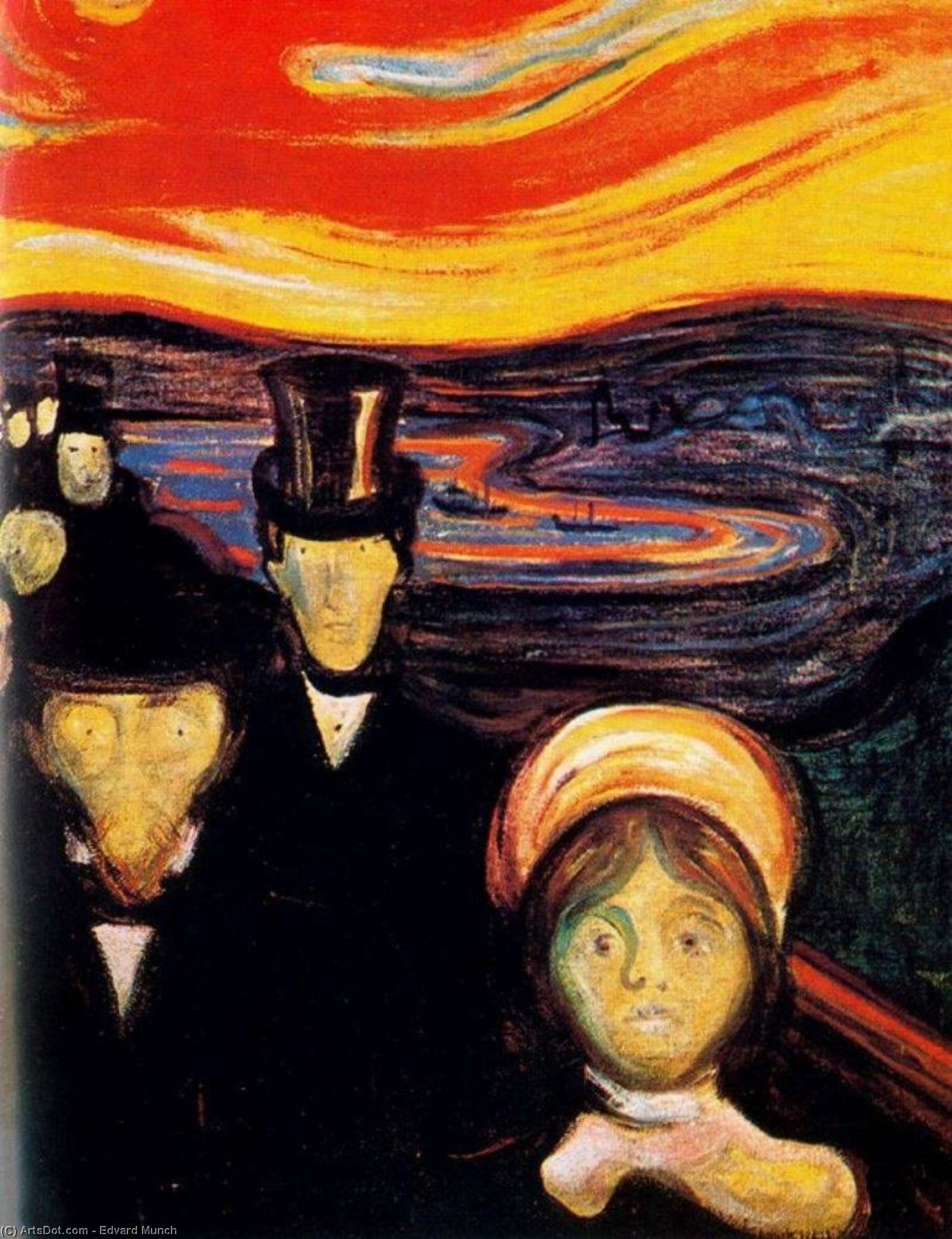
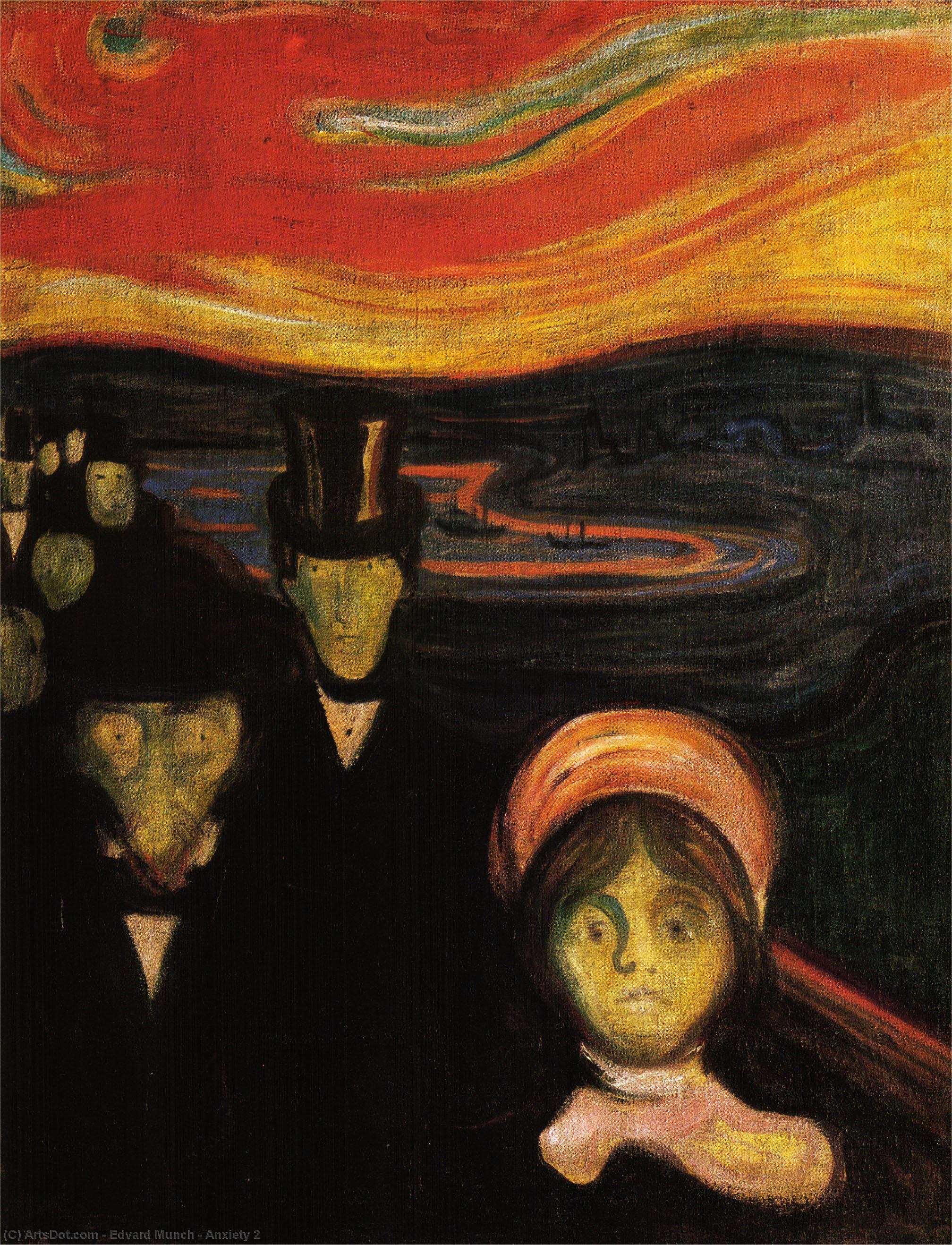
Edvard Munch’s “Anxiety,” painted in 1894, isn't merely a depiction of a scene; it’s an excavation of the human psyche. More than just a landscape, it’s a visceral embodiment of unease, a raw and unsettling portrayal of inner turmoil rendered with the potent tools of Expressionism. This oil on canvas, measuring 94 x 74 cm, immediately draws the viewer into a world saturated with color and charged with emotion – a world where the boundaries between observer and observed blur, and the very air seems to vibrate with unspoken dread.
Expressionism at its Core: A Window into the Soul
“Anxiety” stands as a cornerstone of Expressionism, a movement that sought to transcend mere representation and delve directly into the realm of subjective experience. Unlike Impressionism’s focus on capturing fleeting moments of light, Munch aimed to externalize his internal state – specifically, the suffocating weight of anxiety itself. The painting's vibrant yet discordant palette—deep blues, bruised purples, and sickly yellows—doesn’t depict a realistic sunset but rather an emotional landscape mirroring the artist’s own troubled mind. Notice how the swirling brushstrokes create a sense of movement and instability, reflecting the chaotic nature of anxious thought.
The composition is deliberately unsettling. A group of figures stands before a body of water, their postures suggesting conversation or contemplation, yet none seem truly at ease. Their faces are obscured, rendered in broad strokes that emphasize anonymity and universality – they represent anyone who has ever wrestled with the suffocating grip of anxiety. The jetty extending into the dark water acts as a visual metaphor for an uncertain future, a precipice from which one might be tempted to leap.
Edvard Munch: A Pioneer of Psychological Portraiture
To understand “Anxiety,” it’s crucial to appreciate Edvard Munch's broader artistic trajectory. Born in 1863 in Sweden and deeply affected by early personal tragedies – the loss of his mother and sister to tuberculosis – Munch consistently explored themes of mortality, illness, and psychological distress throughout his career. He wasn’t simply painting what he saw; he was translating his deepest fears and vulnerabilities onto canvas. Works like “Despair,” “Puberty,” and “Street Lafayette” further illuminate this preoccupation with the darker aspects of human existence, revealing a consistent thread of emotional intensity in his oeuvre.
Munch’s exploration of anxiety wasn't isolated; it resonated with broader cultural currents. The late 19th century witnessed growing anxieties about industrialization, urbanization, and the perceived loss of traditional values – themes that found expression in literature, philosophy, and art across Europe. Munch’s work became a powerful visual articulation of these collective anxieties.
Relevance Beyond its Time: A Timeless Exploration of Human Emotion
“Anxiety” remains profoundly relevant today, not simply as a historical artifact but as a mirror reflecting the enduring challenges of mental health. The painting’s raw emotional honesty and unsettling imagery continue to resonate with contemporary audiences grappling with similar struggles. It serves as a poignant reminder that anxiety is not merely an individual experience but a shared human condition – a universal struggle for meaning and stability in a world often perceived as chaotic and unpredictable. As part of the Expressionist movement, this painting continues to inspire artists and captivate viewers with its emotional depth.
For more information on Expressionism and Edvard Munch's works, visit Top 5 Famous Expressionism Artists of All Time at ArtsDot.