The Painting and Its Significance
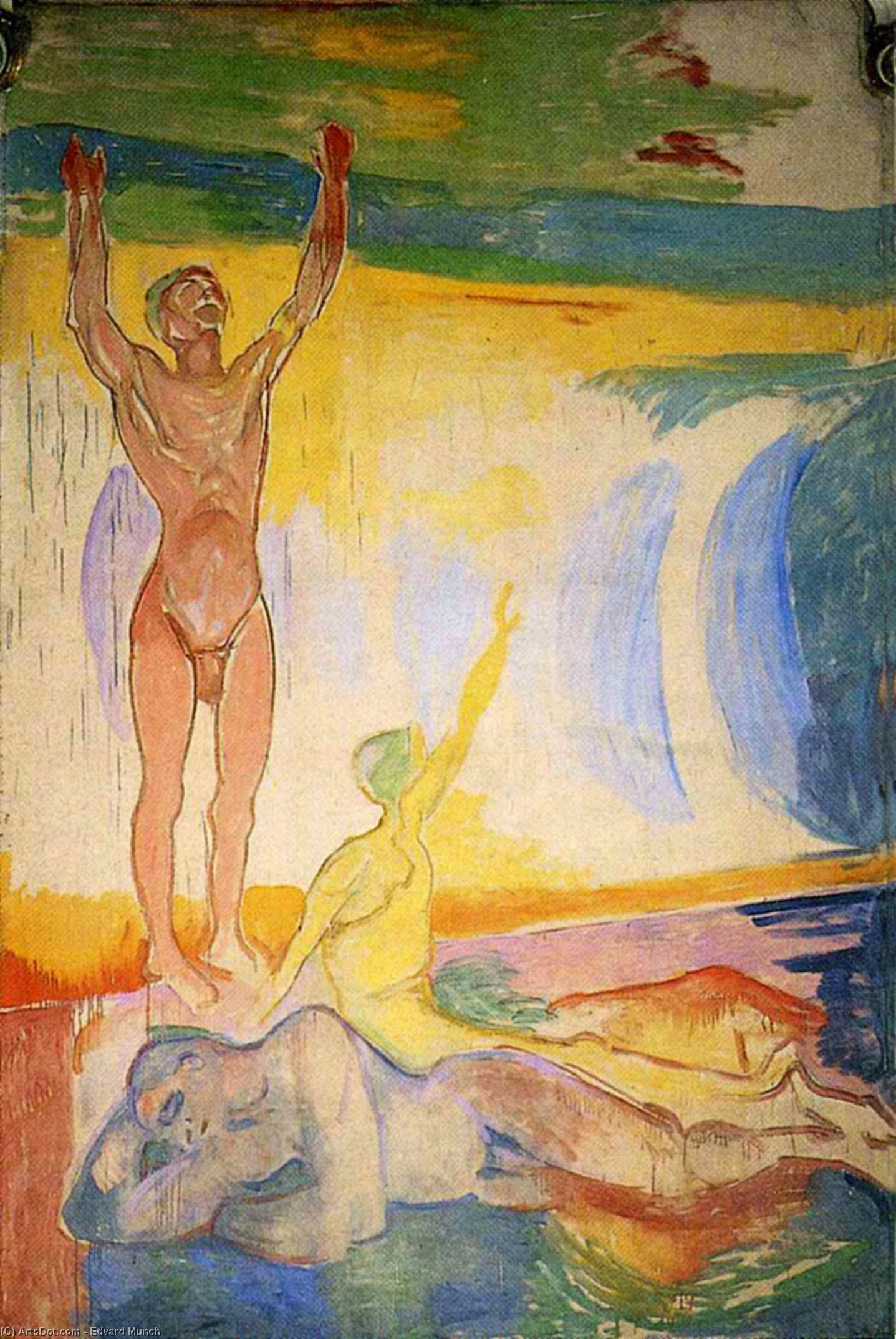
Awakening Men, a monumental oil on canvas painting by
Edvard Munch, stands as a testament to the artist's profound exploration of human emotions and interactions. Created in 1916, this work exemplifies the Expressionist movement, characterized by its emphasis on subjective experience and emotional intensity.
Composition and Figures
The painting measures 455 x 305 cm, featuring three central figures set against a backdrop of smaller, scattered individuals. The dominant figure stands with arms raised, while two others sit nearby, creating a dynamic composition that draws the viewer's attention. The inclusion of additional figures in the background adds depth and complexity to the scene.
Light and Shadow
The play of light and shadow is a crucial element in
Awakening Men. Munch skillfully employs chiaroscuro, a technique that uses strong contrasts between light and dark to create a sense of volume and drama. This use of light underscores the emotional intensity of the scene, drawing the viewer into the world of the painting.
Expressionism and Its Influence
As one of the
top Expressionist artists, Munch's work had a significant impact on modern art. His innovative use of color and composition influenced generations of artists, shaping the course of Expressionism.
Other Works by Edvard Munch
Munch's oeuvre includes other notable works such as
The Hands and
Adam and Eve, which can be found on
ArtsDot.com. These paintings demonstrate his continued exploration of human emotions and relationships.
Conclusion
Awakening Men is a powerful example of Munch's ability to capture the essence of human interaction through art. The painting's dynamic composition, coupled with its masterful use of light and shadow, makes it a compelling piece that continues to captivate audiences today.
Experience the emotional depth of Edvard Munch's art with hand-made oil painting reproductions from ArtsDot.com.