Elisabeth Förster-Nietzsche: A Portrait of Quiet Intensity
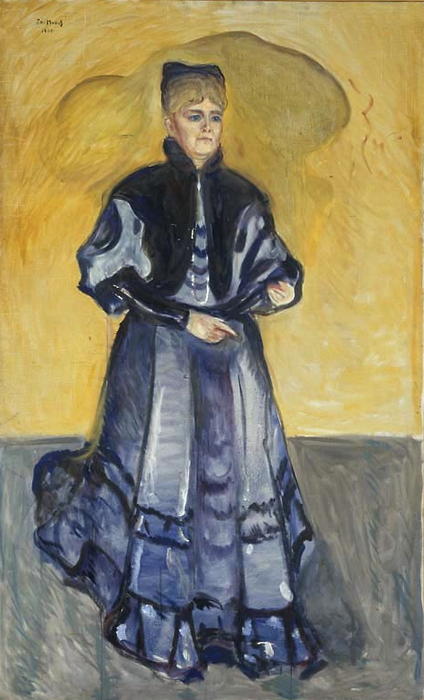
Edvard Munch’s “Elisabeth Förster-Nietzsche,” painted in 1902, stands as a testament to the artist's masterful ability to distill profound emotion into deceptively simple visual form. This portrait isn’t merely a depiction of a woman; it’s an exploration of psychological depth—a glimpse into the inner world of Elisabeth Förster-Nietzsche herself, a Norwegian writer and philosopher who captivated Munch with her intellect and spirit.
- Subject Matter: The painting focuses on Elisabeth Förster-Nietzsche, a prominent figure in Norwegian intellectual circles during Munch’s time. Her gaze directs outwards, seemingly contemplating something beyond the immediate frame—perhaps reflecting upon ideas or experiences that shaped her life and worldview.
- Style & Technique: Munch employed his signature Expressionist style, prioritizing emotional impact over realistic representation. The muted palette – dominated by blues and yellows – contributes to a sense of melancholic serenity. Thick brushstrokes convey texture and movement, capturing the subtle nuances of light and shadow that define the scene.
Historical Context: Symbolism Within Fin-de-Siècle Norway
Painted during the “Fin de Siècle,” or End of Century, Munch’s oeuvre reflects the anxieties and uncertainties prevalent in Europe at the turn of the 20th century. This period witnessed a burgeoning interest in psychology and psychoanalysis, mirroring Munch's own preoccupation with exploring the subconscious mind. The painting subtly embodies these intellectual currents, suggesting an awareness of existential questions—questions concerning identity, mortality, and the human condition.
- Color Palette: The yellow background isn’t merely decorative; it symbolizes optimism and warmth against the backdrop of a darker emotional landscape. It serves as a visual counterpoint to the cool blues of Elisabeth Förster-Nietzsche's dress, highlighting the tension between outward composure and inner turmoil.
- Composition: Munch skillfully utilizes compositional elements—such as the placement of Elisabeth Förster-Nietzsche within the frame and the subtle gesture of her hand holding the umbrella—to guide the viewer’s eye and reinforce the painting's emotional core. These details contribute to a feeling of quiet contemplation, inviting viewers to consider the complexities of human experience.
Emotional Impact: Capturing Inner Reflection
“Elisabeth Förster-Nietzsche” transcends mere portraiture; it achieves an extraordinary feat of psychological portrayal. Munch’s masterful technique captures not just Elisabeth Förster-Nietzsche's physical appearance but also her inner state—a sense of thoughtfulness and introspection that resonates deeply with the viewer. The painting evokes feelings of melancholy, serenity, and perhaps even a hint of wistful longing—qualities characteristic of Munch’s broader artistic vision.
- Brushwork: Munch's expressive brushstrokes imbue the canvas with palpable energy, conveying the artist’s emotional response to his subject. The textured surface invites contemplation and encourages viewers to engage with the painting on a visceral level.
- Symbolism of Umbrella: The umbrella isn’t just an object; it symbolizes protection—both physical and psychological—against the storms of life. It subtly underscores Elisabeth Förster-Nietzsche's resilience and her ability to maintain inner peace amidst external challenges.
A reproduction of “Elisabeth Förster-Nietzsche” offers a remarkable opportunity to experience Munch’s artistic genius firsthand—to immerse oneself in the evocative beauty of Expressionism and to contemplate the enduring power of art to illuminate the human psyche.