A Moment Suspended: Exploring Edvard Munch’s *Flickor pa en bro*
Edvard Munch, a pivotal figure in the development of Expressionism, invites us into a world of quiet contemplation and underlying tension with his painting, *Flickor pa en bro* (Girls on a Bridge). Completed during a period of intense personal exploration for the artist, this work is more than just a depiction of figures traversing a bridge; it’s a poignant study of human connection, isolation, and the emotional weight of everyday life.
Historical Context & Artistic Lineage
Born in 1863, Munch's life was deeply marked by loss and illness – experiences that profoundly shaped his artistic vision. He rejected the prevailing naturalist styles of his time, influenced by the burgeoning Symbolist movement and later becoming a key forerunner to Expressionism. Emerging in the early 20th century,
Expressionism sought to convey subjective emotional experience rather than objective reality, prioritizing inner feeling over accurate representation. Munch’s work, including *Flickor pa en bro*, exemplifies this shift, anticipating the psychological explorations that would define much of 20th-century art. He shared artistic kinship with contemporaries like Van Gogh and Gauguin, absorbing their bold use of color and emotive brushwork while forging his own unique path.
Decoding the Composition & Technique
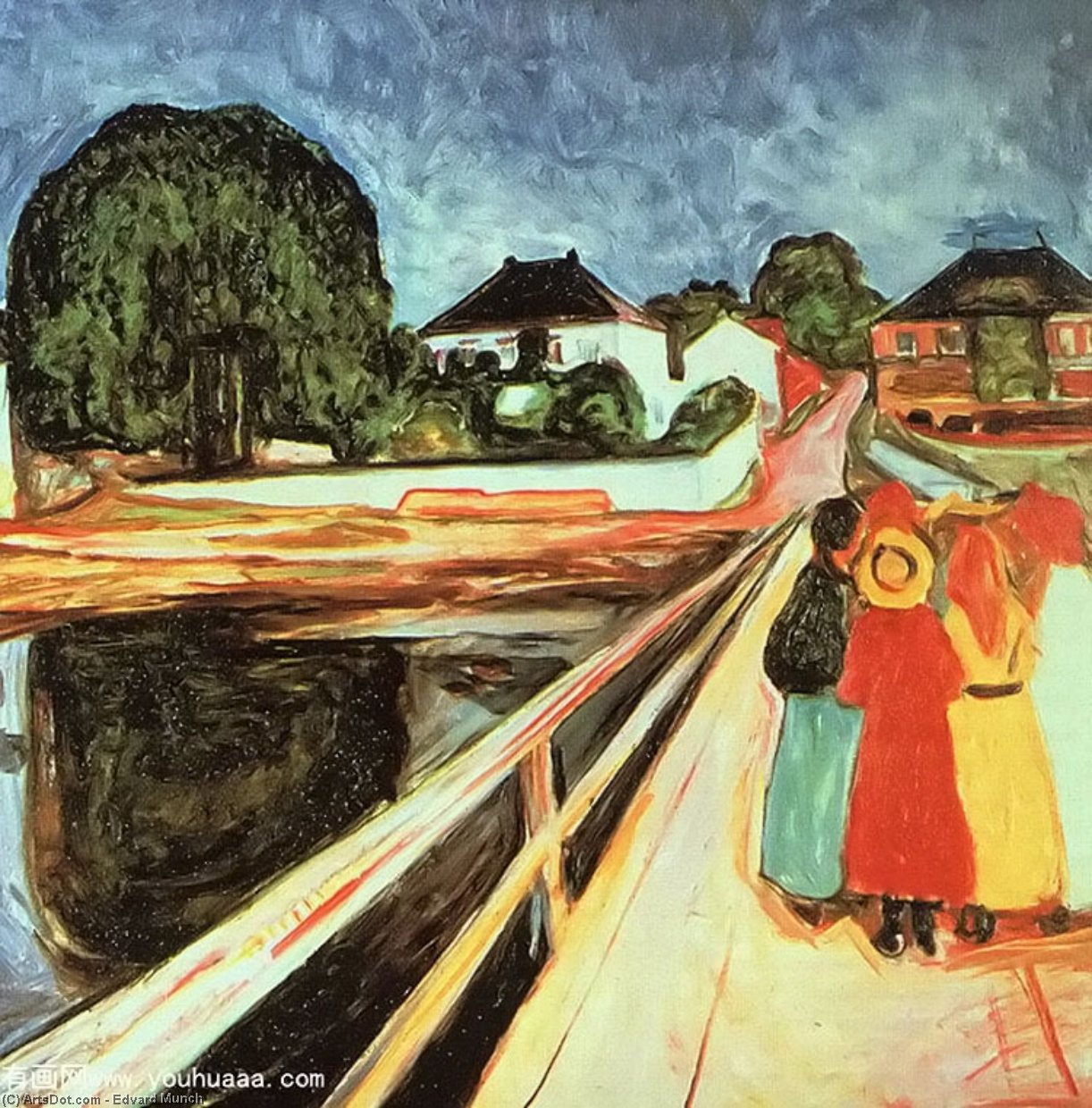
The painting presents a scene of three figures walking across a wooden bridge, set against an overcast sky and alongside a body of water. Munch’s technique is characterized by loose, expressive brushstrokes and a deliberate distortion of form. The diagonal thrust of the bridge draws the viewer's eye into the composition, while the figures – rendered with simplified shapes and visible texture – appear somewhat detached from their surroundings. The color palette leans towards cool tones punctuated by warmer accents, creating a melancholic yet captivating atmosphere.
Impasto, the thick application of paint, adds to the tactile quality of the work, emphasizing the physicality of the artist’s process.
Symbolism & Emotional Resonance
The bridge itself is a potent symbol – representing transition, connection, and perhaps even vulnerability. The figures, though together, seem lost in their own thoughts, hinting at themes of loneliness and introspection. The subdued lighting and muted colors contribute to the overall sense of quiet melancholy. While seemingly depicting an ordinary scene, Munch imbues it with a profound emotional depth, inviting viewers to project their own feelings onto the canvas. The water adds a layer of tranquility but also suggests the depths of the subconscious.
Munch’s Legacy & Collecting Today
Edvard Munch's influence on modern art is undeniable. His exploration of psychological themes paved the way for future generations of artists, and his iconic works continue to resonate with audiences worldwide. Many of his masterpieces, including *The Scream* and *Horse Team*, are housed at the
Nasjonalgalleriet in Oslo, Norway, and the dedicated
Munch Museum, offering invaluable opportunities for study and appreciation. High-quality reproductions of *Flickor pa en bro* allow art enthusiasts and interior designers to bring a piece of this artistic legacy into their own spaces – adding a touch of emotional depth and historical significance to any collection or environment. This painting is not merely an aesthetic object; it’s a window into the human soul, rendered with breathtaking honesty and enduring power.
- Explore more works by Edvard Munch at ArtsDot: ArtsDot
- Learn about the artist’s life and work on Wikipedia: Wikipedia
- Discover the Munch Museum in Oslo: Munch Museum