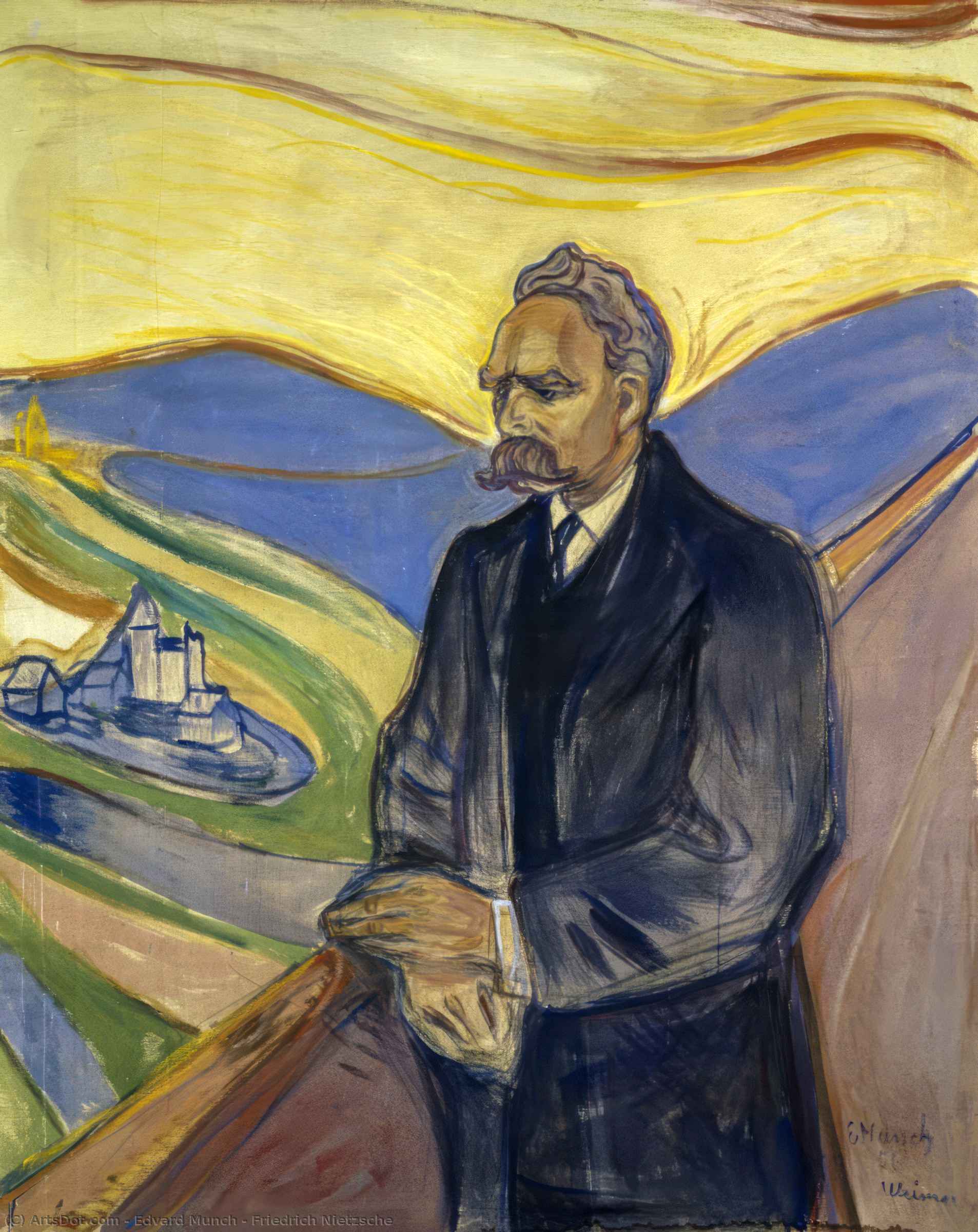
A Portrait of Profound Thought: Edvard Munch’s ‘Friedrich Nietzsche’
Edvard Munch's 1906 oil on canvas portrait of Friedrich Nietzsche is a striking example of Expressionist artistry, currently residing at the Thielska Galleriet in Stockholm. More than just a likeness, this painting delves into the very essence of the philosopher’s complex and often turbulent inner world, capturing not merely *what* Nietzsche looked like, but *how* he felt to exist.
The Philosophical Weight: Context & Inspiration
Munch was deeply captivated by Nietzsche's radical ideas – his critiques of morality, his concept of the Übermensch, and his pronouncements on the “death of God.” These concepts resonated powerfully with Munch’s own anxieties and introspective nature. The portrait isn’t a celebratory depiction; rather, it embodies the weight of Nietzsche’s intellectual burden and the profound loneliness that often accompanied his revolutionary thought. It's a visual manifestation of philosophical turmoil.
Expressionism in Action: Style & Technique
This work is quintessentially Expressionist. Munch abandons realistic representation in favor of conveying subjective emotion. The brushstrokes are loose, almost frantic, and the colors – dominated by dark blues, browns, and blacks contrasted with muted greens and yellows – contribute to a sense of unease and psychological depth.
Impasto, the thick application of paint, adds texture and physicality, emphasizing the raw emotionality of the piece. The distorted forms aren’t errors; they are deliberate choices meant to reflect an inner state rather than external reality.
A Master of Emotion: Munch & His Legacy
Edvard Munch (1863-1944) was a Norwegian painter whose work profoundly impacted the development of modern art. Haunted by personal tragedy – loss, illness, and familial mental health struggles – he channeled his experiences into emotionally charged paintings like
The Scream. His exploration of anxiety, isolation, and mortality established him as a pivotal figure in Expressionism, influencing generations of artists to come.
Decoding the Image: Symbolism & Composition
The composition is carefully constructed. Nietzsche stands on a balcony overlooking a landscape featuring rolling hills, a castle, and water – elements that can be interpreted symbolically. The balcony itself suggests a threshold, a space between interiority and exterior reality. The distant castle might represent unattainable ideals or the weight of history. Nietzsche’s contemplative pose and downward gaze suggest introspection and perhaps even weariness. The subject's prominent mustache and receding hairline contribute to an impression of intellectual maturity and the passage of time.
The Enduring Resonance: Historical Significance & Emotional Impact
Created during a period of significant social and intellectual upheaval, Munch’s portrait reflects the anxieties of the modern age. It speaks to the challenges of confronting existential questions and the burden of individual consciousness. Even today, the painting continues to captivate viewers with its raw emotional power and psychological insight. It's not simply a historical artifact; it’s a timeless exploration of the human condition.
Key Details
- Artist: Edvard Munch
- Title: Friedrich Nietzsche
- Year: 1906
- Medium: Oil on Canvas
- Location: Thielska Galleriet, Stockholm, Sweden
This portrait is more than just a painting; it’s an invitation to contemplate the complexities of thought, emotion, and the human spirit. It would be a compelling addition to any collection or interior space seeking depth, intellectual stimulation, and artistic power.