A Fragmented Dreamscape: The Haunting Innocence of Munch’s Vision
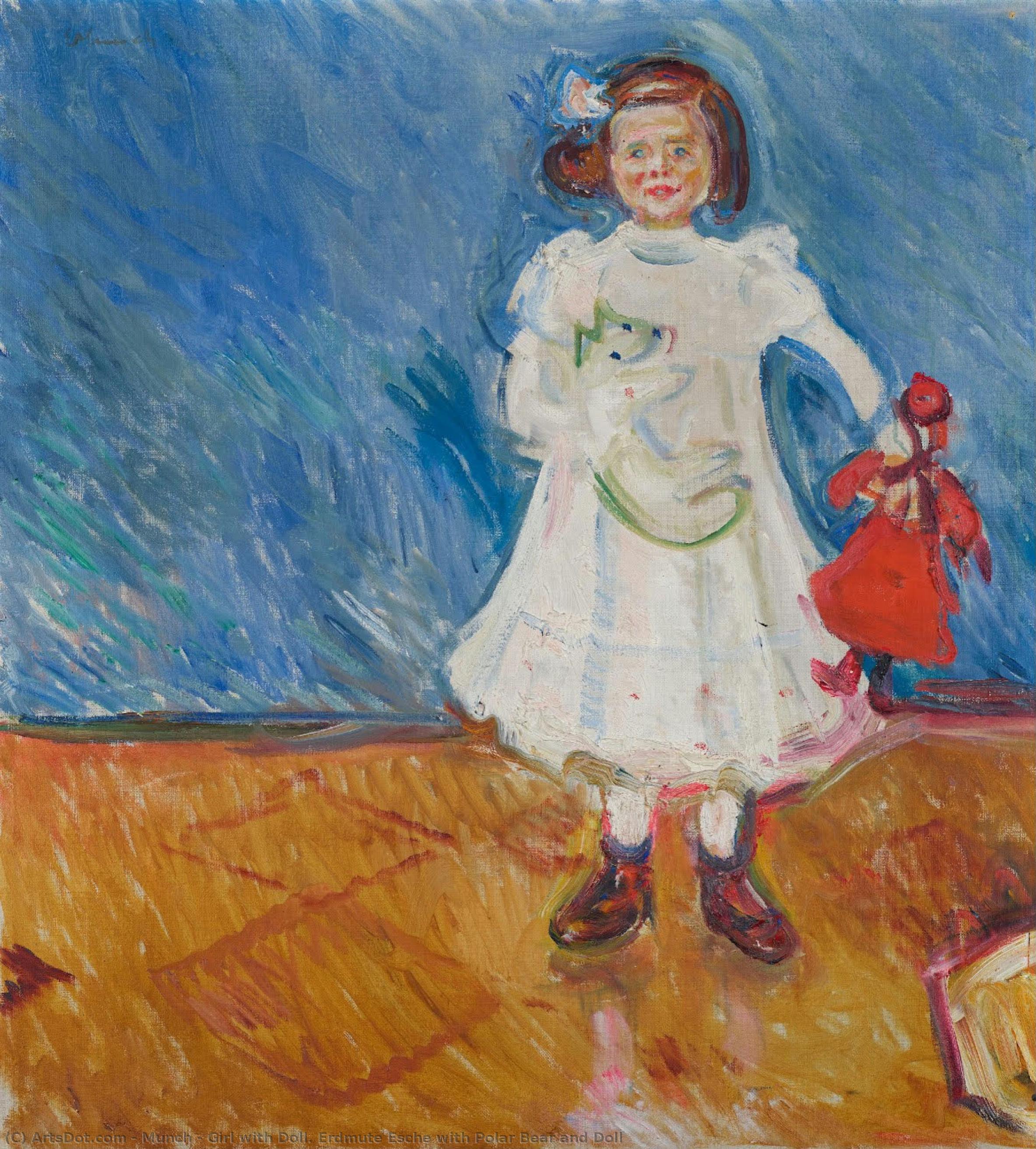
In the quiet corners of the Kunsthaus Zürich resides a masterpiece that defies the simple boundaries of portraiture. Edvard Munch’s 1905 work, “Girl with Doll: Erdmute Esche with Polar Bear and Doll,” is far more than a depiction of childhood; it is a profound window into the psychological landscape of Expressionism. At first glance, the viewer meets a young girl, her presence anchored by the soft weight of a doll and a stuffed polar bear. Yet, beneath this surface of playfulness lies a simmering tension, an embodiment of the anxieties that defined Munch’s era. The painting captures a moment suspended in time, where the sweetness of youth meets the unsettling shadows of the subconscious, making it a captivating centerpiece for any collection focused on emotional depth.
The composition is masterfully orchestrated to evoke a sense of dynamic instability. Rather than adhering to the rigid rules of classical realism, Munch employs an asymmetrical arrangement that draws the eye toward the central figure, who sits slightly off-center. This subtle displacement creates a psychological friction, mirroring the artist's own preoccupation with fragmentation and internal unrest. The floor beneath the girl is rendered through sharp, diagonal lines that suggest depth while simultaneously rejecting a stable perspective, pulling the viewer into a world that feels both intimate and strangely distorted. It is this very tension—the balance between the recognizable and the abstract—that makes the piece so magnetic for those who appreciate art that challenges the eye.
The Language of Color and Texture
Munch’s technical prowess is most evident in his bold, emotive use of color and texture. The palette is a striking dialogue between melancholy and passion; deep, vibrant blues dominate the upper reaches of the canvas, evoking a sense of vast, lonely space, while warm browns and sudden accents of bright red provide a visceral contrast. These hues do not merely decorate the scene; they narratively drive the emotional temperature of the work. The girl’s pale dress acts as a luminous focal point against the darker, swirling background, symbolizing a flicker of purity amidst an encroaching gloom.
To touch this painting with the eyes is to feel its palpable energy. Through the use of thick impasto, Munch creates a surface that is rugged and alive. The visible, sweeping brushstrokes are a hallmark of his technique, ensuring that the artist’s hand is always present in the viewer's experience. This tactile quality adds a layer of physical intensity to the subject matter, transforming a simple interior scene into a textured landscape of feeling. For the interior designer, such a piece offers an unparalleled sensory experience, providing a rich, sculptural element that brings movement and life to a sophisticated living space.
Symbolism and the Legacy of Expressionism
Beyond its aesthetic brilliance, the artwork serves as a poignant exploration of companionship and the fragility of existence. The presence of the doll and the polar bear suggests the imaginative sanctuary of childhood, yet the overall atmosphere is tinged with an unmistakable sense of introspection. This duality—the coexistence of innocence and unease—is the very essence of Munch’s genius. His life, marked by personal loss and a deep connection to the themes of mortality, informs every stroke of this canvas. The girl's slightly averted gaze invites the viewer to wonder what lies beyond her immediate world, prompting a reflective state of mind.
For collectors and enthusiasts of fine art, owning a high-quality reproduction of this work means bringing home a piece of art history that continues to resonate with the modern soul. It is an invitation to contemplate the complexities of the human condition through the lens of one of the 20th century's most influential pioneers. Whether placed in a gallery-style study or as a soulful accent in a contemporary lounge, this painting remains a timeless testament to the power of art to capture the unseen tremors of the heart.