A Portrait of Melancholy: Exploring "Kvinna i blått frau barth privat"
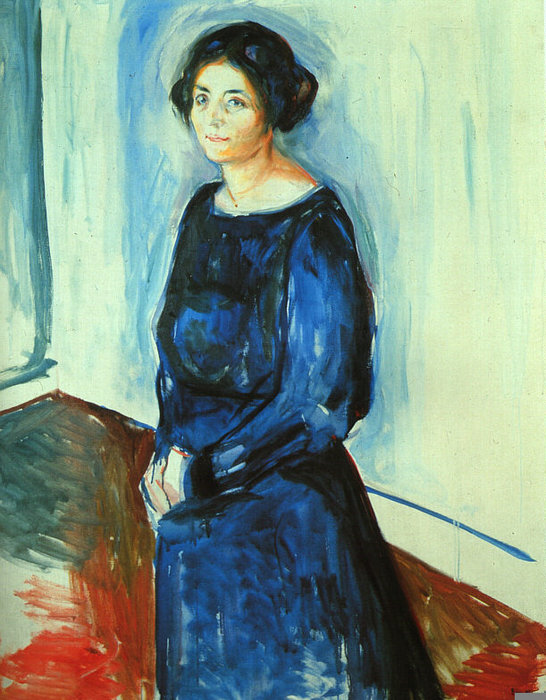
Edvard Munch’s “Kvinna i blått frau barth privat” (Woman in Blue Shawl, Private) is more than a simple depiction of a woman; it's a poignant distillation of the artist’s lifelong preoccupation with mortality and emotional distress. Painted during a period marked by intense personal upheaval – his sister’s death from tuberculosis just months before the work’s creation – the canvas resonates with a palpable sense of sorrow and introspection, reflecting Munch’s deeply ingrained anxieties about illness, loss, and the precariousness of human life. The painting's subdued palette of blues and whites, characteristic of Munch’s mature style, amplifies this mood, creating an atmosphere of quiet contemplation rather than overt drama.
- Subject & Composition: The central figure, a woman in a striking blue dress and black shawl, is presented with a direct gaze, seemingly engaging the viewer in a silent exchange. Her posture suggests both vulnerability and resilience, embodying the complex emotional states that defined Munch’s artistic output.
- Technique & Style: Executed with characteristic expressive brushstrokes, the painting exemplifies Munch's Symbolist approach. He eschews photographic realism in favor of conveying inner psychological states through color and form. The loose application of paint, particularly evident in the rendering of the shawl and the background wall, contributes to the work’s raw emotional intensity.
- Historical Context: Created in 1895, “Kvinna i blått frau barth privat” aligns with Munch's pivotal period of artistic development. Following his initial foray into Impressionism and Post-Impressionism, he increasingly embraced Symbolism, influenced by artists like Paul Gauguin and Vincent van Gogh. This shift reflected a broader cultural trend toward exploring subjective experience and psychological themes in art.
Symbolic Resonance: Blue, Loss, and the Female Figure
The pervasive use of blue within the painting is profoundly significant. For Munch, blue frequently represented death, mourning, and the subconscious – a color deeply associated with his personal tragedies. The woman herself can be interpreted as an embodiment of grief and remembrance, perhaps even a self-portrait filtered through the lens of sorrow. The shawl, a dark and enveloping fabric, further reinforces this sense of concealment and emotional weight.
- Color Psychology: Munch masterfully employs color not merely for aesthetic effect but as a vehicle for conveying emotion. The cool blues evoke feelings of sadness, isolation, and introspection, while the stark contrast with the white background heightens the dramatic impact of the scene.
- The Female Figure in Symbolism: Throughout his oeuvre, Munch frequently depicted women as symbols of vulnerability, suffering, and spiritual longing. This particular woman embodies these themes powerfully, representing a universal experience of loss and emotional turmoil.
A Window into Munch’s Soul
"Kvinna i blått frau barth privat" is not simply a beautiful painting; it's a deeply personal and profoundly moving work that offers a rare glimpse into the tormented soul of one of modern art’s most influential figures. Its enduring power lies in its ability to tap into universal human emotions – grief, fear, and longing – making it a timeless masterpiece. This reproduction captures not just an image but the very essence of Munch's artistic vision, allowing you to experience firsthand the intensity and emotional depth that defined his extraordinary career.
Size: Unknown
Date: Unknown