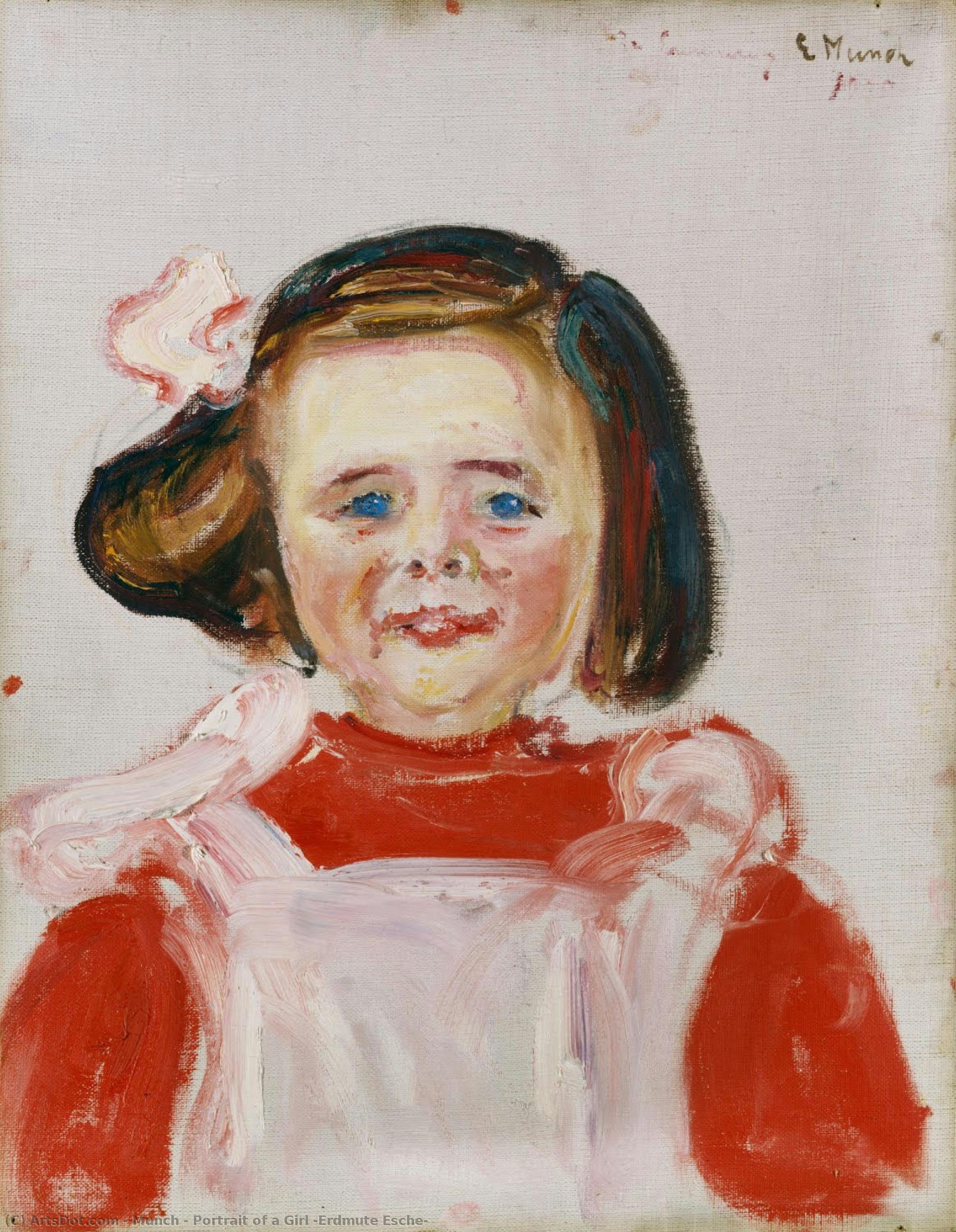
Explore Edvard Munch’s 'Portrait of a Girl (Erdmute Esche)' – a tender 1905 Impressionist piece capturing childhood innocence. Oil, impasto & soft lighting evoke warmth and emotion.
Explore Edvard Munch (1863-1944), pioneer of Expressionism! Discover 'The Scream' & art exploring anxiety, mortality, love & psychological themes.
Explore the Kunsthaus Zürich's diverse collection spanning centuries! From Monet to Giacometti & modern masterpieces, experience Swiss and international art in a stunning architectural setting.
A Glimpse into Childhood: Edvard Munch’s Portrait of Erdmute Esche
This captivating portrait, *Portrait of a Girl (Erdmute Esche)*, painted in 1905, offers a tender and intimate glimpse into the world of childhood as seen through the eyes of Expressionist master Edvard Munch. Measuring just 41 x 32 cm, this work possesses an immediacy and emotional resonance that belies its modest size. It’s more than simply a likeness; it's a study in capturing fleeting emotion and the essence of youth.
Subject & Historical Context
The sitter is Erdmute Esche, later Erdmute Luchsinger, depicted as a young girl. The painting was created during a period when Munch was increasingly interested in portraying human relationships and psychological states. Interestingly, the Esche family had a connection to another prominent artist of the era – Henry van de Velde, who designed furniture for them. This detail places the portrait within a network of artistic and intellectual circles at the turn of the 20th century. The artwork also serves as a study for children's portraits, indicating Munch’s exploration of this subject matter.
Style & Technique
Munch’s signature style is immediately recognizable in this work. While leaning towards Post-Impressionism, the painting showcases his developing Expressionist tendencies. The brushstrokes are loose and visible, creating a textured surface that emphasizes the spontaneity of the artistic process. Impasto effects – where paint is applied thickly – add depth and tactile quality to the piece. He masterfully uses color and light rather than precise detail, prioritizing emotional impact over photographic realism. The composition centers on Erdmute’s face, drawing the viewer's attention directly to her expression and gaze.
Color Palette & Composition
The painting is dominated by a warm palette of reds, whites, and pinks, complemented by earthy browns. These colors contribute to the overall sense of warmth and intimacy. The girl’s red dress and white apron with pink accents create a focal point within the composition. Munch employs subtle variations in tone and color to suggest depth, despite the relatively simple perspective – a frontal view that enhances the directness of her gaze. The soft, diffused lighting, likely from an unseen window, gently highlights her features, particularly her eyes and cheeks.
Symbolism & Emotional Impact
At its core, *Portrait of a Girl (Erdmute Esche)* embodies the symbolism of innocence and childhood. The girl’s expression is open and engaging, inviting the viewer into her world. Munch's ability to convey emotion through color, brushwork, and composition creates a powerful emotional connection with the subject. The painting evokes feelings of nostalgia, tenderness, and perhaps even a hint of melancholy – themes frequently explored in Munch’s oeuvre.
A Piece for Collectors & Designers
This artwork is not only a significant piece within Edvard Munch's body of work but also a beautiful addition to any art collection or interior space. Its intimate scale and warm color palette make it suitable for both private residences and curated gallery settings. A high-quality reproduction would bring the emotional depth and artistic brilliance of Munch’s vision into any home, offering a timeless piece that sparks conversation and inspires contemplation. The signature "E. Munch 190..." in the upper right corner confirms its authenticity and historical value.