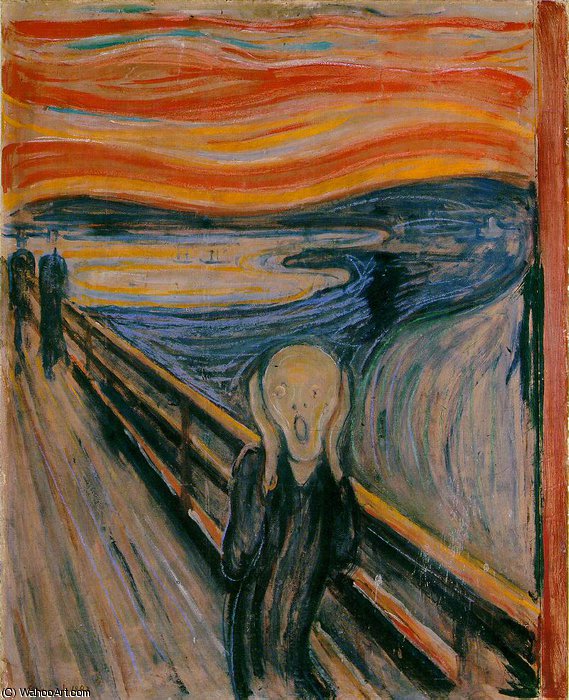
Edvard Munch’s “Skriet Olja, NG Oslo”: An Exploration of Existential Anguish
“Skriet Olja, NG Oslo,” often referred to simply as "The Scream," is arguably Edvard Munch's most iconic work and a cornerstone of Expressionism. Painted in 1893, this oil on canvas transcends mere representation; it embodies the raw, visceral experience of existential dread and psychological turmoil. Measuring 92 x 74 cm, the painting’s relatively modest size belies its monumental impact on art history and popular culture.
Style and Technique: Expressionism at Its Peak
“Skriet” exemplifies the core tenets of Expressionism, an artistic movement that emerged in the late 19th and early 20th centuries as a reaction against Impressionism’s focus on objective observation. Instead of depicting external reality accurately, Expressionist artists sought to convey their inner emotional states through distorted forms, exaggerated colors, and subjective perspectives. Munch achieved this effect through a deliberate manipulation of technique. The painting's swirling brushstrokes create a sense of dynamism and instability, mirroring the protagonist’s internal chaos. The vibrant, unnatural hues – fiery oranges, blood reds, and sickly yellows – further amplify the emotional intensity. The use of thin layers of oil paint allows for transparency and blending, contributing to the ethereal quality of the scene.
Historical Context: Fin-de-Siècle Anxiety
“Skriet” emerged during a period of profound social and intellectual upheaval known as the fin de siècle (end of century). The late 19th century was marked by rapid industrialization, urbanization, and scientific advancements that challenged traditional beliefs and values. This era witnessed a growing sense of anxiety and uncertainty about the future, fueled by philosophical currents such as Nietzsche’s proclamation of “God is dead” and Freud's exploration of the unconscious mind. Munch tapped into this collective mood of disillusionment and despair, creating an image that resonated deeply with his contemporaries and continues to speak to audiences today.
Symbolism and Emotional Impact: A Universal Cry
The painting’s symbolism is both personal and universal. The central figure, often mistakenly assumed to be screaming, is actually recoiling in horror, covering its ears as if trying to block out a terrifying sound. Munch himself described the experience that inspired “Skriet” as feeling a "great scream in nature." The two figures walking along the bridge in the background are oblivious to the protagonist’s anguish, highlighting the sense of isolation and alienation that permeates modern life. The undulating landscape, with its swirling sky and distorted perspective, further contributes to the painting's unsettling atmosphere. “Skriet” evokes a profound sense of dread, anxiety, and existential despair – emotions that are universally relatable across cultures and generations. It is not merely a depiction of fear; it is an embodiment of the human condition itself.
Legacy: An Enduring Icon
“Skriet Olja, NG Oslo” has become one of the most recognizable images in art history, transcending its status as a painting to achieve iconic status in popular culture. Its enduring appeal lies in its ability to capture the raw, visceral experience of existential angst – a feeling that continues to resonate with audiences today. The painting’s influence can be seen across various artistic disciplines, from film and literature to music and graphic design. It remains a powerful testament to the expressive potential of art and its capacity to illuminate the darkest corners of the human psyche.