A Glimpse into a Soul: Edvard Munch’s ‘The Girl by the Window’
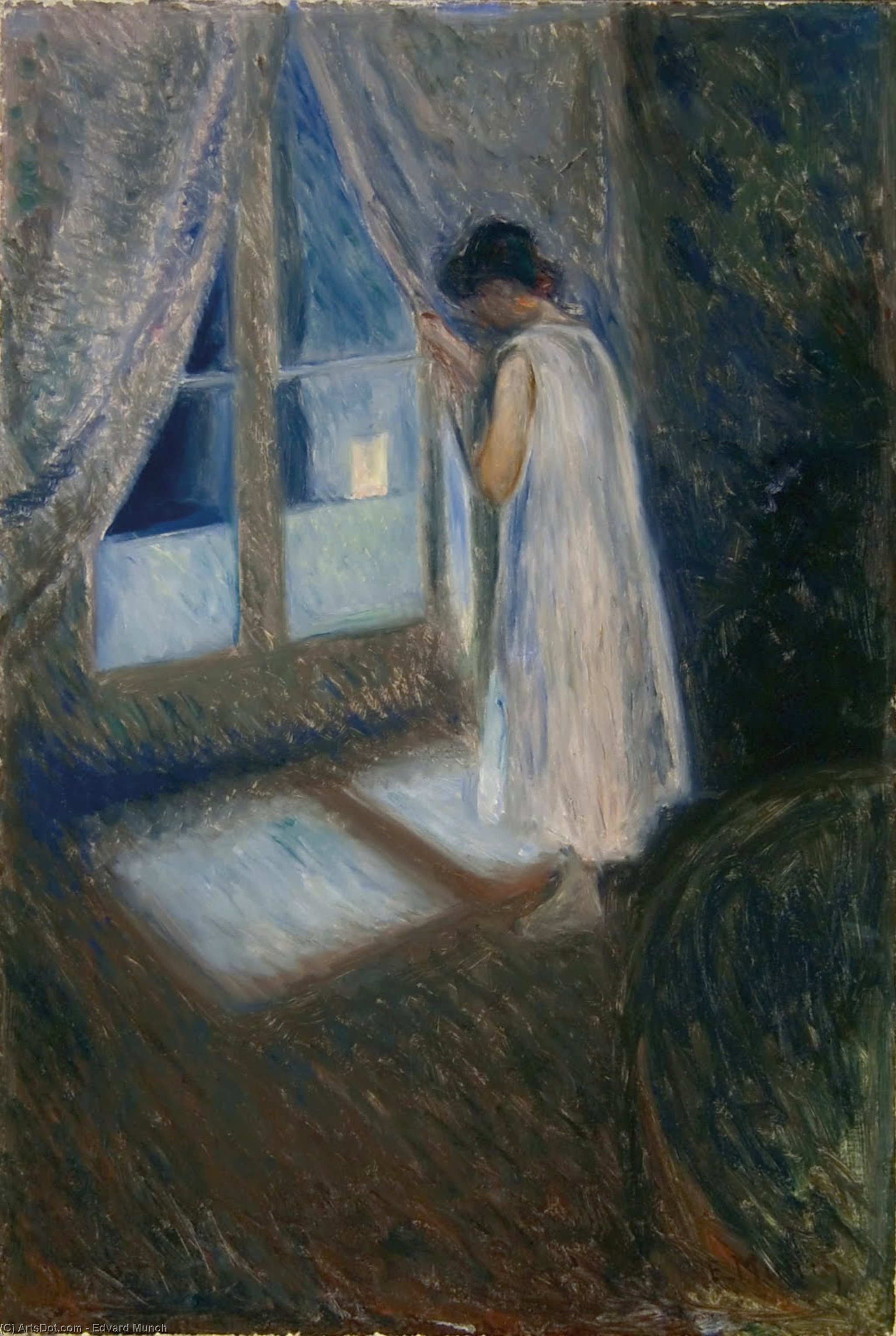
Edvard Munch's “The Girl by the Window,” painted in 1893, isn’t merely a portrait; it’s a distilled essence of anxiety and introspection – a window directly into the artist’s own turbulent psyche. Housed within the walls of the Art Institute of Chicago, this oil-on-canvas masterpiece stands as a pivotal example of Symbolism, an artistic movement that sought to represent inner realities rather than external appearances. More than just depicting a young woman gazing out a window, Munch captures a profound sense of isolation and unspoken longing, utilizing color, composition, and the very ambiguity of her expression to evoke a powerful emotional response.
The painting immediately draws the viewer in with its muted palette – deep browns, violets, and blues dominate, creating an atmosphere of twilight melancholy. The figure herself is rendered with a deliberate lack of detail; her face remains obscured by shadow, preventing us from fully grasping her emotions while simultaneously amplifying our own sense of unease. This strategic ambiguity is characteristic of Symbolist art, which prioritized suggestion over explicit representation. The steep angle of the floor and the enveloping darkness within the room contribute to a claustrophobic effect, mirroring the psychological state of the subject – trapped between an interior world of sorrow and an unknown exterior.
The Roots of Anxiety: Munch’s Personal Landscape
To fully appreciate “The Girl by the Window,” it's crucial to understand the context of Edvard Munch’s life. Born in 1863 amidst a backdrop of profound loss – his mother and sister succumbed to tuberculosis early on – Munch carried an enduring preoccupation with mortality, illness, and the fragility of human existence. This wasn’t simply biographical detail; these experiences became the very foundation of his artistic vision, fueling a relentless exploration of the inner landscape of fear, grief, and longing. His father's strict religious beliefs and his own struggles with mental health further intensified this sense of dread, shaping not only his personal life but also the symbolic language he employed in his art.
Munch’s work during this period—including “The Scream,” a globally recognized icon of existential angst—reflects a deep engagement with psychological themes. “The Girl by the Window” can be seen as a quieter, more introspective cousin to "The Scream," offering a glimpse into the quiet despair that often underlies moments of intense emotional distress. The painting’s power lies in its ability to tap into universal feelings of loneliness and uncertainty, resonating with viewers across generations.
Symbolism and the Language of Emotion
As a Symbolist artist, Munch deliberately eschewed naturalistic representation in favor of conveying subjective emotions and psychological states. The window itself serves as a potent symbol – a barrier between the interior world of the girl and the unknown possibilities (or dangers) that lie beyond. It represents both confinement and a yearning for escape, mirroring the internal conflict at the heart of the painting. The two figures visible in the background—engaged in their own activities—suggest a bustling, indifferent world outside, further emphasizing the girl’s isolation.
Furthermore, Munch's technique – loose brushstrokes and an emphasis on color rather than precise detail – contributes to the painting’s emotional intensity. The colors aren’t meant to depict reality but to evoke feeling—the somber browns representing sadness, the violets hinting at melancholy, and the blues suggesting a sense of foreboding. The overall effect is one of heightened sensitivity and vulnerability, inviting viewers to contemplate their own experiences of loneliness and introspection.
A Timeless Reflection: Reproduction Possibilities
ArtsDot offers meticulously crafted hand-painted reproductions of “The Girl by the Window,” allowing you to bring this iconic artwork into your home or office. Our skilled artists replicate Munch’s evocative style with exceptional attention to detail, capturing the painting's nuanced colors and atmospheric depth. Whether you choose a large-scale statement piece or a smaller, more intimate reproduction, our reproductions provide an authentic representation of this profoundly moving work of art – a timeless reflection on the human condition.