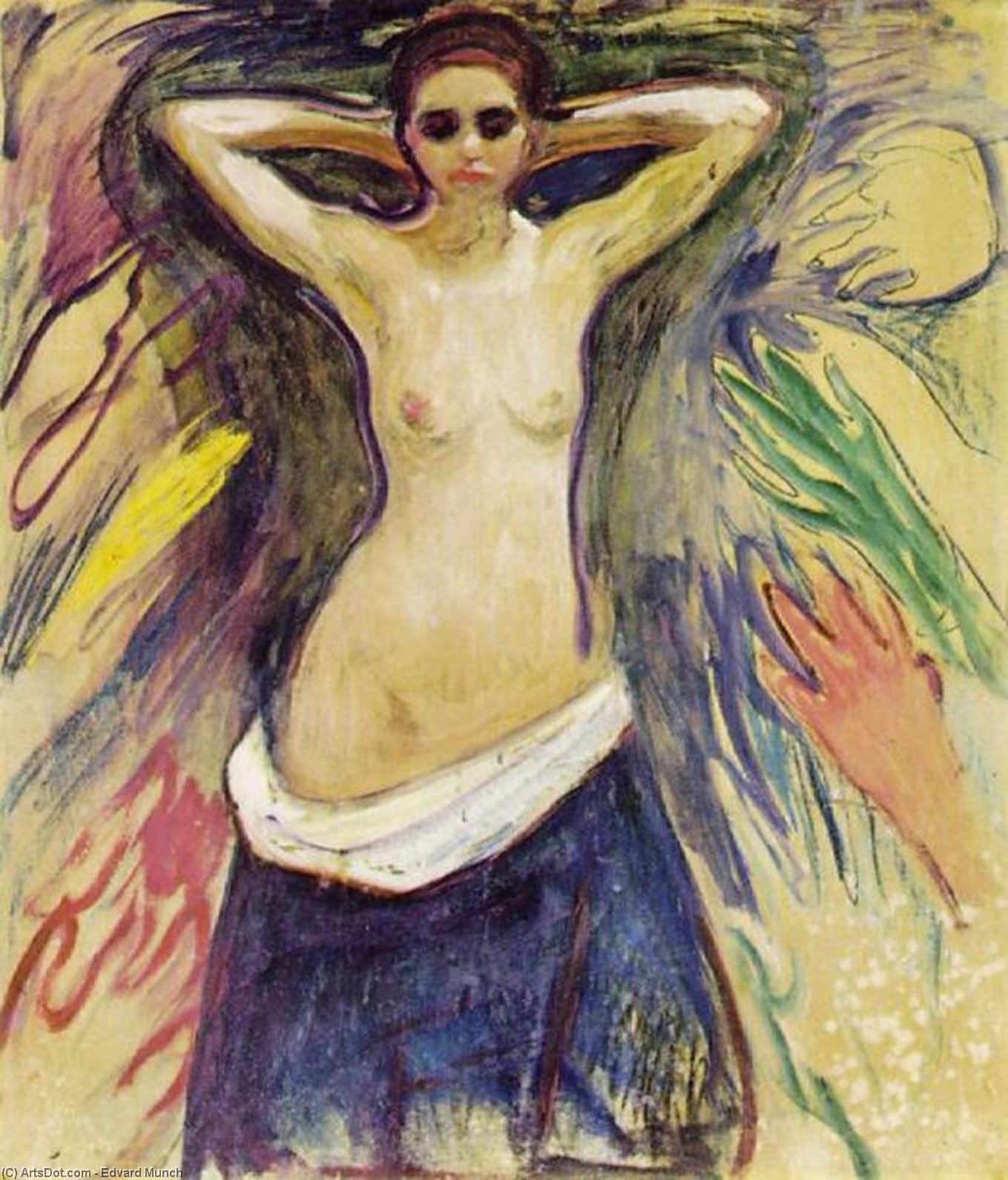
Edvard Munch, a pivotal figure in modern art, is globally renowned for his iconic works that delve into the depths of human emotions. One such masterpiece is
The hands Kommunes Kunstsamlinger, Oslo, created in 1893, which exemplifies the artist's unique blend of symbolism and emotional intensity.
Symbolism and Emotional Depth
"The Hands" is a painting that captures the essence of Munch's symbolic style. The vibrant color palette and the central figure's pose evoke a sense of vulnerability and introspection. The woman, possibly naked or minimally clothed, with her hands on her breasts, conveys a deep emotional state. This gesture can be interpreted as a symbol of self-protection, self-awareness, or even a plea for understanding. In addition to the main subject, two other figures are partially obscured in the background, adding depth and complexity to the painting. These secondary characters serve to underscore the central figure's isolation and her emotional journey.
Artistic Context
Edvard Munch was a key figure in the Expressionist movement, which emphasized subjective emotional experience over realistic representation. His works often reflected his own personal struggles with mental health and loss. "The Hands" can be seen as an expression of these inner turmoils, where the subject's hands symbolize her attempt to grasp or hold onto something intangible.
Relevance in Modern Art
Munch's influence on modern art is profound. His innovative use of color and composition paved the way for future generations of artists. "The Hands" stands as a testament to his ability to capture the human condition through symbolic representation.
Key Points: - The hands Kommunes Kunstsamlinger, Oslo is a symbolist painting by Edvard Munch.
- Created in 1893, it reflects Munch's unique style and emotional depth.
- The central figure's pose and the background characters add complexity to the painting.
- Munch was a pivotal figure in Expressionism, influencing modern art with his subjective and emotionally charged works.
Conclusion
"The Hands Kommunes Kunstsamlinger, Oslo" by Edvard Munch is a masterpiece that encapsulates the artist's symbolic style and emotional intensity. It stands as a powerful example of Expressionist art, reflecting the human experience through vibrant colors and poignant symbolism. For those interested in exploring more of Munch's works,
Skriet Olja, NG Oslo and
Poster for Peer Gynt are notable pieces that showcase his artistic range. Additionally,
Edvard Munch's biography on ArtsDot provides a comprehensive look at his life and contributions to modern art.
This painting is a testament to the enduring power of Munch's art, inviting viewers to reflect on their own emotional journeys.