A Symphony of Solitude: The Melancholy of Munch’s Pier
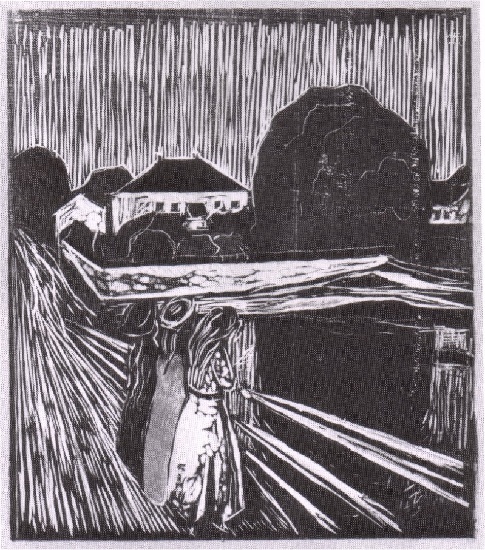
In the quiet, rain-swept moments captured by Edvard Munch in Three Girls on the Pier, we find ourselves transported to a realm where the boundary between the external world and the internal psyche begins to dissolve. This hauntingly beautiful work, rendered in a stark and evocative monochromatic palette, serves as a profound window into the soul of Expressionism. As the rain descends in relentless diagonal streaks across the composition, it does more than merely depict weather; it acts as a veil, separating the three young women from the viewer and immersing them in a shared state of introspective solitude. To gaze upon this piece is to encounter a masterclass in atmosphere, where the absence of color allows the raw, emotional textures of the print to speak with unparalleled clarity.
The composition is a delicate dance of lines and shadows. Munch utilizes strong, vertical, and diagonal strokes to represent the falling rain, creating a sense of dynamic tension that mirrors the underlying existential unease characteristic of his era. The figures themselves are rendered with a deliberate simplicity, their forms softened and somewhat distorted by the atmospheric weight of the storm. This lack of precise anatomical detail is not a failure of skill, but a deliberate stylistic choice to prioritize feeling over fact. By flattening the perspective and compressing the background elements—the distant, obscured houses and the dark expanse of the sea—Munch creates a sense of claustrophobia that heightens the vulnerability of the subjects, making their isolation feel both physical and spiritual.
The Weight of History and the Language of Emotion
To truly appreciate this masterpiece, one must understand the turbulent era from which it emerged. At the dawn of the 20th century, the rapid pace of industrialization and the looming shadows of global conflict left many artists grappling with a profound sense of displacement. Munch, a pioneer of the Expressionist movement, rejected the serene, light-filled aesthetics of Impressionism in favor of what he called "soul painting." He sought to capture the tremors of the human heart—the grief, the anxiety, and the fleeting moments of profound loneliness. In Three Girls on the Pier, every grain of ink and every heavy shadow serves this purpose, transforming a simple scene of everyday life into a universal symbol of human fragility.
For the discerning collector or interior designer, this artwork offers much more than mere decoration; it provides an emotional anchor for a space. The monochromatic tones and the somber, sophisticated mood make it an exquisite addition to a curated gallery wall or a focal point in a minimalist study. It possesses a timeless quality that transcends trends, inviting conversation and deep reflection. Whether displayed as a high-quality lithographic reproduction or a textured print, the piece retains its ability to command attention through its quiet intensity, offering a sense of depth and intellectual gravity that enriches any environment it inhabits.