Explore Edvard Munch (1863-1944), pioneer of Expressionism! Discover 'The Scream' & art exploring anxiety, mortality, love & psychological themes.
Explore the world's largest collection of Edvard Munch’s art at Oslo’s MUNCH Museum! Discover iconic works like *The Scream*, contemporary exhibits, and stunning architecture on the Oslofjord.
A Solitary Vision: Exploring Edvard Munch’s “Young Woman on the Shore”
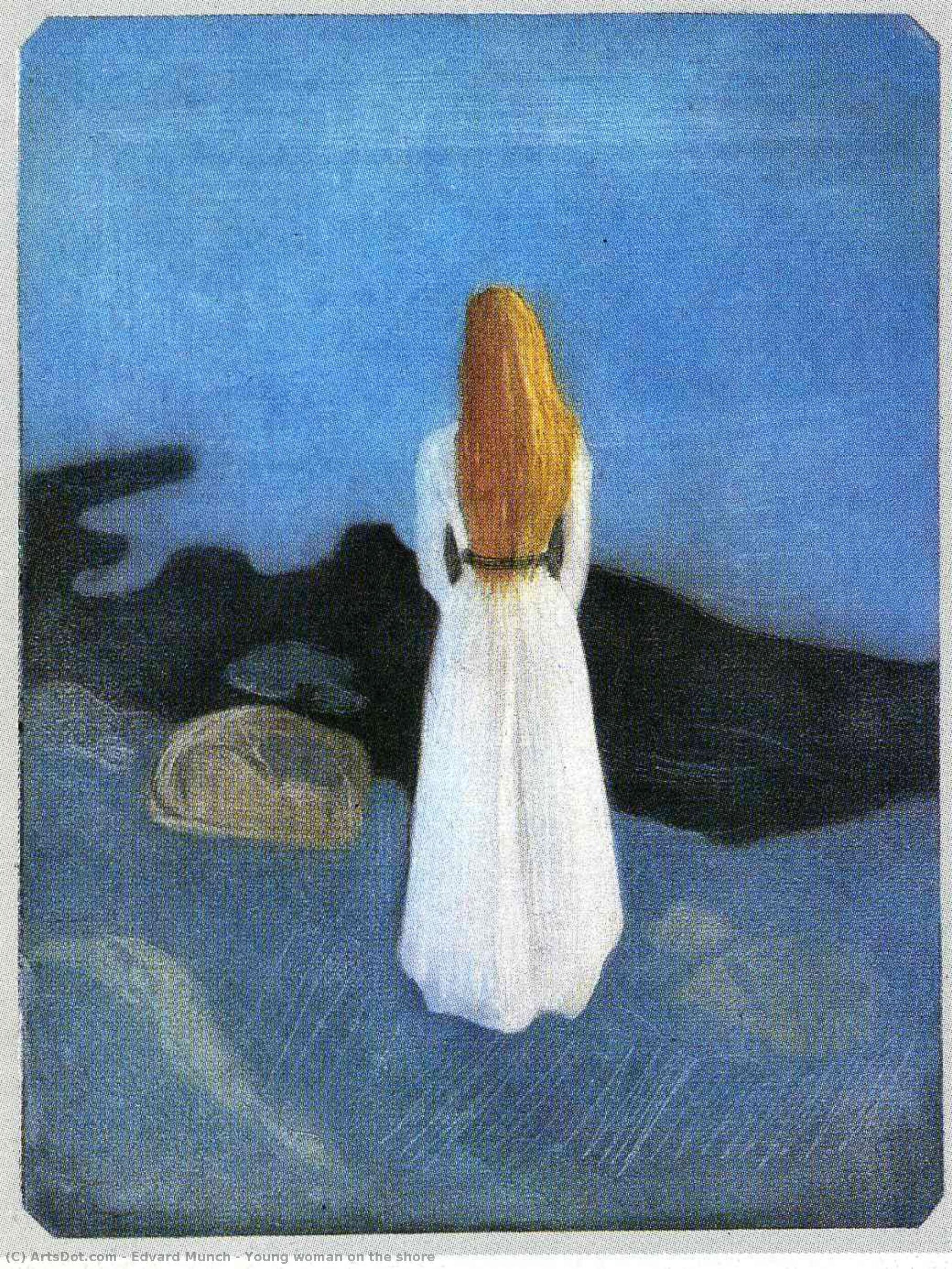
“Young Woman on the Shore,” painted in 1896, is a powerful and evocative work by Norwegian artist Edvard Munch – a cornerstone of Expressionism. Measuring an impressive 288 x 219 cm, this painting commands attention not merely through its scale but through the raw emotion it conveys.
Subject & Composition
The artwork depicts a lone female figure standing on a beach or shoreline, her back turned to the viewer. This deliberate positioning immediately establishes a sense of introspection and detachment. The composition is dramatically dominated by both the woman’s form and the swirling, turbulent sky above. Munch minimizes depth, flattening the perspective to emphasize the two-dimensional plane and heighten the emotional impact. Rocks are suggested along the shore, but they serve primarily as grounding elements within an otherwise ethereal scene.
Style & Technique
“Young Woman on the Shore” is deeply rooted in the Expressionist movement, sharing stylistic affinities with Munch’s most famous work, “The Scream.” Key characteristics include simplified forms, gestural brushstrokes, and a deliberate distortion of reality to convey inner psychological states. The technique employs oil paint applied with broad strokes, creating an impressionistic effect despite the overall simplification. Texture appears smooth, suggesting blended colors rather than distinct layering. Lines are loose and agitated, contributing to the painting’s restless energy.
Historical Context & Artistic Influences
Munch created this work during a period of significant personal turmoil and artistic experimentation. Born in 1863, his childhood was marked by loss – the early deaths of his mother and sister from tuberculosis profoundly impacted his worldview. He studied at the Royal School of Art and Design in Kristiania (Oslo) and was influenced by nihilist philosophy which encouraged artists to explore their inner emotional landscapes. Exposure to Post-Impressionists like Gauguin and Van Gogh during travels abroad further shaped his artistic vision, particularly their bold use of color and emotive power.
Symbolism & Emotional Impact
The painting is rich in symbolic meaning. The woman’s back-facing posture suggests a withdrawal from the world, a deep immersion in her own thoughts and feelings. The turbulent sky can be interpreted as representing inner turmoil or an overwhelming sense of existential dread. The cool color palette – dominated by blues and whites with darker accents – reinforces the somber mood.
Themes of loneliness, contemplation, and perhaps even despair are central to the work’s emotional resonance. It's a visual representation of *Weltschmerz* - world-weariness.
Collecting & Interior Design
“Young Woman on the Shore” is an exceptional example of Munch’s mastery and a significant piece within the Expressionist canon. A high-quality reproduction of this artwork would serve as a striking focal point in any interior space. Its cool tones lend themselves well to modern or minimalist settings, while its emotional depth adds complexity and intrigue.
- Ideal for: Living rooms, bedrooms, studies, or contemplative spaces.
- Complements: Modern furniture, neutral color palettes, and natural textures.
- Evokes: A sense of introspection, tranquility, and artistic sophistication.
This painting is a testament to Munch’s ability to translate profound emotional experiences into visual form – a hauntingly beautiful work that continues to resonate with viewers today.