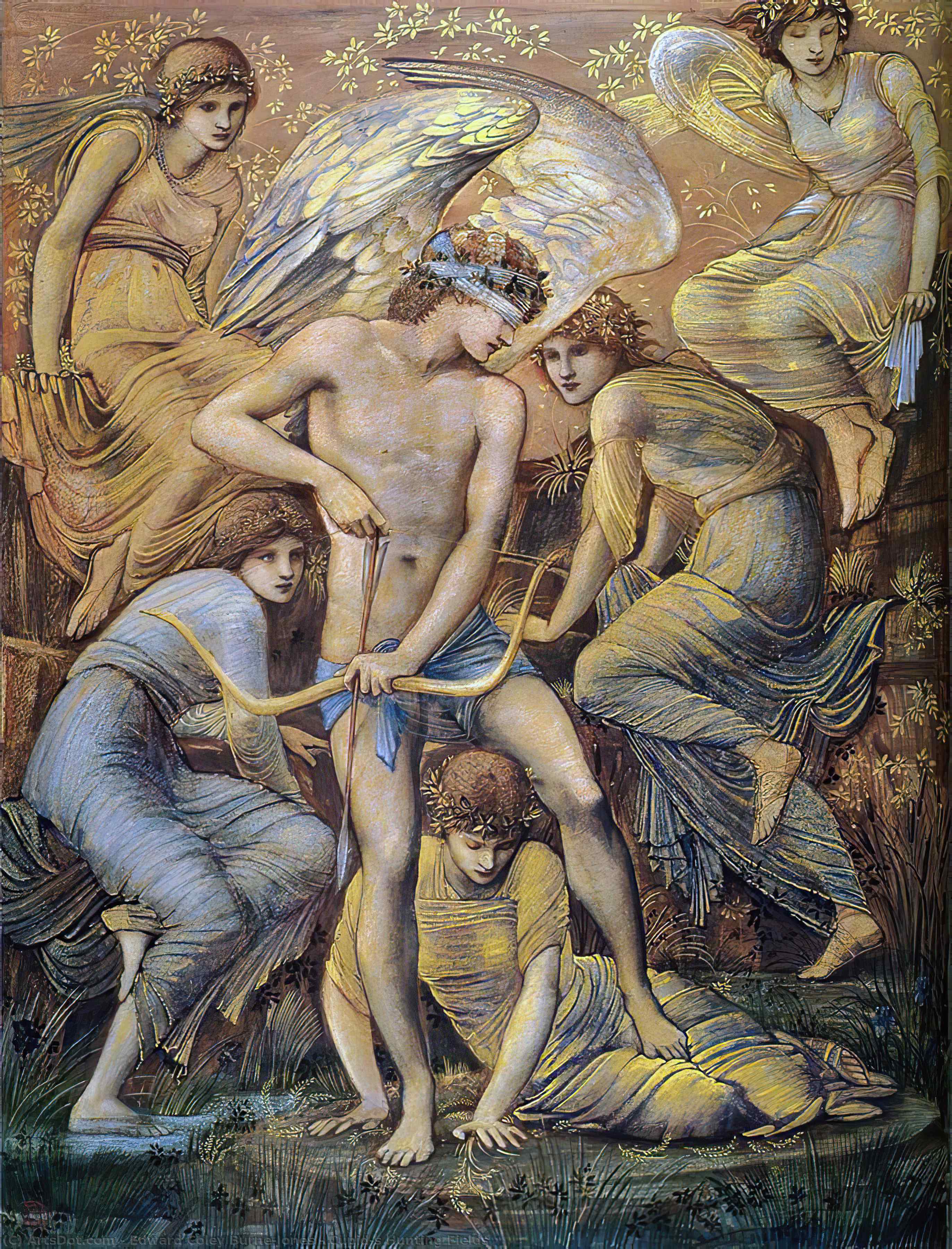
Cupid's Hunting Fields: A Pre-Raphaelite Reverie
Edward Coley Burne-Jones’s “Cupid’s Hunting Fields” is more than simply a depiction of a mythological scene; it’s an immersion into the very heart of Pre-Raphaelite ideals – a yearning for beauty, a reverence for medieval art, and a profound engagement with themes of love, innocence, and the natural world. Painted during a period of immense social and artistic change in Victorian England, this work exemplifies Burne-Jones's mastery of color, composition, and narrative storytelling. The canvas breathes with a quiet intensity, inviting the viewer to step into a timeless realm where gods and mortals intertwine amidst a landscape of idyllic serenity.
Composition and Narrative
The painting’s strength lies in its carefully constructed narrative. At its core is Cupid, the emblem of desire, surrounded by a chorus of angels and nymphs – figures rendered with an almost unsettling realism, a deliberate rejection of the idealized forms favored by earlier artistic traditions. Burne-Jones meticulously arranges these characters within a lush green field, creating a sense of depth and movement. The poses are deliberately graceful, some standing in contemplative stillness, others engaged in playful interactions, while a few rest languidly, suggesting a timeless moment of repose. The inclusion of objects – bows and arrows held by several figures – subtly reinforces Cupid’s role as the divine messenger of love, adding layers of symbolic meaning to the scene.
Technique and Color Palette
Burne-Jones was renowned for his meticulous technique, a hallmark of the Pre-Raphaelite Brotherhood. “Cupid’s Hunting Fields” showcases this skill through its incredibly detailed rendering of fabrics, skin tones, and foliage. The artist employed a rich, saturated color palette – deep greens, warm reds, and shimmering golds – to evoke a sense of opulence and otherworldly beauty. His use of light is particularly noteworthy, casting soft shadows that enhance the three-dimensionality of the figures and create an atmosphere of ethereal grace. The brushwork itself is visible in places, adding to the painting’s tactile quality and reinforcing its connection to the artist's hand.
Symbolism and Historical Context
Created within the context of the Pre-Raphaelite movement, “Cupid’s Hunting Fields” reflects a deliberate reaction against the perceived mechanistic approach of contemporary art. The Brotherhood sought to revive the spirit of Quattrocento Italian painting – characterized by its emotional intensity, detailed observation of nature, and symbolic richness. Burne-Jones's work aligns with this ethos, drawing inspiration from medieval iconography while simultaneously exploring themes relevant to Victorian society. The scene can be interpreted as a meditation on love’s transformative power, innocence lost, and the eternal quest for beauty – concepts that resonated deeply within the Victorian imagination.
A Timeless Masterpiece
"Cupid's Hunting Fields" remains a powerful testament to Burne-Jones's artistic vision and the enduring appeal of Pre-Raphaelite aesthetics. Its evocative imagery, masterful technique, and profound symbolism continue to captivate viewers today. A hand-painted reproduction offers an unparalleled opportunity to experience the full beauty and emotional depth of this iconic artwork.