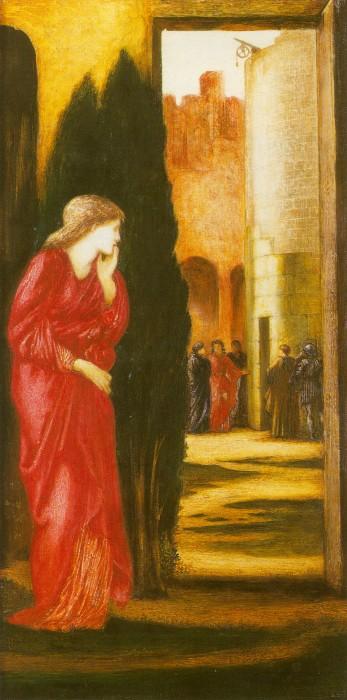
Admire Danae and the Brazen Tower by Edward Burne-Jones – a Pre-Raphaelite masterpiece depicting myth & beauty. Explore Oxford's Ashmolean Museum and discover Burne-Jones’ iconic style.
Discover the enchanting Pre-Raphaelite art of Edward Burne-Jones (1833-1898). Explore his mythical paintings, stained glass & Aesthetic Movement designs.
Explore art & archaeology spanning millennia at the Ashmolean Museum! Discover Egyptian mummies, Pre-Raphaelite masterpieces & more – free admission awaits!
Danae and the Brazen Tower: A Pre-Raphaelite Masterpiece
Edward Coley Burne-Jones’s *Danae and the Brazen Tower*, completed in 1887, stands as a cornerstone of the Pre-Raphaelite movement's fascination with mythology and its masterful execution. More than just a depiction of biblical narrative—the story recounts Zeus’s seduction of Danaë, daughter of King Acrisius of Argos, resulting in Zeus impregnating her with Perseus—the painting delves into profound themes of despair, longing, and the inescapable grip of fate, rendered with breathtaking detail and luminous color. Burne-Jones's artistic vision sought to recapture the spirit of medieval art, rejecting the academic conventions prevalent at the time and prioritizing emotional resonance over mere imitation.
The Mythical Narrative: Zeus’s Temptation and Perseus’s Birth
At its core lies the tale of Zeus’s irresistible desire for Danaë, a virtuous princess whose father, fearing prophecy, imprisoned her in a tower to safeguard his lineage. Despite the oppressive confinement, Danaë gazes upwards with unwavering resolve, embodying resilience against adversity. The tower itself—constructed from bronze, symbolizing strength and divine authority—becomes a visual metaphor for both imprisonment and aspiration. Burne-Jones meticulously portrays Zeus’s arrival, depicted as a radiant figure descending from the heavens, highlighting the clash between earthly suffering and celestial power. This dramatic scene underscores the central conflict: Danaë's yearning for freedom juxtaposed against the inescapable influence of divine intervention.
Technique and Artistic Style: Pre-Raphaelite Luminosity
Burne-Jones employed oil on panel—a favored medium among Pre-Raphaelites—to achieve an unparalleled level of luminosity and textural richness. His brushstrokes are deliberate, conveying a sense of movement and capturing the subtle nuances of emotion. The color palette is dominated by warm reds and golds, reflecting Danaë’s inner turmoil and hinting at Perseus's imminent arrival. Burne-Jones skillfully utilized chiaroscuro—the dramatic interplay between light and shadow—to sculpt form and heighten visual impact, drawing inspiration from medieval illuminated manuscripts. This technique elevates the painting beyond mere representation, transforming it into a conduit for conveying psychological depth and spiritual contemplation.
Symbolism: Light, Darkness, and Divine Presence
The painting is replete with symbolic elements that enrich its narrative significance. The tower’s bronze hue symbolizes Zeus's dominion and represents both imprisonment and protection—a paradoxical emblem of Danaë’s predicament. Conversely, the radiant light emanating from Zeus embodies divine grace and offers a glimmer of hope amidst despair. Burne-Jones’s masterful composition directs the viewer’s gaze upwards, mirroring Danaë’s longing for transcendence. The subtle depiction of Perseus—represented as a small figure nestled amongst the foliage—symbolizes the promise of deliverance and reinforces the overarching theme of overcoming adversity through faith and perseverance.
Legacy and Significance: An Aesthetic Icon
Currently housed in the Ashmolean Museum in Oxford, *Danae and the Brazen Tower* remains an enduring testament to Burne-Jones’s artistic genius and the Pre-Raphaelite movement's commitment to elevating art beyond mere decorative function. Its influence extends far beyond its time, inspiring artists and designers alike with its evocative imagery and profound exploration of human emotion. Reproductions of this masterpiece continue to captivate audiences worldwide, cementing its place as an iconic symbol of Victorian artistic idealism—a timeless reminder that beauty can emerge from darkness and that aspiration transcends physical limitations.