A Vision of Mythic Embrace: Exploring Burne-Jones's Poetic Narrative
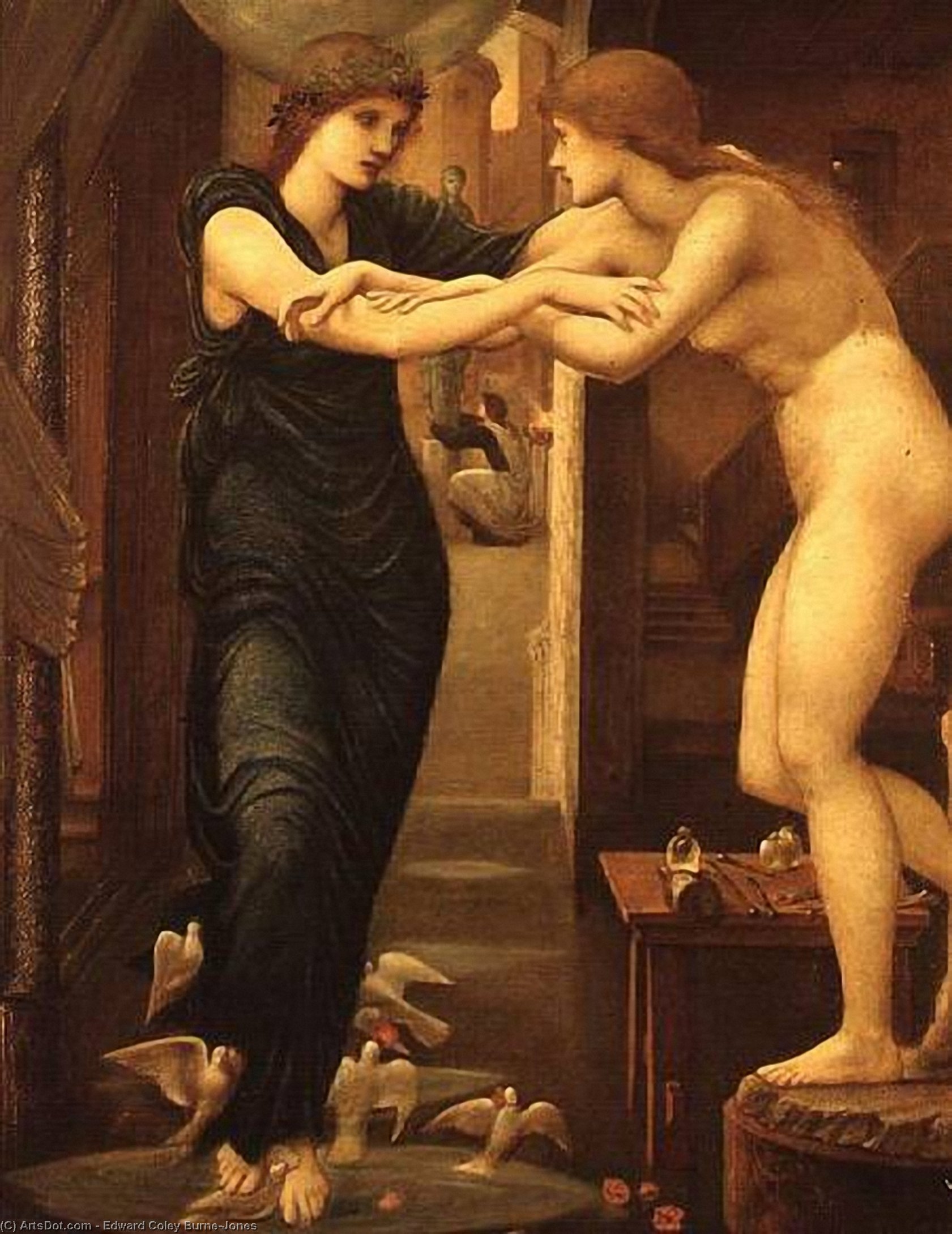
To stand before Edward Coley Burne-Jones’s The Godhead Fires, Pygmalion is to step across the threshold into a dream rendered in pigment and shadow. This work is not merely a depiction of figures; it is an immersion into the delicate tension between divine grace and earthly struggle. The composition immediately draws the eye to the central embrace—a moment charged with unspoken narrative. One figure, radiating an ethereal quality suggestive of divinity, holds fast to another whose posture speaks volumes of resistance or perhaps reluctant surrender. Burne-Jones masterfully captures this dynamic interplay, presenting a scene steeped in mythological resonance that has captivated art lovers for generations.
The Allure of Symbolism and Form
At the heart of the painting’s mystery lies its rich tapestry of symbolism. The interaction between the goddess and the mortal woman suggests themes perennial to human experience: the pull between fate and free will, the nature of creation, or perhaps the transformative power of divine love. Complementing this central drama is the scattering of birds throughout the canvas. These avian elements are more than mere decoration; they act as living witnesses, injecting an organic vitality into the otherwise sublime encounter. They flutter in the foreground and drift toward the background, guiding the viewer's eye through the intricate depth that Burne-Jones achieved with such meticulous care.
Technique and the Aesthetic of the Late Victorian Era
Burne-Jones’s style is deeply rooted in the romanticism that followed the High Renaissance, yet it carries a distinct, melancholic beauty characteristic of the late Victorian period. His technique favors line and atmosphere over stark realism, lending the entire scene an almost dreamlike luminescence. The handling of color, though perhaps muted by time or reproduction, speaks to a palette designed to evoke deep emotion rather than simply record light. For those considering a hand-painted reproduction, understanding this delicate balance—the marriage of narrative poetry with academic finish—is key; it allows the piece to function both as high art and as a profound source of domestic inspiration.
Emotional Resonance for the Modern Collector
This artwork possesses an undeniable emotional gravity. It whispers tales of longing, transformation, and the sublime mystery that underpins human connection. For the collector or designer seeking a focal point imbued with intellectual depth, The Godhead Fires, Pygmalion offers unparalleled richness. It does not shout its meaning; rather, it invites quiet contemplation. To bring this piece into a space is to invite a sense of timeless romance and artistic contemplation, transforming a room into a sanctuary echoing the beautiful ambiguities captured by Burne-Jones.