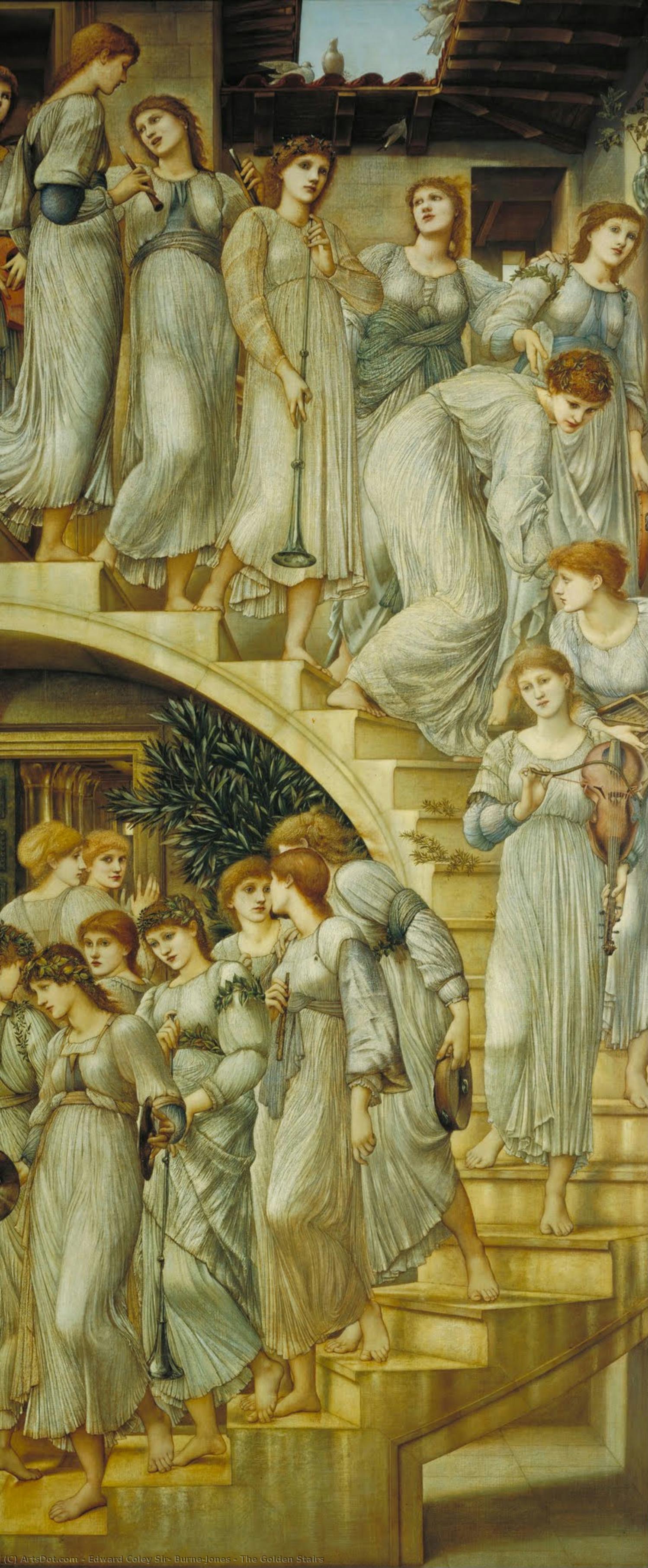
Edward Burne-Jones’s luminous ‘The Golden Stairs,’ a Pre-Raphaelite masterpiece from 1880, captures ethereal beauty and spiritual contemplation through masterful glazing—a breathtaking depiction of women ascending a floral staircase towards enlightenment.
A Dream Woven in Color: The Golden Stairs
Edward Coley Burne-Jones’s “The Golden Stairs,” completed in 1880, stands as a cornerstone of Pre-Raphaelite art and embodies the Aesthetic Movement's fascination with mythic narratives and idealized beauty. More than just a depiction of women descending a staircase—though that visual element is undeniably striking—the painting delves into profound themes of spirituality, feminine grace, and the pursuit of artistic perfection.
- Subject Matter: The scene portrays a group of young women gracefully traversing a monumental staircase adorned with intricate floral motifs. These figures are not merely present; they embody an ethereal presence, radiating serenity and contemplation.
- Style & Technique: Burne-Jones meticulously employs oil paint on canvas, utilizing a technique characterized by luminous glazing—a layering process that imbues the artwork with remarkable depth and vibrancy. The artist’s masterful brushwork captures subtle nuances of light and shadow, creating an atmosphere of palpable stillness.
- Historical Context: Painted during Burne-Jones's prolific artistic period, “The Golden Stairs” reflects the broader cultural currents of Victorian England. It aligns perfectly with the Pre-Raphaelite Brotherhood’s rejection of academic conventions and embrace of medieval inspiration—a movement that sought to recapture the spiritual fervor and imaginative spirit of earlier art eras.
- Symbolism: The staircase itself serves as a potent symbol, representing ascension towards enlightenment and divine grace. The musical instruments held by the women underscore the importance of artistic expression and contemplation as pathways to transcendence. Furthermore, Burne-Jones’s deliberate use of color—primarily muted golds and creams—evokes associations with sacred spaces and idealized beauty.
- Emotional Impact: “The Golden Stairs” transcends mere visual representation; it aspires to evoke a feeling of profound tranquility and wonder. The painting's harmonious composition and luminous palette invite viewers into a realm of imaginative contemplation, capturing the essence of Aesthetic ideals—a celebration of beauty as an end in itself.
As Dr. Steven Zucker eloquently observes, “They’re walking down the staircase. They’re holding musical instruments. They’re not really playing them. The horns are held vertically, a finger can be seen.” This detail underscores Burne-Jones's commitment to capturing not just what is visible but also what lies beneath—the intangible spirit of artistic endeavor and spiritual aspiration.
The painting’s enduring popularity inspired Gilbert & Sullivan’s comic operetta “The Mikado,” demonstrating its ability to resonate across genres and captivate audiences with its timeless beauty. Its influence extends beyond the theatrical realm, inspiring interior designers who seek to infuse their spaces with elegance and sophistication—a testament to Burne-Jones's artistic legacy.