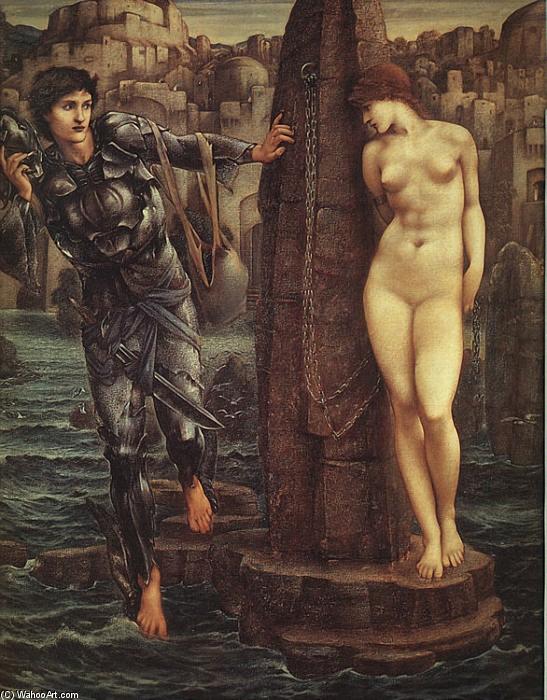
The
Rock of Doom is a captivating oil painting by
Edward Coley Burne-Jones, created in 1888. This artwork is a quintessential representation of Romanticism, a style that emphasizes strong emotions and imagination. At https://ArtsDot.com, we offer high-quality handmade oil paintings reproductions of this masterpiece.
The Painting's Background and Significance
The
Rock of Doom is part of Burne-Jones' unfinished series,
The Perseus Cycle, which portrays the classical story of Perseus and the slaying of Medusa. The painting depicts the moment when Perseus encounters Andromeda, naked and chained to a rock, awaiting her fate. This scene is a testament to Burne-Jones' skill in capturing the essence of mysticism and intrigue.
Key Features of the Painting: - The use of oil on canvas, which gives the painting a sense of depth and luminosity
- The intricate details of the characters' clothing and accessories, showcasing Burne-Jones' attention to detail
- The dramatic landscape, with the rocky coastline and the sea in the background, adding to the sense of tension and foreboding
Artistic Style and Influence
Burne-Jones' style is characterized by his use of Romanticism and Pre-Raphaelite elements. His work was influenced by
William Morris and other artists of the time. The
Rock of Doom is a prime example of Burne-Jones' ability to blend mythology and realism, creating a unique and captivating visual experience. You can find more information about
Edward Coley Burne-Jones and his works on https://ArtsDot.com, including other paintings like
The Call of Perseus and
Perseus and the Graiae. The
Plymouth City Museum and Art Gallery also features some of Burne-Jones' works, showcasing his contribution to the world of art.
For a deeper understanding of Romanticism and its influence on art, visit https://ArtsDot.com and explore our collection of handmade oil paintings reproductions.