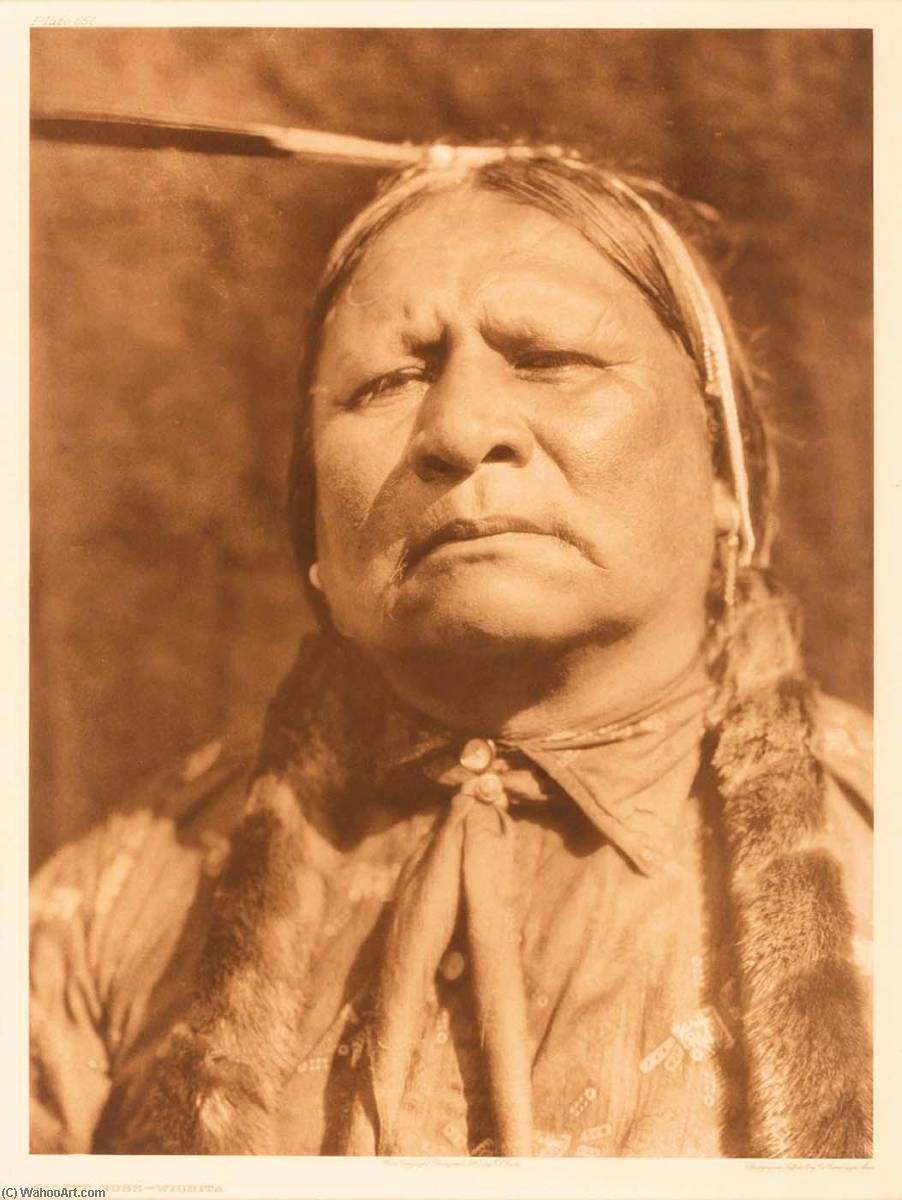
The
Smithsonian American Art Museum is home to a plethora of stunning artworks, including the captivating photograph
Walter Ross Wichita by renowned artist
Edward Sheriff Curtis. This black and white photogravure on tissue, created in 1927, measures 16 1/2 x 12 1/4 inches and is a testament to Curtis's exceptional skill in capturing the essence of Native American culture.
Edward Sheriff Curtis was a prolific photographer who dedicated his life to documenting the lives and traditions of Native American tribes. His work is characterized by a deep respect for the subject matter and a commitment to preserving the history and culture of these communities. The
Walter Ross Wichita photograph is a prime example of Curtis's ability to convey the dignity and strength of his subjects.
Key Features of the Painting: - The photograph features a Native American man, Walter Ross Wichita, adorned in traditional attire, including a feathered headband and necklace.
- The subject's serious expression and direct gaze create a sense of intensity and depth.
- The use of photogravure on tissue gives the image a unique texture and tone, adding to its emotional impact.
Edward Sheriff Curtis's work can be found in various museums and collections, including the
Smithsonian American Art Museum and the
ArtsDot.com collection. For those interested in learning more about Curtis's life and work, the
Wikipedia page provides a comprehensive overview of his career and achievements.
The
Walter Ross Wichita photograph is not only a beautiful work of art but also an important historical document, offering a glimpse into the lives and traditions of Native American communities. As a testament to the enduring power of art, this photograph continues to inspire and educate audiences today.