A Gaze of Unyielding Dignity
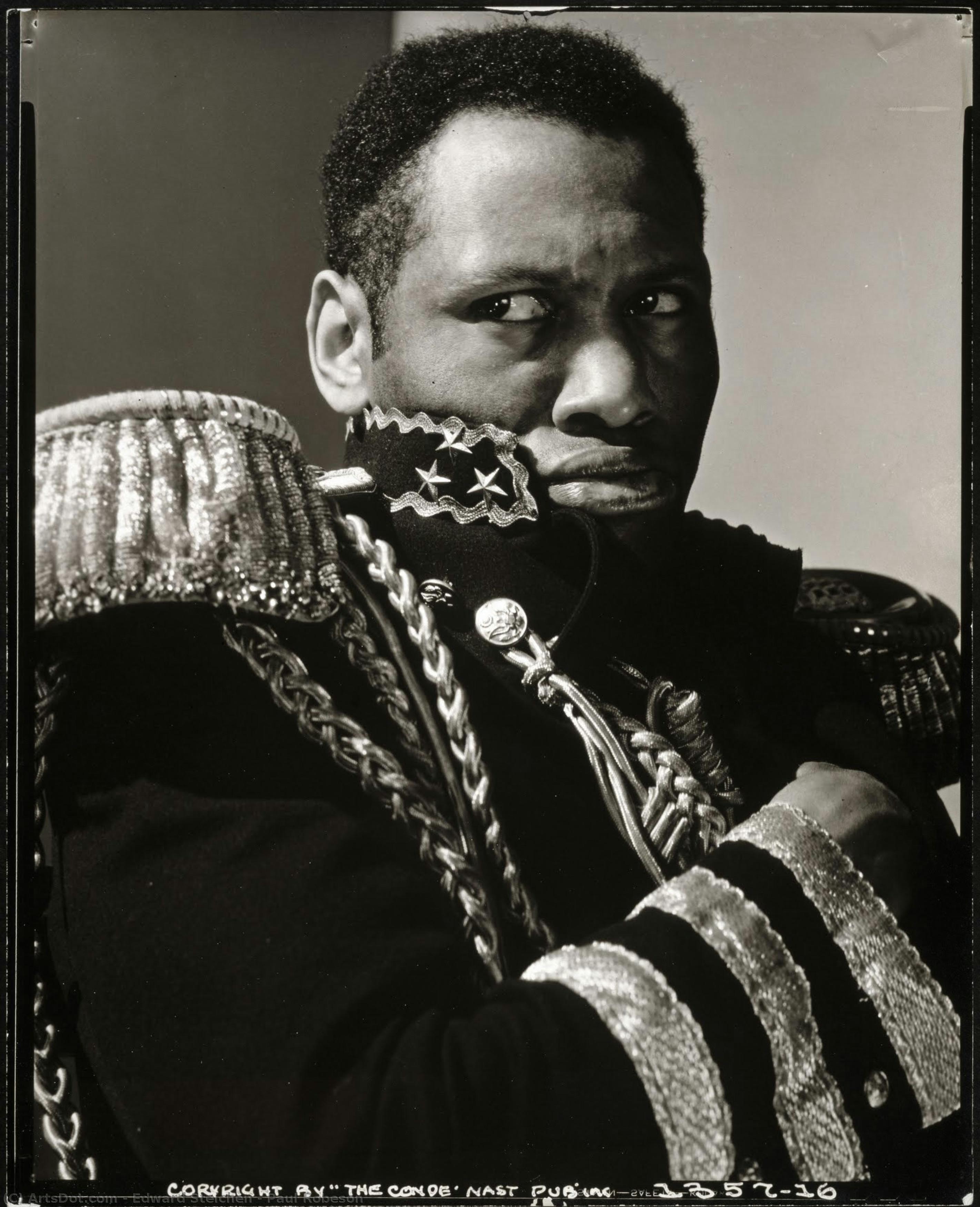
In the quiet, silvered depths of Edward Steichen’s 1933 masterpiece, Paul Robeson as “The Emperor Jones”, we encounter more than a mere photographic record; we witness a profound encounter with human resilience. This striking black and white portrait captures the legendary singer, actor, and civil rights activist at a pivotal moment in his artistic journey. Through Steichen’s masterful use of the gelatin silver printing process, the image breathes with an exceptional tonal range that pulls the viewer into an intimate dialogue with Robeson. The composition is deliberately tight, focusing on the subject's upper torso and head, which forces an inescapable connection between the viewer and the man behind the persona. There is a palpable weight to his presence, a gravity that transcends the frame and speaks to the enduring strength of a soul navigating a turbulent era of racial prejudice and systemic oppression.
The emotional resonance of the piece lies in Robeson’s gaze. He looks squarely into the lens with an intense concentration that oscillates between quiet strength and a hint of defiance. It is a look that demands respect, embodying the very dignity that defined his life and career. For the collector or the designer, this photograph offers a window into a moment where art and activism converged, making it not just a beautiful object of study, but a powerful totem of conviction.
The Alchemy of Light and Shadow
Technically, Steichen demonstrates why he was often regarded as one of the greatest portrait photographers of his age. The photograph utilizes a stark grayscale palette that moves seamlessly from the deepest, velvety blacks to brilliant, piercing whites. This dramatic lighting—a hallmark of mid-2'0th century portraiture—serves to sculpt Robeson’s features, creating a sense of three-dimensional volume and mystery. Strong highlights dance across the contours of his face and the structured edges of his uniform, while enveloping shadows retreat into the background, adding layers of psychological depth.
The interplay of textures is equally mesmerizing. The smoothness of Robeson’s skin provides a soft counterpoint to the intricate, tactile details of his military-style attire. Steichen meticulously captures the fine lines of gold braid on the shoulders, the decorative stitching around the collar, and the glint of ornate buttons. These elements do more than just provide visual interest; they serve as a rich textural tapestry that underscores the grandeur of the "Emperor" persona. The geometric precision of the clothing’s structure contrasts beautifully with the organic, human warmth of the subject, creating a balanced yet visually arresting composition.
A Legacy Captured in Silver
To possess a reproduction of this work is to hold a piece of cinematic and social history. As Robeson portrayed the character of Brutus Jones in Eugene O’Neill’s play, Steichen used his camera to elevate the theatrical role into a metaphor for authority and the complexities of power. The uniform, with its imperial flourishes, acts as a symbolic layer that highlights both the ambition of the character and the societal hierarchies Robeson would later challenge in his real-world activism.
For those looking to curate a space with intellectual depth and emotional gravity, this portrait serves as an exquisite centerpiece. Whether placed in a sophisticated study, a modern gallery-style living room, or a curated design project, the image brings a sense of timelessness and narrative complexity. It is a work that does not merely decorate a wall; it commands the room, inviting contemplation on the intersection of identity, art, and the indomitable human spirit.