Deutsch Im Wald von Valdoniello: A Snapshot of Alpine Resolve
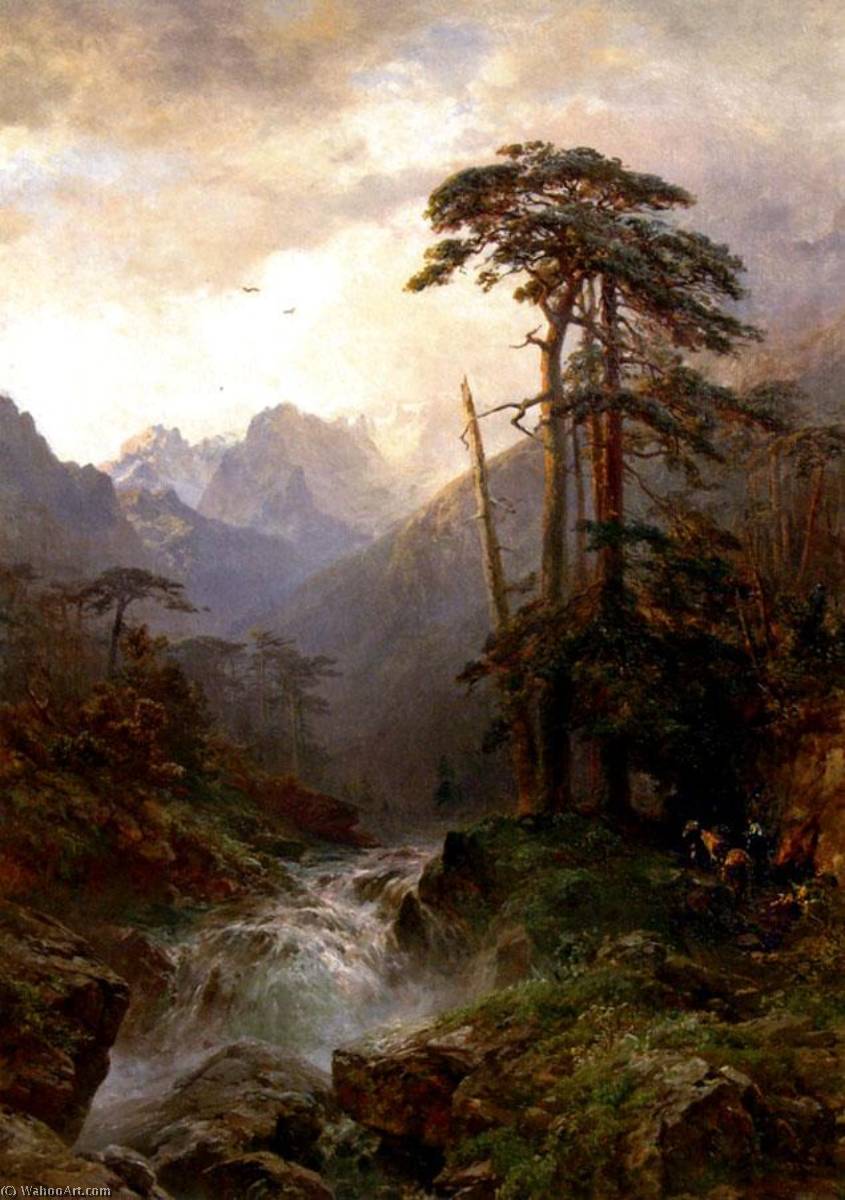
Edward Theodore Compton’s “Deutsch Im Wald von Valdoniello,” painted in 1884, is more than just a landscape; it's a potent distillation of Victorian-era exploration, artistic ambition, and the quiet fortitude required to confront the sublime. This oil on canvas depicts a group of men – likely surveyors or perhaps even early mountaineering pioneers – standing amidst a dense, ancient forest in the Valdoniello region of Germany. The scene is rendered with meticulous detail, characteristic of Compton’s style, showcasing his dedication to capturing not just the visual appearance but also the very *atmosphere* of the Alpine wilderness.
The composition immediately draws the eye towards the central figures, their postures suggesting a moment of deliberation or perhaps even weary contemplation. They are framed by towering pines and fir trees, their dark green hues contrasting sharply with the lighter tones of the sky and distant mountains. The subtle use of light and shadow adds depth to the scene, creating a sense of realism that was highly valued in academic art at the time. Note the careful attention paid to textures – the rough bark of the trees, the worn leather of their clothing, the damp earth beneath their feet – all contributing to an immersive experience for the viewer.
A Window into the Alpine Spirit
Compton’s work emerged during a period of intense interest in exploration and scientific discovery. The late 19th century witnessed a surge in expeditions to uncharted territories, driven by both romantic ideals and practical concerns – mapping resources, establishing trade routes, and, crucially, understanding the natural world. Compton's paintings were frequently commissioned by organizations like the German Alpine Association (DAV), reflecting this broader trend. The painting embodies the spirit of adventure, portraying individuals confronting a challenging environment with determination and skill.
Furthermore, the scene speaks to the burgeoning field of mountaineering itself. While not explicitly depicting a climb, the presence of these men in such a rugged landscape suggests their pursuit of conquering peaks – a symbolic representation of human ambition and resilience. The painting’s quiet dignity reflects the growing respect for nature's power and the courage required to engage with it.
Technique and Style: A Masterful Blend
Compton was renowned for his mastery of watercolor, often employing a technique he called “alpine watercolor,” which involved layering thin washes of color to create luminous effects. This is evident in "Deutsch Im Wald von Valdoniello," where subtle gradations of green and blue evoke the misty atmosphere of the forest. His brushwork is precise yet fluid, conveying both detail and movement. The use of impasto – thick application of paint – adds texture and depth to the trees and rocks, further enhancing the realism of the scene.
The painting’s palette is dominated by cool tones—greens, blues, and grays—which contribute to its sense of tranquility and remoteness. However, flashes of warm color—such as the golden light filtering through the trees—add a touch of drama and highlight the figures' presence within the landscape.
A Timeless Appeal
"Deutsch Im Wald von Valdoniello" transcends its historical context to offer a timeless appeal. It’s a painting that invites contemplation, prompting us to consider our own relationship with nature and the challenges of human endeavor. The scene's quiet strength and evocative atmosphere make it a compelling addition to any collection, offering a glimpse into a bygone era of exploration and artistic brilliance. Its detailed rendering and masterful use of light and shadow continue to captivate viewers today, solidifying Compton’s place as one of the most significant landscape painters of his time.