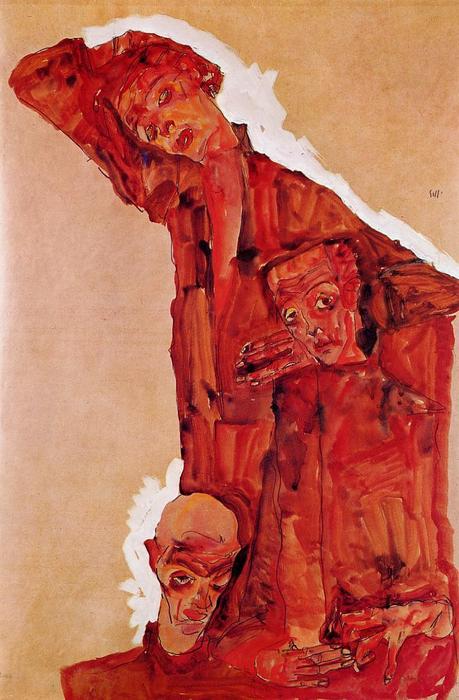
Composition with Three Male Figures (Self Portrait) – An Expressionist Echo of Mortality
Egon Schiele’s “Composition with Three Male Figures (Self Portrait),” painted in 1911, stands as a cornerstone of Austrian Expressionism and a profoundly unsettling meditation on the human condition. More than just a depiction of the artist himself—a rare self-portrait for Schiele—the painting delves into themes of vulnerability, isolation, and confronting death with unflinching honesty.
Style and Technique: Schiele’s distinctive style is immediately recognizable through its bold simplification of form and use of vibrant reds. Departing from Impressionistic nuances, he employs a technique characterized by thick impasto—heavy application of paint—creating textured surfaces that convey palpable emotion. The angular poses of the figures contribute to an overall sense of dynamism and unease, mirroring Schiele’s preoccupation with psychological intensity.
Historical Context: Created during a period marked by artistic experimentation and intellectual ferment in Vienna, “Composition with Three Male Figures” reflects the broader anxieties surrounding the burgeoning modernist movement. The Kunstsalon Franke, where Schiele exhibited his work alongside artists like William Christian Symons—a celebrated decorative designer known for opulent interiors—represented a crucial forum for challenging established conventions.
- Notable Influences: Schiele’s artistic vision was undeniably shaped by Symbolist painters such as Edvard Munch and Odilon Redon, whose exploration of psychological states and symbolic imagery foreshadowed the Expressionist aesthetic.
- Symbolism Within the Image: The dominant red hue isn't merely decorative; it symbolizes passion, desire, but also blood—a potent reminder of mortality and decay. The figures themselves are rendered with meticulous detail, yet their faces convey expressions of profound sadness and apprehension.
Emotional Impact: “Composition with Three Male Figures” transcends mere visual representation to evoke a visceral response in the viewer. Schiele’s masterful manipulation of color and form compels us to confront uncomfortable truths about human existence—the inevitability of suffering, the fragility of beauty, and the inescapable shadow of death. It remains a hauntingly beautiful testament to Schiele's ability to translate inner turmoil into enduring artistic achievement.
- Recommended Reproduction: For those seeking to experience the emotional depth of this masterpiece firsthand, ArtsDot.com offers meticulously crafted oil paintings reproductions that faithfully capture Schiele’s original vision.
- Explore Further Inspirations: Discover similar artistic explorations at William Christian Symons on ArtsDot.com – showcasing exquisite decorative art and design inspired by the Symbolist movement.