Explore the emotionally charged Expressionist art of Egon Schiele (1890-1918): bold portraits, psychological themes & unique lines. Discover reproductions now!
Explore Austrian modernism at the Leopold Museum! Discover masterpieces by Klimt & Schiele, delve into art history, and experience a unique collection within Vienna’s vibrant MuseumsQuartier.
A Portrait of Vulnerability: Exploring Egon Schiele’s Crouching Woman with Green Headscarf
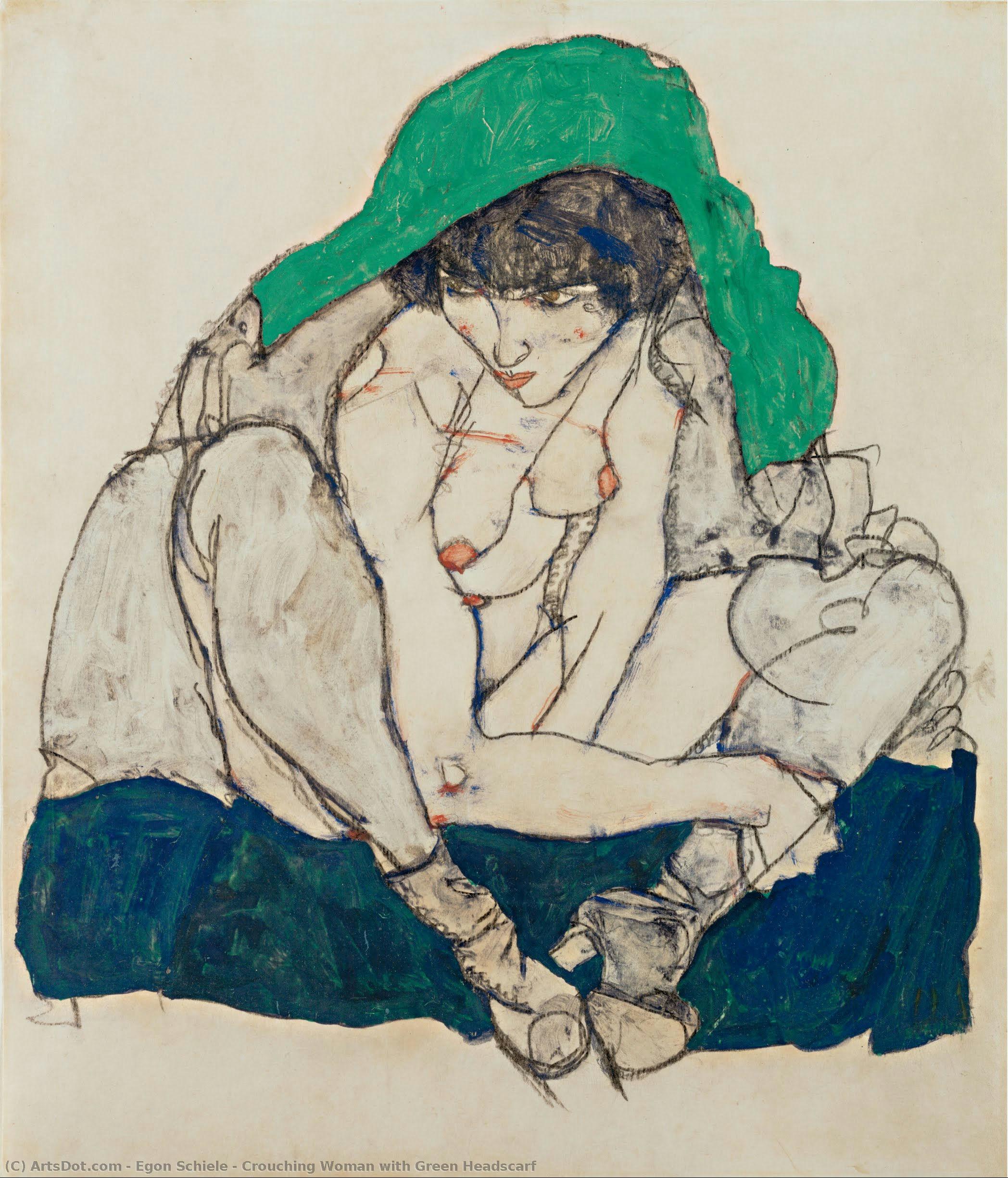
The painting “Crouching Woman with Green Headscarf,” executed in 1914 by Austrian Expressionist Egon Schiele, transcends mere visual representation; it embodies a profound exploration of human emotion and psychological complexity. Captured on canvas measuring 310 x 470 cm, this artwork stands as a testament to Schiele’s distinctive artistic vision—a vision deeply rooted in the anxieties and uncertainties of his time.
The Artist's Vision: Expressionism at Its Core
Schiele’s stylistic approach firmly establishes him within the Expressionist movement, characterized by its rejection of academic conventions and its prioritization of subjective experience. Unlike Impressionists who sought to capture fleeting moments of light and color, Schiele aimed to convey inner turmoil—to distill emotion onto the canvas with unflinching honesty. The painting's distorted figures, angular lines, and muted palette are hallmarks of this style, reflecting a preoccupation with themes of illness, death, and sexual desire – anxieties that permeated Viennese society at the dawn of the 20th century. Schiele’s meticulous attention to detail—particularly in rendering the woman’s skin tones—contrasts sharply with the stylistic simplification typical of Expressionism, highlighting his commitment to capturing nuanced psychological states.
Technical Mastery: Charcoal and Pastel – A Delicate Balance
Schiele employed a masterful combination of charcoal and pastel pigments to achieve an arresting textural effect. The artist painstakingly layered charcoal strokes to sculpt the woman’s form, conveying a sense of physicality and vulnerability. Simultaneously, pastel hues—primarily greens and browns—were delicately applied to soften the contours and imbue the painting with atmospheric depth. This dual technique allowed Schiele to simultaneously depict both anatomical precision and emotional resonance. The subtle gradations of color contribute to the overall mood, creating an unsettling yet captivating visual experience that draws the viewer into the woman’s inner world.
Historical Context: Vienna at a Crossroads
“Crouching Woman with Green Headscarf” emerged during a period of significant social and intellectual upheaval in Vienna—a city grappling with burgeoning psychoanalysis, artistic experimentation, and simmering anxieties about societal norms. Schiele's work reflects the pervasive influence of Sigmund Freud’s theories on the subconscious mind, mirroring the artist’s own fascination with confronting uncomfortable truths about human psychology. The painting speaks to a broader cultural preoccupation with mortality and repression—themes that resonated powerfully within Viennese artistic circles during Schiele’s lifetime. Furthermore, the depiction of female vulnerability aligns with emerging feminist sensibilities challenging traditional gender roles.
Symbolism: Green as Grief and Hidden Emotion
The prominent green headscarf serves as more than just a decorative element; it functions as a potent symbol—likely representing grief, mourning, or perhaps concealed emotion. Green is traditionally associated with sorrow and regeneration, mirroring the woman’s posture – slumped and vulnerable – suggesting an inner struggle beneath her outward composure. The partially obscured face reinforces this sense of mystery and invites contemplation about unspoken feelings and hidden anxieties. Schiele's masterful use of color contributes to the painting’s symbolic depth, elevating it beyond a simple portrait into a meditation on human experience.
Emotional Resonance: A Portrait That Remains Unsettling
Ultimately, “Crouching Woman with Green Headscarf” succeeds in eliciting an emotional response from the viewer—one characterized by discomfort and fascination. Schiele’s unflinching portrayal of human fragility confronts us with uncomfortable truths about desire, vulnerability, and mortality. The painting lingers in the mind long after viewing, prompting reflection on themes of psychological complexity and artistic innovation. It stands as a poignant reminder that art can illuminate the darkest recesses of the human psyche—a testament to Schiele’s enduring legacy as one of Expressionism's most compelling voices.