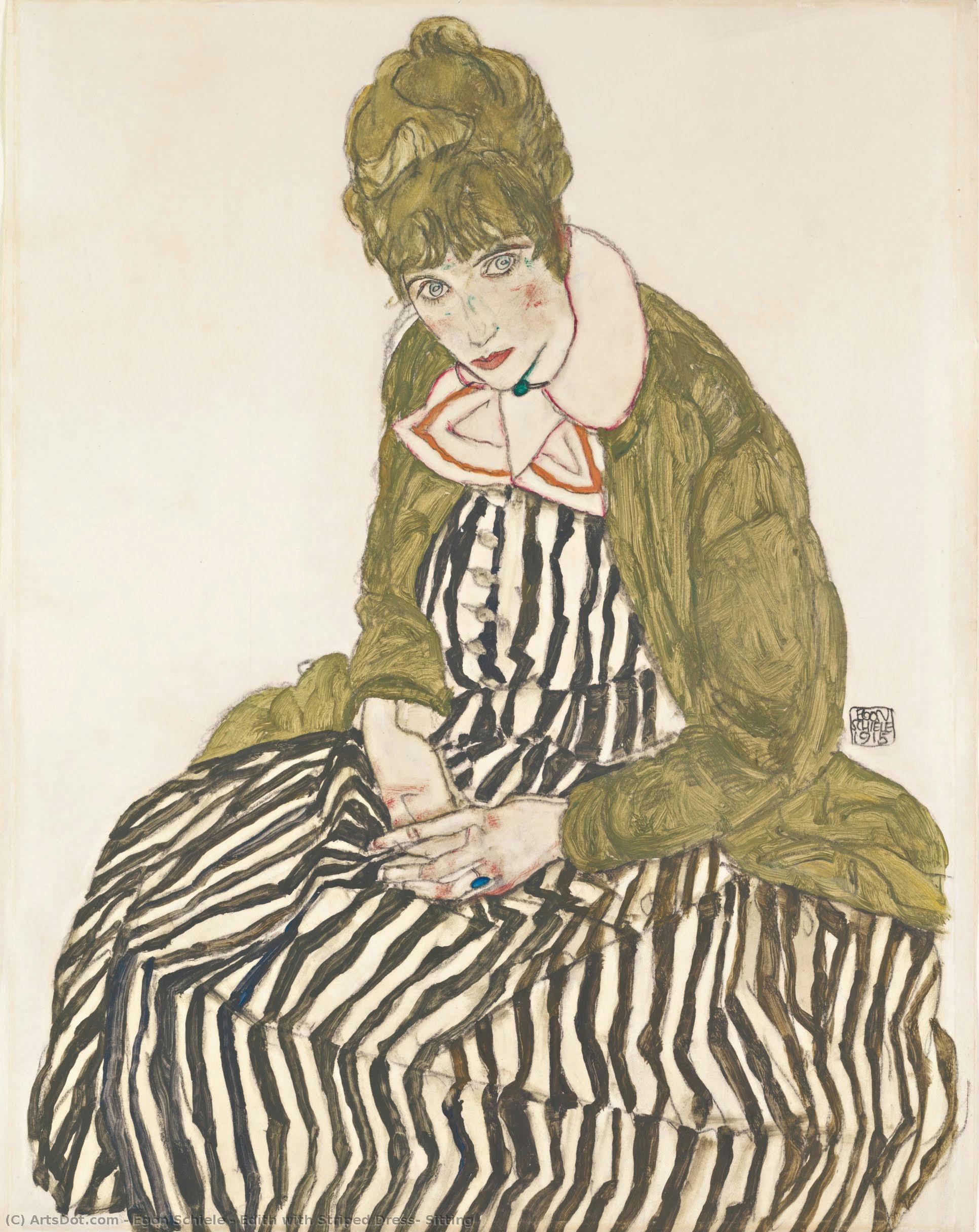
Edith with Striped Dress, Sitting – A Portrait of Resilience Amidst Loss
Egon Schiele’s “Edith with Striped Dress, Sitting” transcends mere representation; it embodies the poignant intersection of love, sorrow, and artistic expression—a microcosm of Schiele's tumultuous life and tragically curtailed career. Painted in 1915 during his burgeoning romance with Edith Harms, a woman who would become his wife and mother to their son, the artwork offers a glimpse into a moment frozen in time – a quiet contemplation against the backdrop of impending personal upheaval.
- Subject Matter: The portrait depicts Edith Harms seated gracefully, her gaze directed outwards with an almost hesitant vulnerability. Her attire—a simple striped dress—is meticulously rendered in monochrome, emphasizing texture and form rather than decorative embellishments.
- Style & Technique: Schiele’s signature expressive style is evident throughout the piece. Employing pencil and gouache on paper, he achieves remarkable detail while simultaneously conveying a palpable sense of emotion. The artist's masterful use of hatching and cross-hatching creates depth and luminosity, capturing the subtle nuances of Edith’s posture and expression.
- Historical Context: Created during World War I, “Edith with Striped Dress” reflects the anxieties and uncertainties of the era. Schiele’s relationship with Wally Neuzil was fraught with complications, mirroring broader societal tensions surrounding gender roles and artistic freedom. The painting serves as a testament to Schiele's unwavering dedication to his muse despite external pressures.
- Symbolism: The striped dress itself is laden with symbolic significance. Stripes can represent division, confinement, or perhaps even the duality of Edith’s personality—her quiet dignity juxtaposed against her passionate advocacy for Schiele’s independence from Wally Neuzil. Furthermore, the seated posture conveys stillness and introspection, hinting at a profound contemplation on life's fragility.
- Emotional Impact: Viewing “Edith with Striped Dress” evokes a feeling of melancholic beauty—a poignant reminder of Edith Harms’s untimely death just four days after their wedding from influenza. Schiele’s artistic sensitivity captures the essence of human emotion, inviting viewers to contemplate themes of love, loss, and resilience.
This artwork stands as a powerful testament to Schiele's ability to distill complex emotions into deceptively simple visual forms. Its enduring appeal lies in its capacity to resonate with audiences across generations—a timeless portrait that captures the spirit of an artist grappling with profound personal challenges amidst extraordinary creative endeavor.