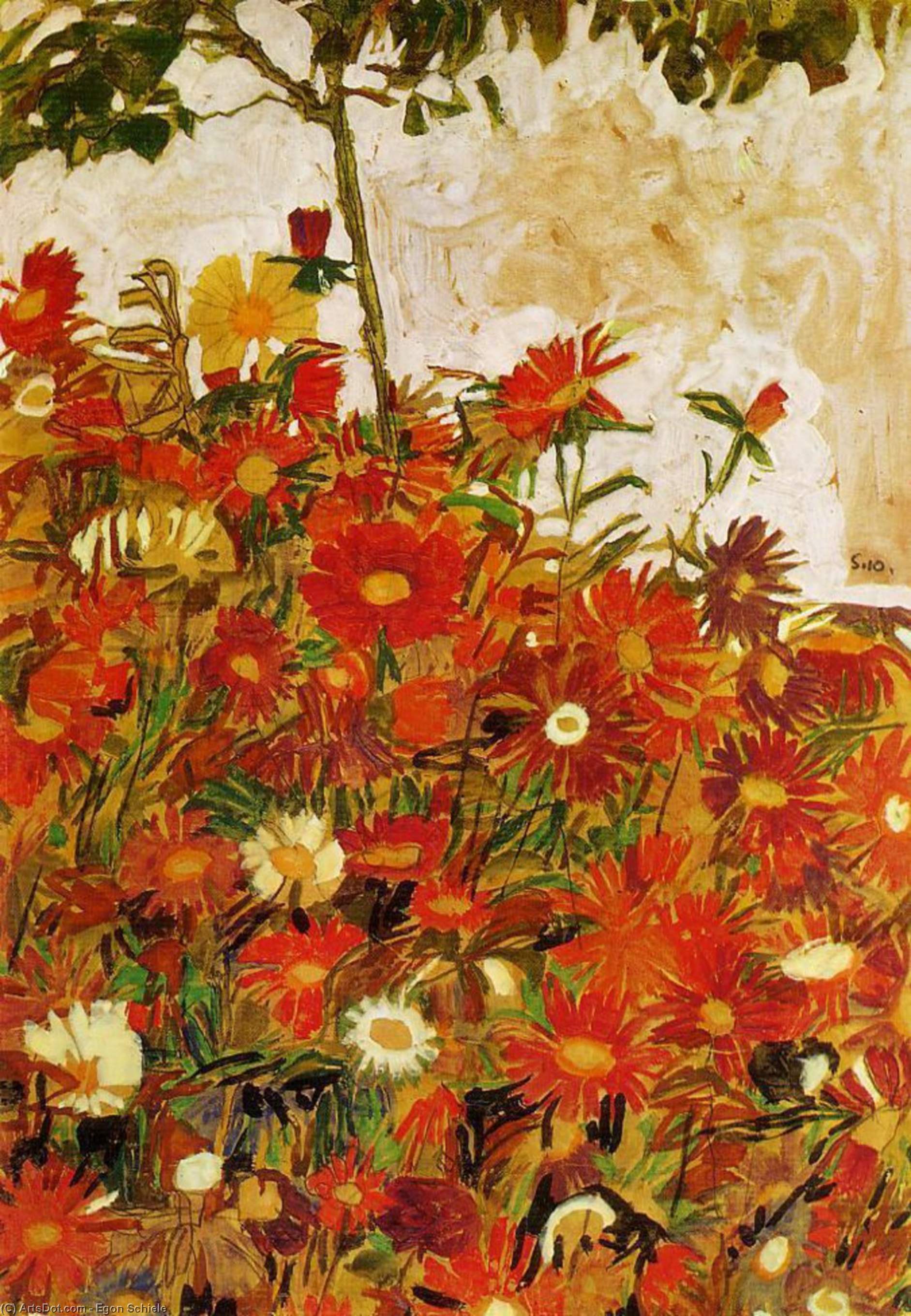
Experience Egon Schiele’s ‘Field of Flowers’ – a raw Expressionist masterpiece! Vibrant poppies & daisies evoke vulnerability and beauty through chalk's textural dance. Explore mortality, symbolism, & Schiele’s turbulent spirit.
Field of Flowers: An Exploration of Expressionist Beauty
Egon Schiele’s “Field of Flowers,” painted in 1910, stands as a testament to the raw emotion and vibrant energy characteristic of Austrian Expressionism. More than just a depiction of botanical beauty, it's an intensely personal statement rendered with remarkable skill and imbued with symbolic resonance.
- Subject Matter: The artwork captures a simple yet profound scene – a meadow brimming with wildflowers—primarily scarlet poppies and golden daisies. Schiele eschewed meticulous realism, prioritizing instead the conveyance of feeling over precise representation.
- Style & Technique: Schiele’s Expressionist style is immediately recognizable through his bold color palette and agitated brushstrokes. He employed chalk as his medium, achieving a distinctive textural quality that amplifies the painting's dynamism. The loose application of pigment contributes to an atmosphere of spontaneity and vulnerability.
- Historical Context: Created during Schiele’s formative years, “Field of Flowers” reflects the broader artistic currents of the time—the influence of Nietzschean philosophy and a preoccupation with themes of mortality and psychological disturbance. Expressionism sought to express inner turmoil rather than simply mirroring external reality.
Schiele's masterful use of light is crucial to understanding the painting’s emotional impact. Soft, diffused illumination casts delicate shadows across the blossoms, creating an illusion of serenity that belies the artist’s underlying anxieties. This subtle interplay of light and dark underscores Schiele’s ability to capture not just what he saw but also how he felt—a feeling of profound contemplation amidst the fleeting beauty of nature.