A Glimpse of Maritime Longing: Egon Schiele’s *Harbour of Trieste*
This evocative oil painting, *Harbour of Trieste*, offers a compelling window into Egon Schiele's unique artistic vision. While less known than his intensely psychological portraits, this work reveals the artist’s mastery of landscape and his ability to imbue even seemingly tranquil scenes with a profound emotional resonance. Painted sometime during his short but prolific career (1890-1918), it stands as a testament to his evolving style and engagement with the world beyond the human figure.
Subject & Composition: A Symphony of Verticality
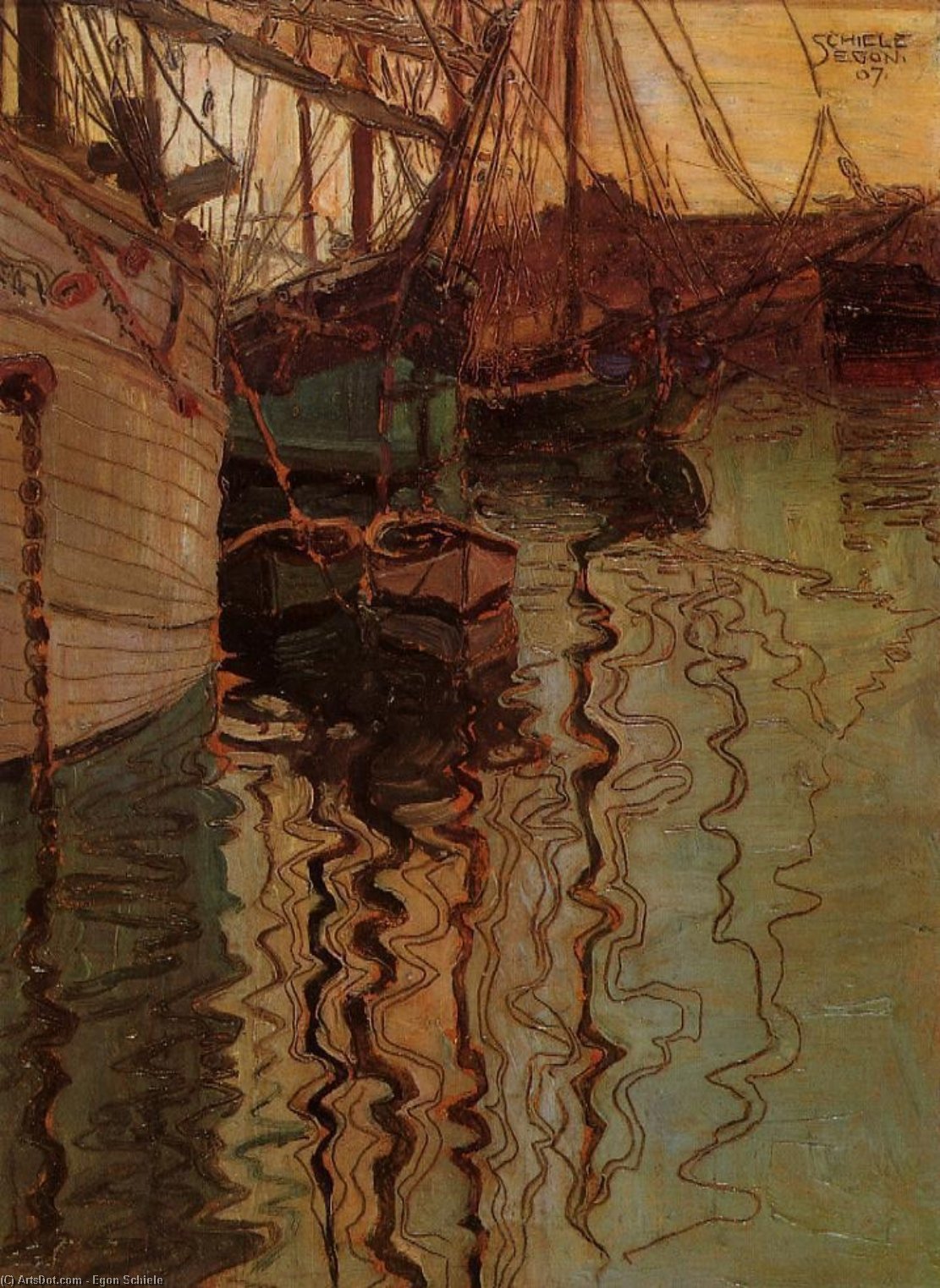
The artwork depicts a bustling harbor scene, dominated by the masts of numerous boats rising like dark sentinels against a muted sky. Schiele’s composition is strikingly vertical, emphasizing the height and structure of the maritime environment. The viewer's slightly low vantage point draws us into the scene, enhancing the sense of depth and immersing us in the reflective interplay between water and vessels.
The harbor itself becomes a stage for contemplation, hinting at journeys begun and endings awaited.
Style & Technique: Expressionism Meets Impressionistic Hues
*Harbour of Trieste* showcases Schiele’s distinctive blend of influences. While rooted in the expressive lines and emotional intensity characteristic of his portraits, this work also demonstrates an affinity for early 20th-century impressionism and post-impressionism.
The loose brushwork and visible texture – achieved through a clear impasto technique – create a dynamic surface that captures the shimmering light on the water and the rough materiality of the boats. The color palette, predominantly warm browns, ochres, and greens, contributes to a somewhat melancholic yet rich atmosphere.
Historical Context & Artistic Development
Schiele’s life was tragically cut short by the Spanish Flu at just 28 years old, but his impact on modern art remains immense. He was a key figure in the Viennese Secession movement and a contemporary of Gustav Klimt, though he quickly forged his own path, rejecting academic conventions in favor of raw emotional honesty. While Schiele is celebrated for his portraits, exploring works like *Harbour of Trieste* reveals a broader artistic range.
Trieste itself held significance as a cosmopolitan port city, a crossroads of cultures and commerce – themes that subtly resonate within the painting’s atmosphere.
Symbolism & Emotional Impact: Longing and Isolation
The harbor setting inherently evokes themes of travel, trade, and transition. However, in Schiele's hands, these motifs are imbued with a sense of
isolation and longing. The boats, while connected by their mooring, appear somewhat detached, each existing within its own space. The distorted perspective and dreamlike quality further amplify this feeling of emotional distance. The painting doesn’t simply depict a harbor; it conveys a mood – one of quiet contemplation and perhaps even melancholy.
For Collectors & Interior Designers
*Harbour of Trieste* offers a unique opportunity to acquire a piece that embodies the spirit of early 20th-century Expressionism. Its muted color palette and dynamic composition make it exceptionally versatile for interior design, complementing both modern and traditional spaces.
- Its evocative atmosphere adds depth and intrigue to any room.
- The painting’s verticality can visually elongate a space.
- As a high-quality reproduction, it provides an accessible way to own a piece of art history by one of the most important artists of his generation.
This artwork is more than just a depiction of a harbor; it’s a poignant reflection on the human condition – a testament to Schiele's enduring artistic power.