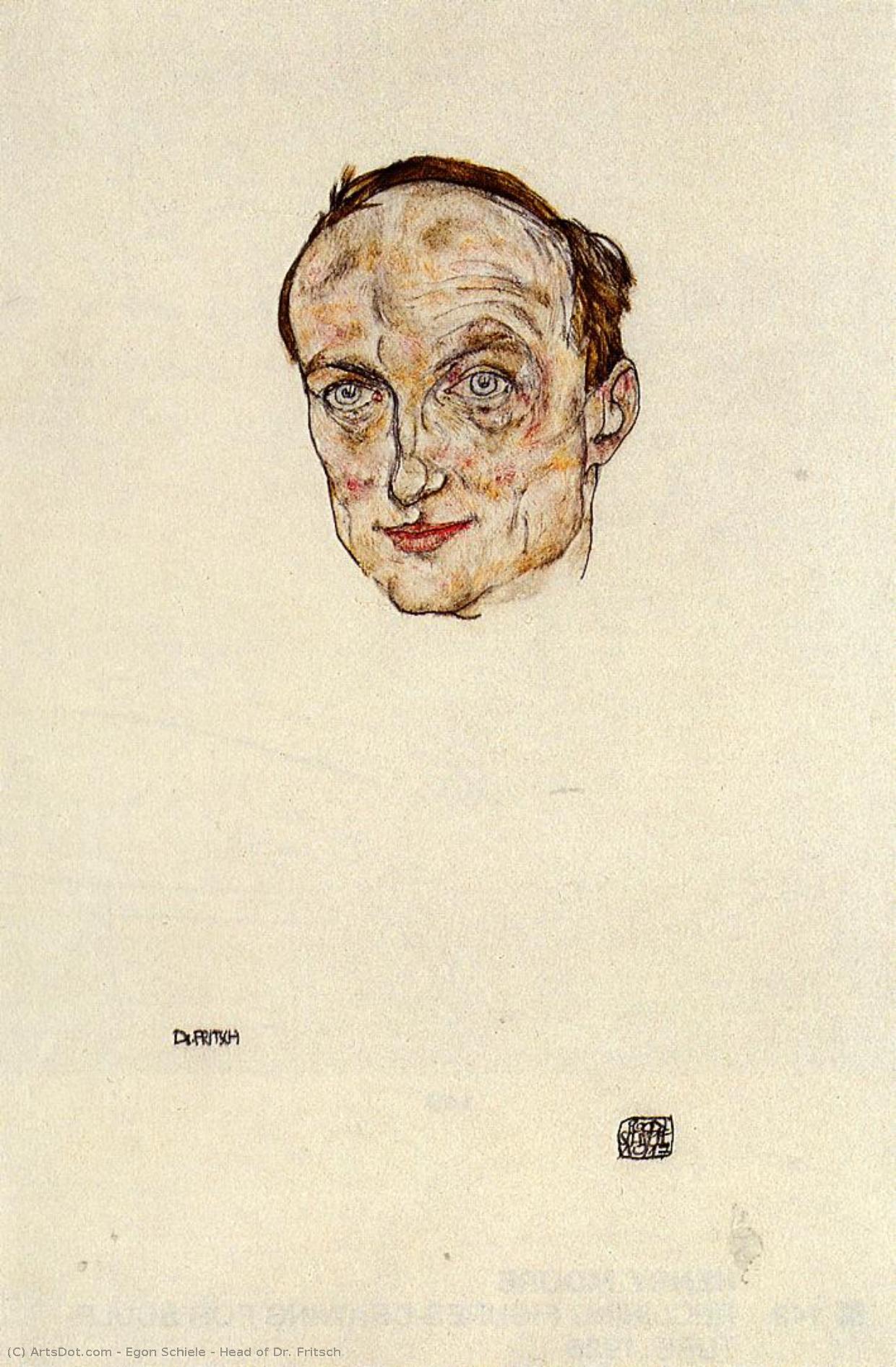
Egon Schiele’s intensely expressive "Head of Dr. Fritsch" (1917) captures a serious portrait in bold lines and dramatic shadows, reflecting the artist's expressionist style and preoccupation with mortality. Discover this poignant work and bring its timeless beauty into your space.
Egon Schiele's Haunting Portrait of Dr. Fritsch: A Study in Existential Anguish
Egon Schiele’s “Head of Dr. Fritsch,” painted in 1917, is not merely a portrait; it’s a visceral exploration of mortality and the unsettling anxieties that permeated early 20th-century Europe. Created during a period of immense personal turmoil for the artist – marked by illness, loss, and a relentless confrontation with his own mortality – this watercolor masterpiece exemplifies Schiele's signature expressionist style with breathtaking intensity. The painting’s stark black and white palette amplifies the emotional weight, stripping away any superficial prettiness to reveal a raw, unflinching gaze.
- Subject & Composition: The subject is Dr. Wilhelm Fritsch, a prominent physician in Vienna, depicted with an almost unnerving directness. Schiele’s masterful use of profile view forces the viewer into a confrontational relationship with the figure, mirroring the unsettling introspection that characterized his work.
- Technique & Style: Executed entirely in watercolor, “Head of Dr. Fritsch” showcases Schiele's remarkable control over the medium. The bold, angular lines and dramatic shadows are hallmarks of expressionism, conveying a sense of unease and psychological depth. Notice the deliberate lack of softening; every stroke contributes to the painting’s unsettling power.
The Shadow of Vienna: Historical Context & Schiele's World
Painted in 1917, “Head of Dr. Fritsch” emerges from a period of profound social and intellectual upheaval in Vienna. The city was a hotbed of artistic innovation – the Secession movement championed new forms of art and architecture – yet beneath the veneer of modernity lay deep-seated anxieties about illness, death, and the perceived decline of traditional values. Schiele’s own life mirrored these concerns; his father's early death from syphilis cast a long shadow over his artistic trajectory, fueling an obsession with themes of vulnerability and decay. The influence of Symbolism and early Modernism is palpable, reflecting a generation grappling with the uncertainties of a rapidly changing world.
- Expressionist Roots: Schiele’s work aligns closely with the tenets of Expressionism, prioritizing emotional intensity over objective representation. He sought to capture not just the appearance of his subjects but their inner turmoil and psychological state.
- Vienna's Artistic Landscape: The painting reflects Vienna's vibrant yet troubled artistic scene, where artists like Schiele were pushing boundaries and challenging conventional notions of beauty and representation.
Symbolism & Emotional Resonance
Beyond a simple portrait, “Head of Dr. Fritsch” is laden with symbolic weight. The doctor’s balding head, rendered with unflinching detail, speaks to the inevitability of aging and the fragility of human existence – a theme central to Schiele's oeuvre. The serious, contemplative expression suggests a profound awareness of mortality, perhaps even a sense of dread. The stark white background serves not as a neutral space but as an intensifying force, isolating the figure and amplifying its emotional impact. Schiele’s ability to convey such raw emotion through seemingly simple forms is a testament to his artistic genius.
- The Motif of Mortality: Schiele frequently explored themes of death and decay in his work, reflecting his own personal anxieties and the broader cultural preoccupation with mortality prevalent at the time.
- Psychological Portraiture: The painting transcends a mere likeness; it’s a psychological portrait that delves into the subject's inner world, revealing a sense of vulnerability and perhaps even despair.
Collecting & Appreciating Schiele’s Legacy
"Head of Dr. Fritsch" represents a pivotal moment in Egon Schiele’s career – a powerful demonstration of his unique artistic vision and his ability to evoke profound emotional responses. A hand-painted reproduction offers an unparalleled opportunity to experience the full force of this iconic work, bringing its haunting beauty and unsettling intensity into your home or studio. ArtsDot's meticulous reproductions capture every nuance of Schiele’s technique, ensuring that you possess a faithful representation of this seminal piece of expressionist art.