A Portrait of Torment: Egon Schiele's "I Will Gladly Endure for Art and My Loved Ones"
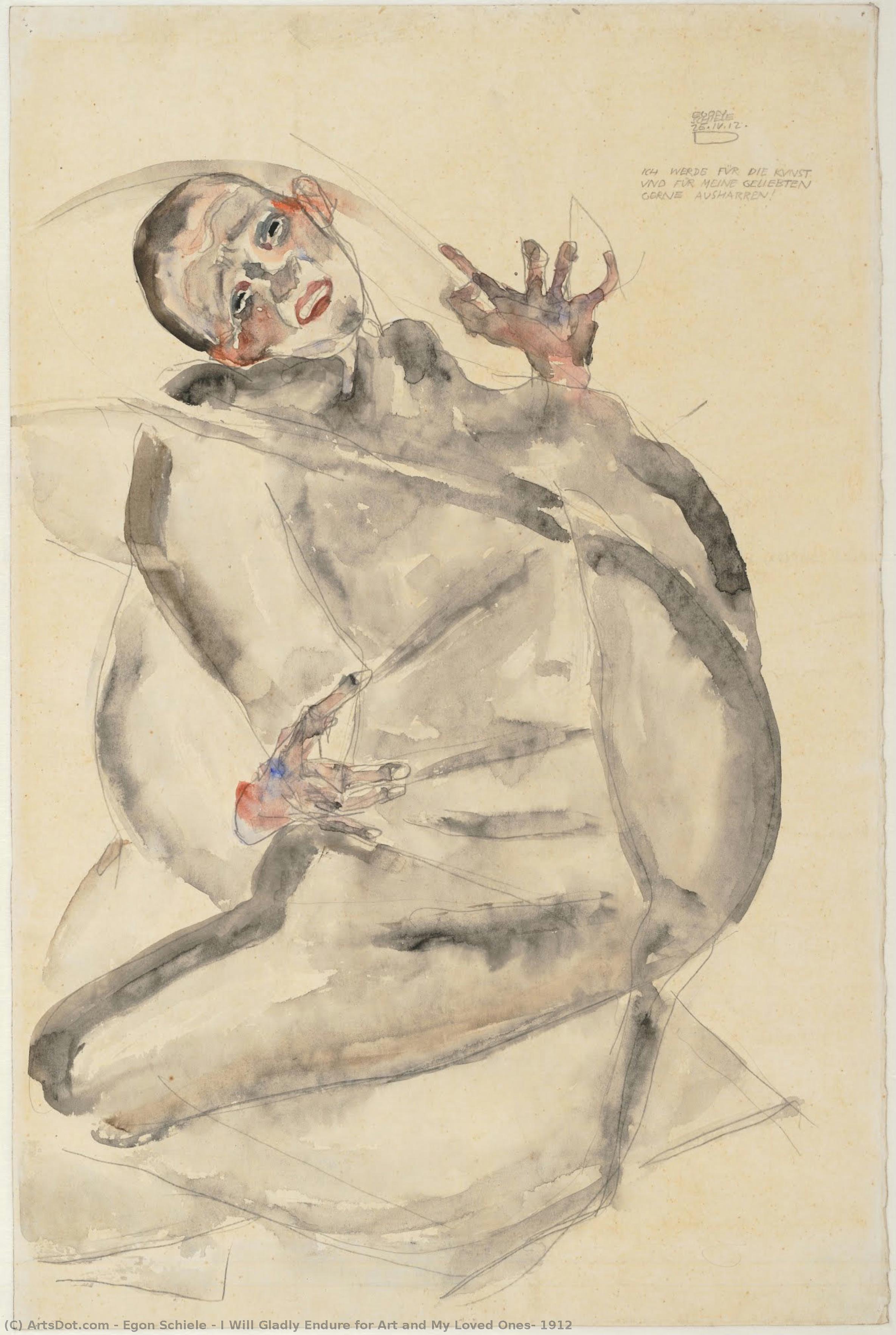
Egon Schiele’s “I Will Gladly Endure for Art and My Loved Ones,” painted in 1912, is not merely a depiction of suffering; it’s a raw, visceral embodiment of the artist's own tumultuous existence. The image, currently residing within the Albertina Museum in Vienna, immediately confronts the viewer with a figure consumed by distress – a young person, likely female or child, rendered in a strikingly intimate and unsettling manner. Their hands are pressed against their face, a gesture simultaneously pleading and defensive, suggesting an overwhelming internal struggle. The watercolor technique, characterized by loose washes and fragmented lines, contributes to the painting’s sense of instability and emotional vulnerability. It's as if the very medium mirrors the subject’s fractured state.
- Style & Technique: Schiele’s signature style is evident here – a blend of Expressionism and Symbolism, prioritizing emotional impact over realistic representation. The use of watercolor allows for delicate gradations of tone and color, creating an ethereal quality that belies the subject's palpable pain.
- Color Palette: Dominated by muted blues, greens, and browns, the palette evokes a sense of melancholy and decay. These somber hues amplify the feeling of confinement and despair.
- Composition: The figure is tightly framed, almost claustrophobic, intensifying the viewer’s sense of intimacy with their suffering. This close proximity forces a direct confrontation with the subject's anguish.
The Shadow of Loss and Legacy
To understand “I Will Gladly Endure for Art and My Loved Ones,” one must delve into the life of Egon Schiele himself, a man profoundly shaped by loss and illness from an early age. Born in 1890 in Tulln an der Donau, Austria, his childhood was marked by tragedy – the death of his father from syphilis at fourteen, followed later by the passing of his sister Elvira. These events cast a long shadow over his artistic output, fueling a preoccupation with mortality, vulnerability, and the ephemeral nature of existence. The painting can be interpreted as a direct reflection of this personal trauma, a desperate attempt to grapple with grief and find meaning amidst suffering.
Schiele’s uncle, Leopold Czihaczek, played a significant role in his upbringing, providing a degree of stability but also imposing a controlling influence. This complex relationship further contributed to the artist's independent spirit and his tendency to explore themes of isolation and alienation within his work. The recurring motif of trains, observed during his childhood, subtly surfaces in several paintings, perhaps representing a longing for escape or a desire to transcend personal limitations.
Symbolism and Emotional Resonance
The posture of the figure – hands pressed against the face – is laden with symbolic weight. It speaks of shame, concealment, and an inability to articulate one’s pain. The upward gaze suggests a yearning for solace or understanding, yet it also hints at a sense of helplessness. Schiele frequently employed distorted figures and exaggerated poses to convey psychological states, and here he masterfully captures the essence of emotional turmoil. The title itself, “I Will Gladly Endure for Art and My Loved Ones,” presents a poignant paradox – an assertion of resilience in the face of overwhelming suffering, suggesting that art and connection with loved ones provide a vital source of strength.
A Reproduction for Reflection and Inspiration
ArtsDot offers meticulously crafted hand-painted reproductions of “I Will Gladly Endure for Art and My Loved Ones,” allowing you to bring this powerful image into your home or studio. These reproductions capture not only the visual details but also the emotional depth and atmospheric quality of Schiele’s original work. Whether you are an art enthusiast, a collector seeking a significant piece for your collection, or an interior designer searching for a statement artwork, our reproduction provides a beautiful and thought-provoking addition to any space. Consider this painting not just as a visual object, but as a window into the soul of a tormented genius – a testament to the enduring power of art to confront and explore the complexities of human experience.