Schiele’s fascination with trains appeared subtly in later works, reflecting his enduring interest in visual motifs. His sister Elvira's untimely death profoundly impacted him.
Explore the emotionally charged Expressionist art of Egon Schiele (1890-1918): bold portraits, psychological themes & unique lines. Discover reproductions now!
Explore Austrian modernism at the Leopold Museum! Discover masterpieces by Klimt & Schiele, delve into art history, and experience a unique collection within Vienna’s vibrant MuseumsQuartier.
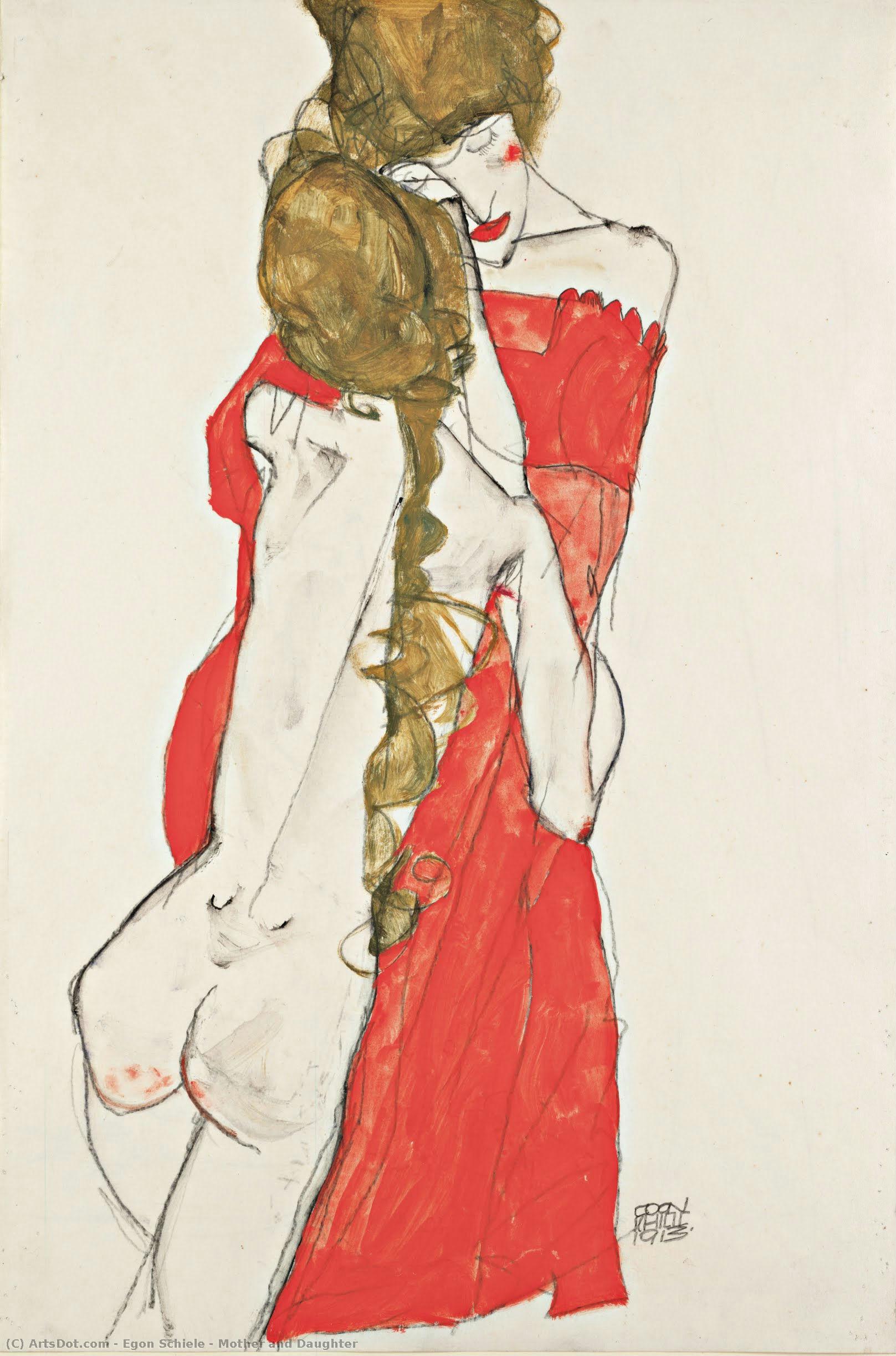
A Portrait of Intimacy: Exploring Egon Schiele’s ‘Mother and Daughter’
The painting “Mother and Daughter,” created by Austrian Expressionist Egon Schiele in 1913, transcends mere representation; it embodies a profound exploration of maternal tenderness and the delicate bond between women. Professor Leopold's astute observation that Schiele’s work demanded comparison with Rembrandt and Dürer underscores the artist’s unparalleled mastery of line and emotion—a quality palpable even in this deceptively simple composition. More than just depicting two figures, Schiele captures a moment frozen in time, radiating an unsettling beauty born from vulnerability.
Style and Technique: The Language of Anxiety
Schiele's distinctive style is immediately recognizable through his elongated figures rendered with angular lines—a hallmark of Expressionism—which convey a palpable sense of unease and psychological depth. Unlike traditional portraiture, Schiele eschewed idealized forms, opting instead for unflinching realism that confronts viewers with the raw physicality of human experience. The artist meticulously crafted each stroke, utilizing a technique characterized by thick impasto – applying paint thickly onto the canvas – creating textured surfaces that heighten the emotional impact of the scene. This deliberate layering of pigment contributes to the painting’s dramatic chiaroscuro effect, emphasizing contrasts between light and shadow and intensifying the expressive power of the imagery. The artist's masterful control over line ensures that every contour speaks volumes about the subjects’ inner turmoil.
Historical Context: Vienna at the Precipice
“Mother and Daughter” emerged during a turbulent period in Viennese art history—the waning years of Austro-Hungarian Empire and the burgeoning anxieties surrounding societal change. Schiele's work reflects the broader artistic preoccupation with themes of mortality, sexuality, and psychological disturbance prevalent in Expressionist circles. The painting’s unsettling stillness is juxtaposed against the backdrop of Vienna’s intellectual ferment, where artists wrestled with existential questions and challenged conventional notions of beauty. It speaks to a time when artists sought to express inner feelings rather than simply documenting external reality—a radical departure from academic traditions.
Symbolism: Red Dress, Blond Hair – Layers of Meaning
The painting's color palette is deliberately symbolic. The dominant scarlet red of the mother’s dress represents passion and vitality, yet simultaneously hints at vulnerability and impending danger. Contrasting this fiery hue is the pale skin tone of the daughter, subtly illuminated with soft reds and grays—a visual metaphor for innocence and fragility. Notably, both figures share blond hair, a motif frequently employed by Schiele to convey purity and spiritual longing. The positioning of the mother’s face, the girl's head, and the contours of the thigh are carefully orchestrated to create a harmonious balance that underscores the interconnectedness of their emotions.
Emotional Impact: A Moment Suspended
Ultimately, “Mother and Daughter” succeeds in conveying an extraordinary emotional resonance. Schiele captures not just physical likeness but also the unspoken intimacy between two women—a connection characterized by tenderness, concern, and perhaps even apprehension. The painting’s unsettling beauty derives from its ability to confront viewers with uncomfortable truths about human relationships and the inevitability of loss. It remains a powerful testament to Schiele's artistic vision and his profound understanding of the human psyche—a timeless masterpiece that continues to captivate audiences today.