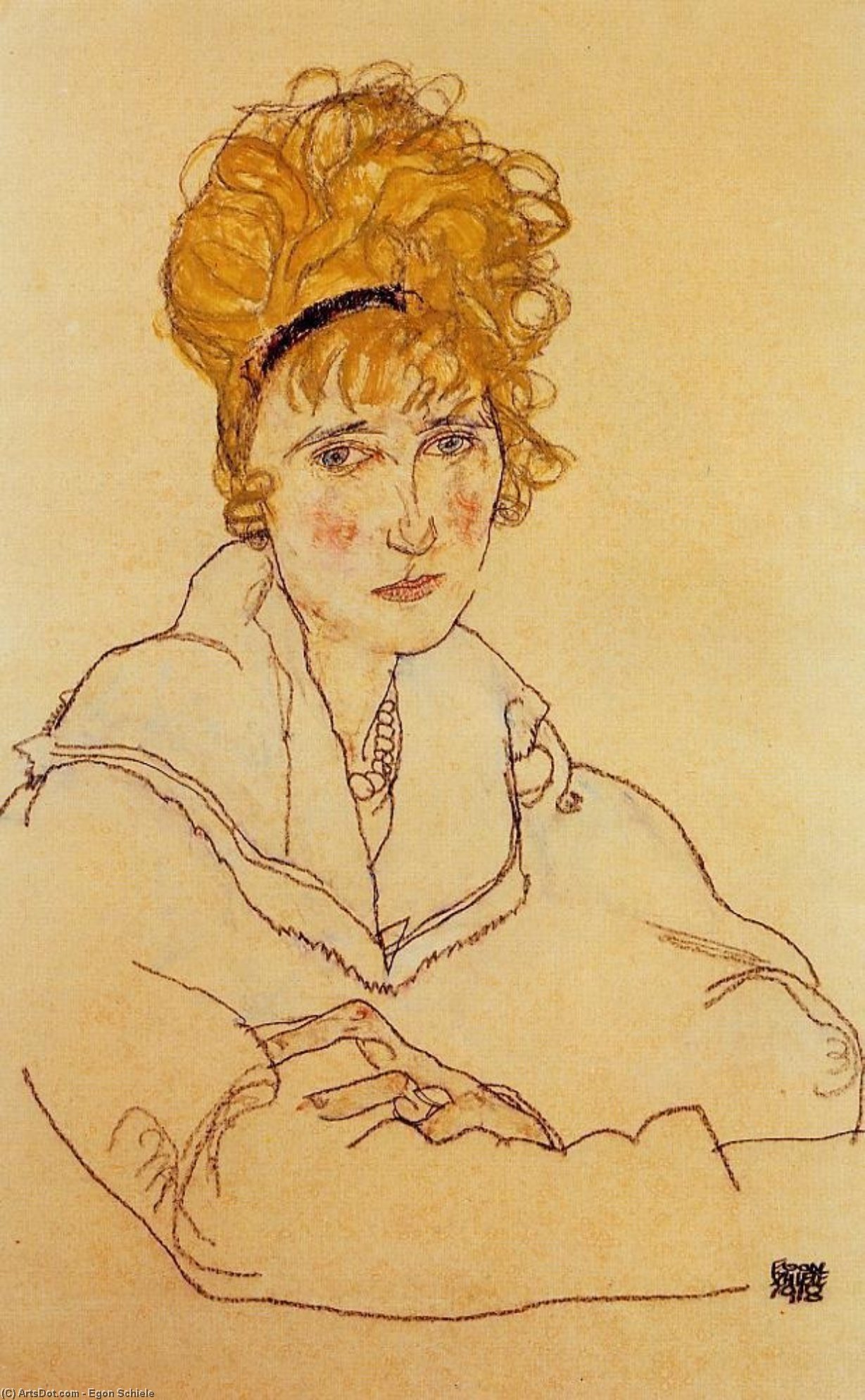
Portrait of Edith Schiele: A Study in Vulnerability and Expression
Egon Schiele’s “Portrait of Edith Schiele,” painted in 1918, stands as a haunting testament to the artist's preoccupation with mortality and psychological depth—themes that permeate his entire oeuvre. This striking monochrome depiction captures a moment of quiet contemplation by Schiele’s sister, Edith, rendered in the distinctive style of Expressionism, a movement born from the anxieties of the early 20th century. The painting isn’t merely a likeness; it's an exploration of inner turmoil conveyed through masterful linework and subtle tonal shifts.
- Subject Matter: The portrait focuses on Edith Schiele herself, seated in a chair against a muted brown background. Her gaze is downward, suggesting introspection or perhaps confronting something unsettling—a characteristic gesture that speaks to Schiele’s broader interest in portraying human vulnerability.
- Style & Technique: Schiele's signature Expressionist technique utilizes bold black and white linework to sculpt the figure’s form, prioritizing emotional impact over realistic representation. The artist eschews blending colors, opting instead for hatching and cross-hatching to create textures and convey mood—a deliberate rejection of Impressionistic ideals.
- Historical Context: Created during a period marked by profound social upheaval – the looming shadow of World War I – “Portrait of Edith Schiele” reflects the anxieties and uncertainties prevalent in European culture at the time. Expressionist artists sought to depict inner psychological states rather than external appearances, responding to the trauma of war and questioning traditional values.
- Symbolism: The chair serves as a grounding element within the composition, yet simultaneously symbolizes confinement and stillness—perhaps mirroring Edith’s internal state. Schiele's use of brown tones contributes to the painting's somber atmosphere, reinforcing the overarching theme of melancholy and confronting death.
Exploring Schiele’s Expressionist Vision
Schiele’s artistic approach was deeply influenced by his personal experiences—particularly the premature deaths of his father and sister—which instilled in him a fascination with morbidity and decay. He deliberately distorted anatomical forms, emphasizing psychological tension rather than physical accuracy. This stylistic choice wasn't simply an aesthetic preference; it was a conscious effort to communicate profound emotional truths about the human condition. The artist’s relentless pursuit of expressive power is evident throughout his work, including “Portrait of Edith Schiele,” where he achieves remarkable success in conveying vulnerability and psychological complexity.
A Reproduction Worth Admiring
A hand-painted reproduction of "Portrait of Edith Schiele" captures the essence of Schiele's artistic vision—the stark beauty of monochrome linework, the palpable sense of unease conveyed through tonal variations, and the enduring power of a portrait that transcends mere likeness to become an exploration of human emotion. ArtsDot offers exceptional quality reproductions that allow you to experience this masterpiece firsthand, bringing its haunting stillness and psychological depth into your home or studio. Explore our collection today!