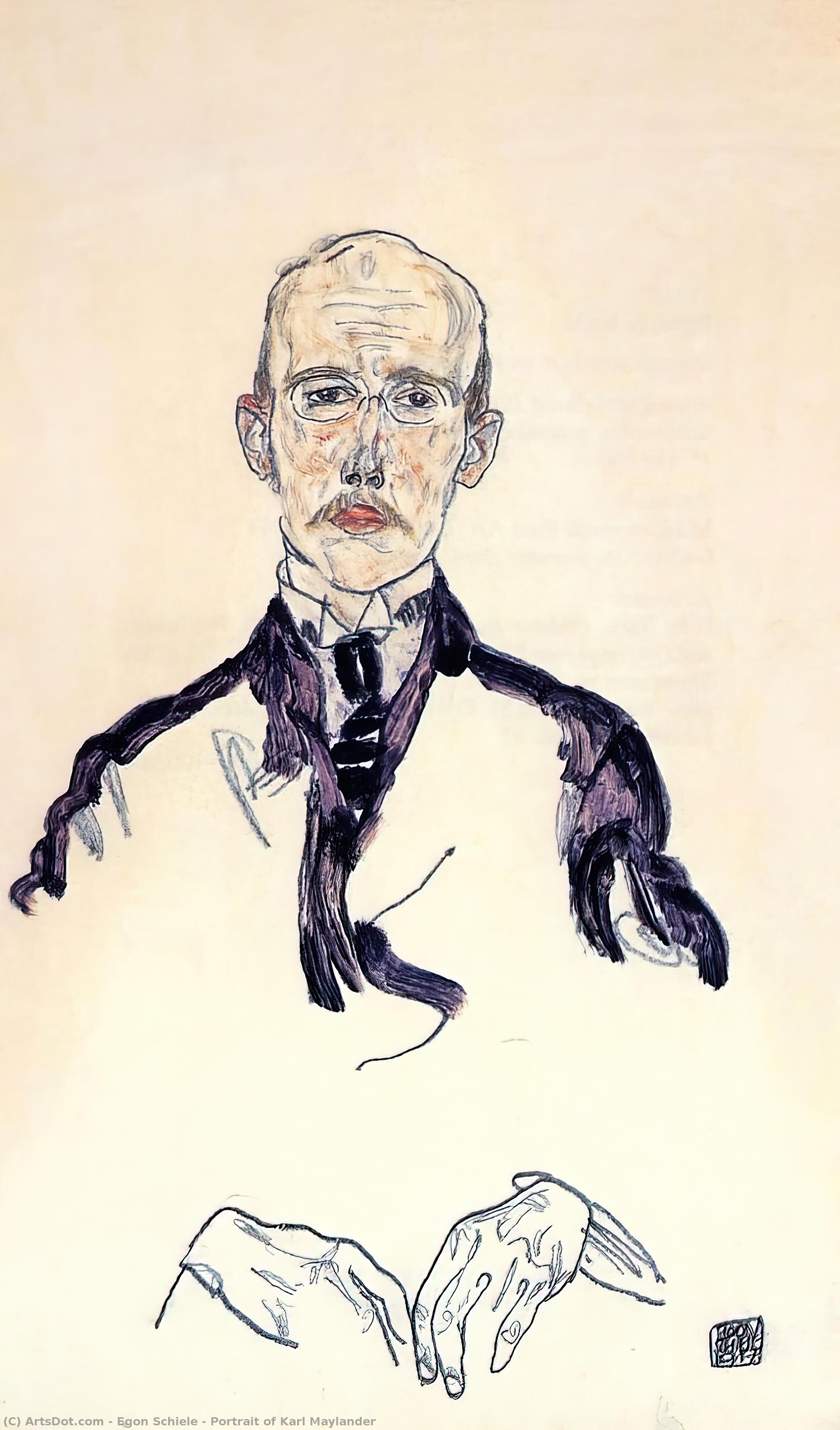
A Window into a Troubled Era: Egon Schiele’s Portrait of Karl Maylander
Egon Schiele's 1917 *Portrait of Karl Maylander* is more than just a likeness; it’s a poignant distillation of early 20th-century anxieties, rendered with the raw emotionality that defines Expressionism. This striking work, executed in watercolor and ink, offers a compelling glimpse into both the sitter's life and the turbulent times in which it was created.
The Subject: A Collector Caught in History
Karl Mayländer was an Austrian art collector and critic, a man of culture who actively supported emerging artists like Schiele himself. However, his story is tragically interwoven with the horrors of the Nazi era. As a Jewish businessman, Mayländer faced persecution and ultimately deportation, losing not only his freedom but also much of his valuable collection – including this very portrait. Understanding Maylander’s fate adds a layer of profound sadness and historical weight to the artwork, transforming it into a memorial as well as an aesthetic experience.
Expressionist Technique & Style
Schiele's masterful use of line is immediately apparent. The portrait isn’t about precise representation; instead, it prioritizes emotional impact through distorted forms and expressive strokes. The stark contrast between black and white intensifies the psychological drama. Notice how Schiele doesn’t blend or soften edges – lines are often jagged and abrupt, conveying a sense of unease and vulnerability. This deliberate rawness is characteristic of Expressionism, an artistic movement that rejected traditional aesthetics in favor of subjective emotional experience.
The lack of color isn't a limitation but rather a powerful tool, focusing the viewer’s attention on Maylander’s face and posture.
Decoding the Composition & Symbolism
Mayländer is depicted formally dressed, with hands clasped tightly in front of him – a gesture that can be interpreted as both dignified restraint and quiet desperation. His downward gaze suggests introspection or perhaps resignation. The composition itself is deliberately unsettling; there’s little background detail to distract from the figure, forcing an intimate confrontation between viewer and subject.
The glasses Maylander wears are not merely corrective lenses but also a barrier, subtly hinting at a separation between his inner world and outward appearance. Schiele often used portraiture as a means of psychological exploration, and this work is no exception.
Historical Context: Vienna on the Brink
1917 was a pivotal year in European history – World War I raged on, empires were crumbling, and societal norms were being challenged. Vienna, Schiele’s home city, was a hotbed of artistic innovation but also simmering with political tension. The portrait reflects this atmosphere of uncertainty and anxiety. Schiele himself lived a short, tumultuous life, dying in the Spanish Flu pandemic just a year before the war ended. His work is imbued with a sense of premonition and existential angst that resonates even today.
Emotional Resonance & Lasting Impact
The *Portrait of Karl Maylander* isn’t simply a beautiful object; it's an emotionally charged encounter. It evokes feelings of empathy, sadness, and perhaps even a sense of foreboding. Schiele’s ability to capture the inner life of his subject is remarkable, making this portrait a powerful testament to the human condition.
Its enduring appeal lies in its honesty and vulnerability, qualities that continue to captivate audiences over a century later.
For Collectors & Interior Designers
This artwork – or a high-quality reproduction – would be a striking addition to any collection focused on Expressionism, early 20th-century art, or portraits with psychological depth. Its monochromatic palette lends itself well to both modern and traditional interiors, adding a touch of sophistication and intellectual weight. Consider pairing it with minimalist furnishings or contrasting textures to highlight its dramatic impact.
- Style: Expressionism
- Medium: Watercolor and Ink on Paper
- Date: 1917
- Dimensions: Unknown
- Current Location: Information regarding the current location of the original artwork is subject to change; please refer to art databases for the most up-to-date details.