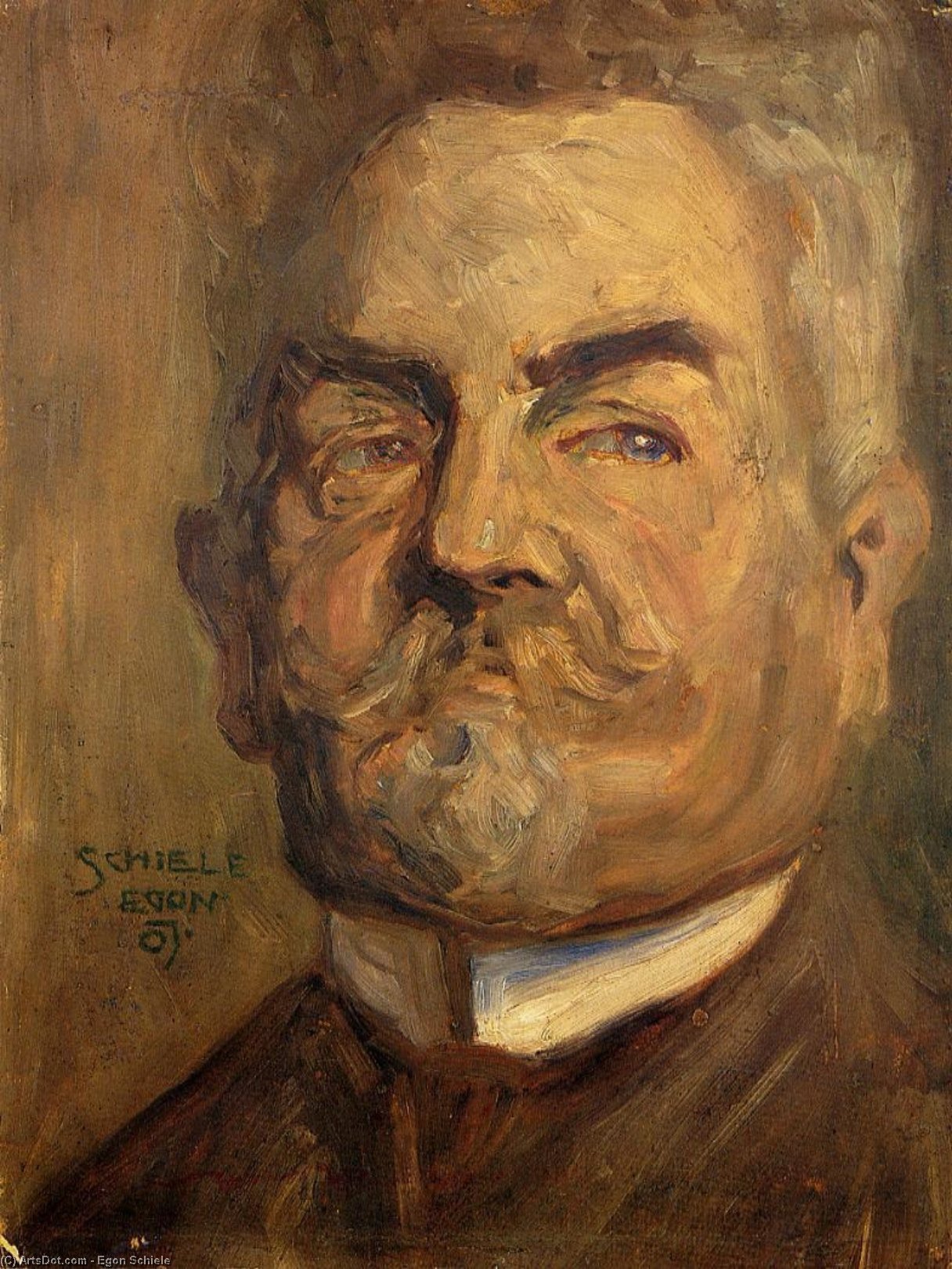
A Portrait Steeped in Sorrow and Intensity: Exploring Egon Schiele’s ‘Head of a Bearded Man I’
The painting “Portrait of Leopold Czihaczek (also known as Head of a Bearded Man I)” by Austrian Expressionist Egon Schiele stands as a haunting testament to the artist's preoccupation with themes of vulnerability, mortality, and psychological torment. Completed in 1907, this deceptively simple composition—a close-up depiction of a man’s face—commands attention through its masterful execution and profound emotional resonance. It’s more than just a likeness; it’s an embodiment of Schiele's deeply personal anxieties projected onto canvas.
- Subject Matter: The portrait focuses intently on the visage of Leopold Czihaczek, likely a self-portrait reflecting Schiele’s own internal struggles. Czihaczek served as Schiele’s guardian after his father’s illness and death, representing a figure of authority yet simultaneously burdened by familial responsibility—a dynamic that finds subtle expression in the painting's gaze.
- Style: Schiele’s style is undeniably Expressionist, characterized by angular lines, flattened planes, and a deliberate avoidance of idealized beauty. He rejects academic conventions, prioritizing raw emotion and psychological truth over realistic representation. This stylistic choice aligns perfectly with the broader artistic movement seeking to convey inner turmoil and disillusionment following the turn of the century.
- Technique: Schiele employed oil paint on canvas using a technique that emphasizes textural contrast. Thick impasto—heavy application of pigment—creates ridges and crevices across Czihaczek’s face, conveying a palpable sense of unease and physicality. The muted brown palette contributes to the painting's somber mood, enhancing the feeling of claustrophobia and isolation.
Historical Context: Vienna at the Dawn of Trauma
Vienna in 1907 was a city grappling with significant social and intellectual upheaval. Sigmund Freud’s groundbreaking psychoanalytic theories were emerging, challenging Victorian notions of morality and exploring the subconscious mind. Simultaneously, anxieties surrounding tuberculosis—a prevalent disease—were pervasive, casting a pall over Viennese society. Schiele's artistic output reflects this atmosphere of uncertainty and fear; his images frequently depict figures consumed by inner torment, mirroring the psychological landscape of his time. The painting speaks to a broader cultural preoccupation with confronting uncomfortable truths about human existence.
Symbolism: Eyes That Speak Volumes
The eyes are undeniably the focal point of “Head of a Bearded Man I.” They stare directly out at the viewer, conveying an unsettling intensity and piercing gaze. Schiele’s masterful use of shading creates deep recesses within the eye sockets, suggesting vulnerability and confronting the viewer with unflinching honesty. This deliberate gaze transcends mere visual representation; it embodies Schiele's desire to expose the hidden anxieties lurking beneath the surface of consciousness—a motif central to Expressionist art. The inclusion of a mustache adds to the portrait’s unsettling character, hinting at repressed desires and societal expectations.
Emotional Impact: A Window into Inner Darkness
Ultimately, “Portrait of Leopold Czihaczek” transcends its formal elements to deliver a powerful emotional punch. It captures a moment of profound psychological vulnerability—a glimpse into Schiele’s own anxieties about mortality and the human condition. The painting's bleak palette, combined with Schiele’s expressive brushstrokes, evokes feelings of melancholy, apprehension, and perhaps even terror. It serves as a poignant reminder that art can illuminate the darkest recesses of our inner selves, prompting contemplation on themes of suffering and resilience. Reproductions offer an opportunity to experience this arresting image firsthand, bringing Schiele's vision into any interior space.