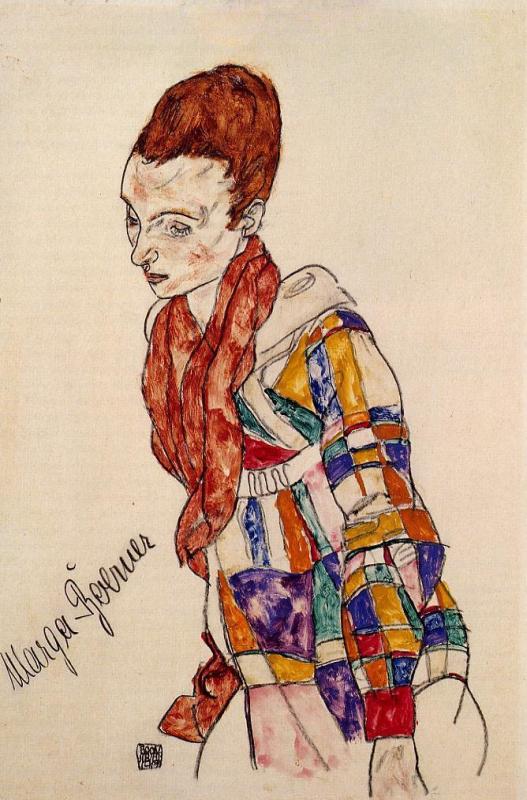
Historical Context: Created during the turbulent years leading up to World War I, “Portrait of Marge Boerner” reflects the broader artistic movement grappling with themes of trauma, isolation, and existential dread. Expressionism sought to depict inner realities rather than external appearances, rejecting academic conventions in favor of raw emotion and psychological insight—a radical departure from prevailing aesthetic ideals.
Decoding Symbolism: Hair, Headband & The Eyes
Schiele’s meticulous rendering of Marge Boerner's hair is laden with symbolic significance. The unruly strands convey a sense of unrestrained emotion and vulnerability – mirroring Schiele’s own artistic preoccupation with mortality. The scarlet headband serves as a focal point, drawing attention to the woman’s face and emphasizing her gaze. This direct stare challenges the viewer, inviting contemplation on themes of self-awareness and confronting uncomfortable truths.
- Hair: Representing primal instinct and emotional turbulence, Schiele's depiction of hair is deliberately unsettling—a deliberate rejection of idealized beauty.
- Headband: The bold red headband symbolizes passion and defiance against societal expectations.
- Eyes: Schiele’s masterful portrayal captures the gaze with an intensity that conveys both vulnerability and unwavering resolve.
Expressionist Line & Texture: A Reflection of Inner Turmoil
Schiele's distinctive artistic style—characterized by forceful lines and textured surfaces—is central to conveying the emotional core of “Portrait of Marge Boerner.” The artist eschews smooth blending techniques, opting instead for deliberate brushstrokes that create a palpable sense of physicality. This textural approach mirrors the psychological turmoil experienced by Schiele himself and underscores Expressionism’s commitment to portraying inner states with uncompromising honesty.
Emotional Resonance: Vulnerability & Confrontation
"Portrait of Marge Boerner" transcends mere visual representation; it communicates profound emotional resonance. The painting compels viewers to confront uncomfortable truths about human vulnerability and psychological complexity—themes that resonate powerfully within the framework of Expressionism’s broader artistic agenda. It remains a hauntingly beautiful depiction of inner turmoil, solidifying Schiele's legacy as one of art history’s most influential voices.