A Portrait of Fragility: Unpacking Egon Schiele’s ‘Seated Girl 1911’
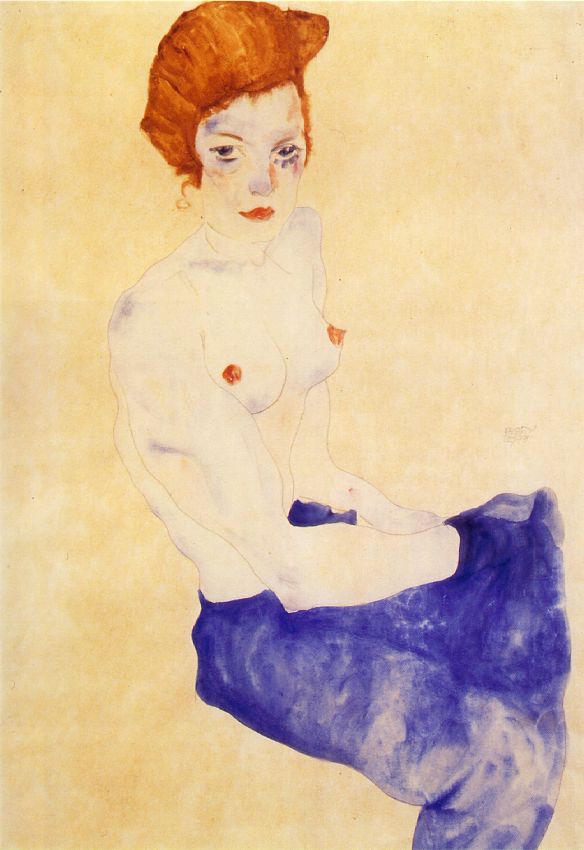
Egon Schiele's “Seated Girl 1911” isn’t merely a depiction of a young woman; it’s a raw, unsettling exploration of vulnerability and the precariousness of existence. Painted in the tumultuous year of 1911, during a period of intense personal struggle for the artist himself, this work embodies the core tenets of Expressionism – a rejection of objective representation in favor of conveying subjective emotion and psychological intensity. The painting immediately confronts the viewer with its unsettling intimacy; a young girl sits poised, her gaze direct yet shadowed, radiating an aura of quiet contemplation mingled with palpable anxiety. Schiele’s signature elongated forms and distorted perspective contribute to a sense of unease, pulling us into the subject's internal world.
- The Figure: The girl herself is rendered with a startling directness. Her posture, though relaxed, hints at an underlying tension, while her pale skin and delicate features suggest fragility. Notice how Schiele emphasizes the curve of her spine and the slight tilt of her head – details that subtly convey both strength and vulnerability.
- The Pink Nipple: The inclusion of a visible pink nipple is a deliberate and provocative element. It’s not simply a matter of eroticism, but rather a symbolic gesture highlighting the exposed, vulnerable nature of the female body within Schiele's worldview. It speaks to themes of mortality, sexuality, and the fleeting beauty of youth.
- Color Palette: The muted palette – primarily blues, browns, and ochres – reinforces the painting’s somber mood. These earthy tones create a sense of stillness and introspection, contrasting sharply with the dynamism of Schiele's lines.
Expressionist Techniques & Schiele’s Unique Style
Schiele’s mastery lies in his ability to translate raw emotion onto canvas through innovative techniques. He employed a rapid, almost frantic brushstroke – visible in the energetic lines that define the girl's form and the surrounding space. This technique, characteristic of Expressionism, wasn’t about meticulous detail but rather about conveying feeling with immediacy and urgency. His use of line is particularly striking; it’s not used to outline forms so much as to suggest their contours, creating a sense of movement and instability. Schiele's elongated figures, often depicted in distorted poses, were revolutionary for his time, challenging conventional notions of beauty and representation.
Key Techniques:
- Dynamic Lines: Schiele’s lines are not static; they pulsate with energy and emotion.
- Distorted Perspective: He frequently manipulated perspective to create a sense of unease and psychological depth.
- Expressive Brushwork: His visible brushstrokes reveal the physicality of his process, conveying a sense of urgency and immediacy.
A Window into Schiele’s World & Historical Context
To understand “Seated Girl 1911,” it's crucial to consider the context in which it was created – a period marked by profound personal loss for Schiele. His father died when he was fourteen, and his sister Elvira succumbed to illness shortly after. These tragedies deeply impacted his artistic vision, fueling an obsession with mortality, sexuality, and the fragility of human existence. The painting can be interpreted as a meditation on these themes, reflecting Schiele’s own anxieties about life, death, and the transient nature of beauty. It's also important to note that Schiele was working during a period of significant social and political upheaval in Europe – the rise of nationalism, the decline of traditional values, and the growing sense of uncertainty about the future. His art served as a powerful expression of these anxieties.
Further Research:
Bringing ‘Seated Girl 1911’ Home: A Hand-Painted Reproduction
ArtsDot offers meticulously crafted hand-painted reproductions of “Seated Girl 1911,” capturing the essence of Schiele's groundbreaking style. Unlike digital prints, our reproductions faithfully recreate the texture and depth of the original painting, allowing you to experience the raw emotion and psychological intensity of this iconic work in your own space. Each reproduction is created by skilled artists who have a deep understanding of Schiele’s techniques and his artistic vision. Invest in a timeless piece of art history – order your hand-painted reproduction today.