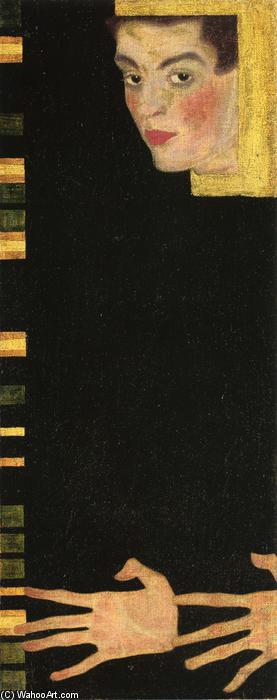
A Window into the Soul: Examining Egon Schiele's Self Portrait with Spread Fingers
Egon Schiele’s “Self Portrait with Spread Fingers,” completed in 1909, stands as a cornerstone of Austrian Expressionism and a hauntingly beautiful testament to the artist’s profound engagement with psychological themes. More than just a depiction of his own visage, this painting delves into anxieties surrounding mortality and explores the complexities of human emotion—a characteristic hallmark of Schiele's oeuvre and a reflection of the turbulent artistic landscape of early 20th-century Vienna.
- Historical Context: Created during Schiele’s formative years, “Self Portrait” emerged from a milieu deeply influenced by Leopold Museum in Vienna, where he absorbed the spirit of Art Nouveau and Expressionism. The painting captures the zeitgeist—a preoccupation with existential questions and a rejection of idealized beauty—that defined the era.
- Technical Mastery: Executed in oil on canvas, Schiele’s technique demonstrates remarkable precision and sensitivity. Bold lines delineate the contours of his face and hands, while vibrant colors contribute to an overall impression of intensity. The artist skillfully utilizes metallic paint to heighten textural contrast and emphasize the physicality of the subject.
- Symbolism & Composition: The pose—hands spread wide apart—is laden with symbolic significance. It conveys openness and vulnerability, inviting contemplation on themes of exposure and fragility. Schiele’s gaze directs off-camera, fostering a dynamic interaction between the viewer and the depicted figure—a deliberate tactic designed to draw us into the artist's inner world.
Art Nouveau Influences: Flowing Lines and Organic Forms
“Self Portrait” embodies the aesthetic principles of Art Nouveau, characterized by graceful curves and organic forms. Schiele’s stylistic choices mirror the broader artistic movement that sought to fuse natural beauty with decorative elegance—a reaction against the rigid formalism of academic painting.
Psychological Depth: Exploring Anxiety and Mortality
Schiele's exploration of psychological depth is palpable in this portrait. The artist confronts viewers with unflinching honesty, capturing not merely physical appearance but also emotional turmoil. “Self Portrait” serves as a powerful reminder of Schiele’s preoccupation with death—a recurring motif throughout his artistic output—and underscores the enduring relevance of Expressionist art's ability to convey profound psychological truths.
Legacy and Relevance Today
"Self Portrait with Spread Fingers" continues to resonate with audiences today, inspiring artists and collectors alike. Its masterful execution and evocative symbolism solidify Schiele’s position as a pivotal figure in modern art history. For those seeking inspiration or desiring a stunning reproduction of this iconic artwork, ArtsDot offers exceptional quality reproductions that allow you to experience the emotional power of Schiele's vision firsthand.