Egon Schiele’s Intimate Echoes: A Study in Vulnerability and Blue
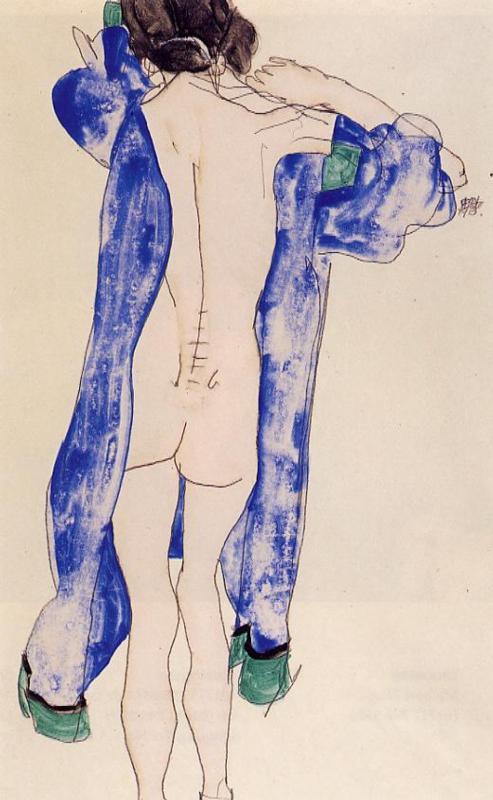
Egon Schiele's "Staiding Female Nude in a Blue Robe" is not merely a depiction of two figures; it’s a raw, unflinching exploration of human connection, vulnerability, and the specter of mortality – hallmarks of the artist’s intensely personal expressionism. Painted during a tragically short but profoundly influential career (1890-1918), this work exemplifies Schiele's unique ability to distill complex emotions into deceptively simple forms. Born in Tulln an der Donau, Austria, and steeped in a childhood marked by illness and loss – notably his father’s death from syphilis at the age of fourteen – Schiele channeled these experiences into a body of work characterized by its unsettling honesty and psychological depth. The painting's genesis lies within the broader context of early 20th-century Vienna, a city grappling with rapid social change, artistic innovation, and a pervasive sense of anxiety, all reflected in the burgeoning Expressionist movement.
- Subject Matter: The central focus is undeniably the nude female form, rendered with an almost brutal directness. However, it’s the interaction between the two figures – one facing away, the other embracing – that elevates this piece beyond a simple nude study.
- Technique: Schiele's technique is immediately recognizable: thick, impasto brushstrokes create a palpable sense of texture and movement, while his distorted figures possess an unsettling quality, reflecting not just physical form but also emotional turmoil. The use of color is deliberate – the dominant blue robes serve to unify the composition and evoke feelings of melancholy and introspection.
Decoding the Symbolism: Blue, Loss, and Connection
The choice of blue is particularly significant. Often associated with mourning and spirituality, it subtly underscores the themes of loss and remembrance that permeate Schiele’s oeuvre. The color also contributes to a sense of coolness and detachment, mirroring the emotional distance between the two women. The woman facing away, shrouded in blue, can be interpreted as representing the past, perhaps a lost love or a deceased family member – a constant presence haunting Schiele's artistic vision. Conversely, the embracing figure embodies a desperate attempt to find solace and connection in the face of this profound sadness. The green shoe is an unexpected detail, a jarring pop of color that further intensifies the painting’s unsettling effect, possibly symbolizing discord or a disruption within the otherwise harmonious blue palette.
Expressionist Roots and Schiele's Unique Vision
Schiele was a key figure in the Expressionist movement, yet his style remained distinctly his own. Unlike some of his contemporaries who embraced vibrant colors and overtly dramatic compositions, Schiele favored a restrained palette and a focus on psychological intensity. His figures are rarely idealized; they are often awkward, vulnerable, and imbued with a sense of unease. This unflinching portrayal of the human condition – its beauty and its ugliness, its joy and its sorrow – is what makes his work so powerfully resonant today. The influence of artists like Gustav Klimt is evident, but Schiele forged his own path, prioritizing emotional truth over aesthetic convention.
Emotional Impact and Artistic Legacy
"Staiding Female Nude in a Blue Robe" possesses a haunting beauty that transcends its subject matter. It’s a painting that demands attention, forcing the viewer to confront uncomfortable truths about human existence. Schiele's ability to capture such raw emotion through his masterful technique ensures that this work remains a powerful and enduring testament to the artist's genius. A reproduction of this piece offers an opportunity to bring this intensely personal vision into your space, inviting contemplation on themes of love, loss, and the complexities of the human spirit.