A Vista of Tranquility and Tension: Egon Schiele’s ‘Stein on the Danube’
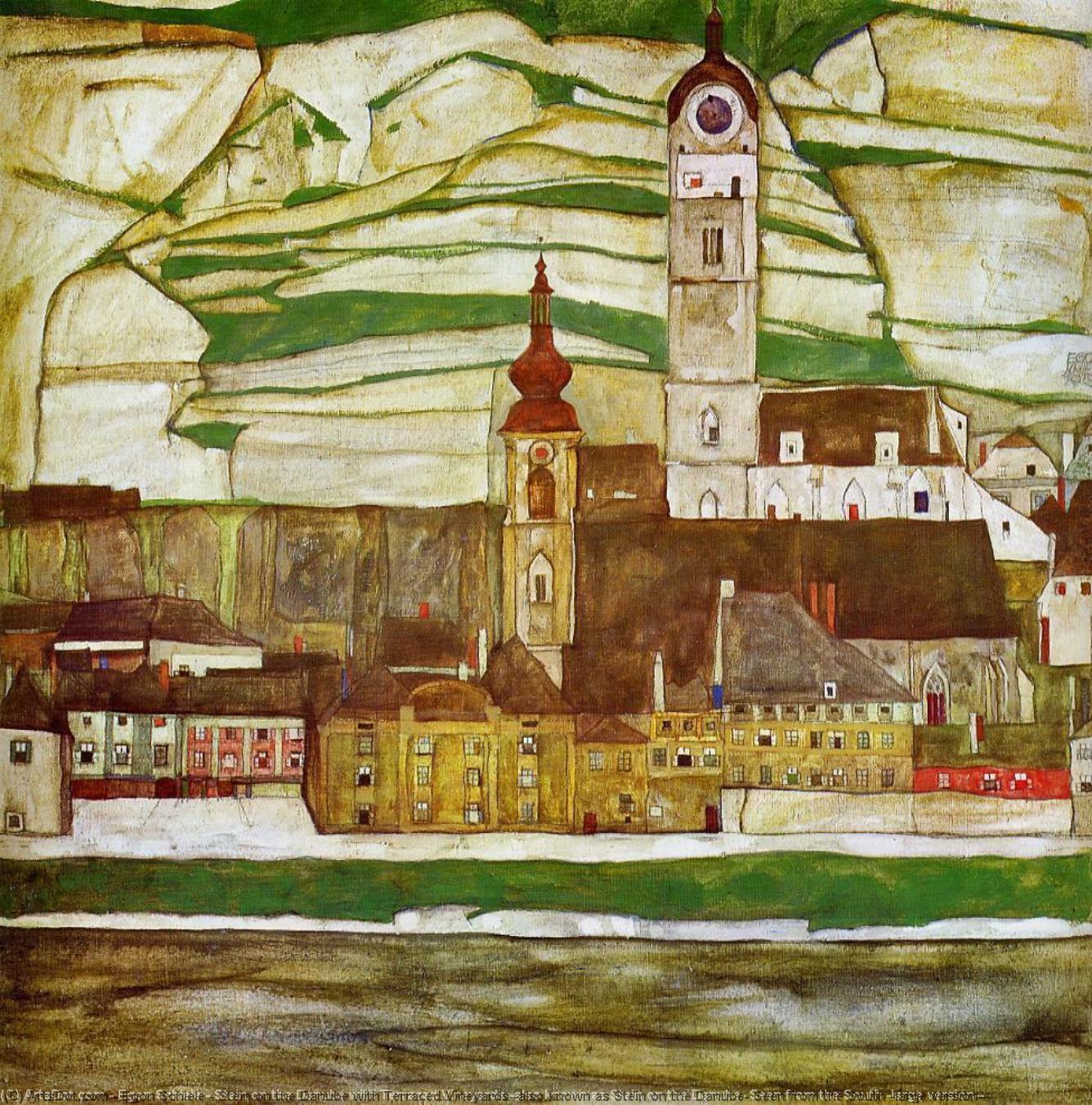
Egon Schiele's 1913 painting, ‘Stein on the Danube with Terraced Vineyards,’ offers more than just a picturesque view; it is a carefully constructed emotional landscape rendered in oil. The scene depicts the Austrian town of Stein an der Donau nestled along the riverbank, dominated by its church steeple and hinting at a medieval past. But to call this merely a ‘townscape’ would be a disservice. Schiele doesn't simply record what he sees; he filters it through his intensely personal vision, creating a work that vibrates with both serenity and an underlying current of unease. The composition is deliberately structured – horizontal bands of color define the river, the land, and the town itself – lending a sense of order to the scene. Yet, within this structure, Schiele’s characteristic expressive lines and limited palette of browns, greens, and punctuated bursts of brighter hues create a dynamic tension. It's a painting that invites prolonged contemplation, revealing new nuances with each viewing.
The Danube as Mirror to the Soul
Schiele was captivated by Stein an der Donau, returning to it as a subject multiple times in 1913. This wasn’t simply about capturing a pretty view; the town held a symbolic resonance for the artist. The Danube itself, often depicted as murky and reflective, can be interpreted as a mirror reflecting not just the physical landscape but also the inner turmoil of Schiele's own psyche. He meticulously prepared for this particular canvas by creating smaller panel paintings, working out the composition and color scheme before committing to the larger scale. This deliberate process speaks to his desire to achieve a specific emotional effect. The terraced vineyards in the distance allude to the region’s agricultural life, but they also introduce a sense of human intervention within nature – a theme frequently explored by Schiele. The placement of the buildings isn't entirely faithful to reality; he rearranged elements to enhance the compositional strength and symbolic weight of the scene, crafting an idealized yet subtly unsettling vision.
A Young Artist at the Height of Expressionism
To understand ‘Stein on the Danube’ fully, it is essential to place it within the context of Schiele's brief but intensely prolific career. Born in 1890 and tragically dying during the Spanish Flu pandemic of 1918, Schiele lived a life marked by both artistic brilliance and personal hardship. He was a protégé of Gustav Klimt, yet quickly forged his own distinct path, becoming a leading figure in Austrian Expressionism. His work is characterized by its raw emotional honesty, often exploring themes of sexuality, death, and isolation. While known primarily for his portraits – frequently unsettlingly direct and psychologically probing – Schiele demonstrated remarkable versatility, as evidenced by this landscape. ‘Stein on the Danube’ exemplifies his ability to translate his inner world onto canvas, imbuing even a seemingly tranquil scene with a palpable sense of emotional depth. The painting was completed at a pivotal moment in his career, showcasing his mastery of color and composition while foreshadowing the stylistic innovations that would define his later work.
A Legacy of Emotional Resonance
Schiele himself held this painting in high regard, believing it worthy of a discerning collector. Its eventual sale to Franz Hauer was born out of financial necessity, but speaks to the artist’s own recognition of its quality. Today, ‘Stein on the Danube’ continues to captivate viewers with its unique blend of beauty and melancholy. It is a work that transcends mere representation, offering instead a glimpse into the soul of an artist grappling with profound questions about life, death, and the human condition. For those seeking a piece that evokes both serenity and introspection, a reproduction of ‘Stein on the Danube’ offers a powerful addition to any collection or interior space – a constant reminder of the enduring power of Expressionism and the artistic genius of Egon Schiele.