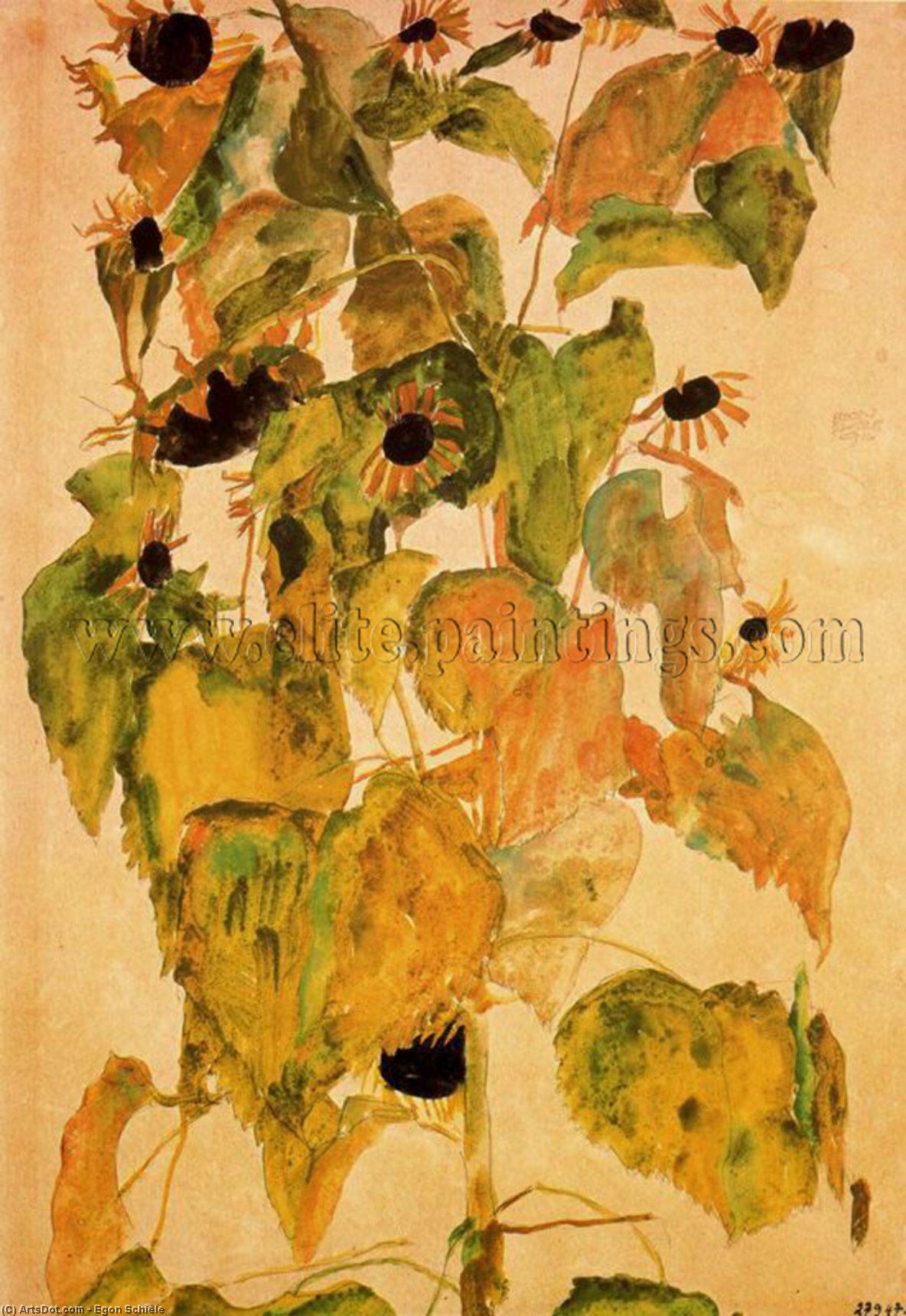
A Symphony of Yellows and Shadows: Exploring Egon Schiele’s Untitled (1321)
The painting “untitled (1320)” by Austrian Expressionist Egon Schiele is more than just a depiction of wildflowers; it's a poignant meditation on life, death, and the unsettling beauty found within decay. Captured in an unknown size, this piece exemplifies Schiele’s signature style—characterized by angular lines, distorted figures, and a palpable sense of anxiety—yet simultaneously imbued with a surprising tenderness for the natural world. The photograph reveals a sprawling field dominated by numerous yellow flowers interspersed amongst lush green foliage. Each flower is rendered with meticulous detail, showcasing Schiele's masterful technique of hatching and cross-hatching to create texture and depth.
- Technique: Schiele employed a painstaking process of hatching and cross-hatching—a hallmark of Expressionist painting—to build up tonal variations within the floral composition. This method lends an almost sculptural quality to the leaves and flowers, emphasizing their physicality and conveying a feeling of immediacy.
- Composition: The arrangement of the flowers is deliberately asymmetrical, mirroring Schiele’s preoccupation with imbalance and unsettling perspectives. Despite the inherent tension in the visual language, there's a quiet harmony achieved through careful placement and tonal gradation.
The painting emerged during Schiele’s formative years—specifically between 1910 and 1918—a period marked by significant artistic experimentation and personal turmoil. Expressionism sought to convey inner emotional states rather than objective representations of reality, responding directly to the anxieties of the era following World War I. Schiele's own life was profoundly impacted by illness and loss, notably his father’s diagnosis with syphilis and the premature death of his sister Elvira—experiences that undoubtedly fueled his artistic vision. The recurring motif of trains in Schiele’s oeuvre speaks to a fascination with movement and transformation, hinting at an underlying awareness of mortality.
- Symbolism: Yellow flowers often symbolize joy and vitality, yet within Schiele's context, they can also represent fleeting beauty confronted by inevitable decline—a subtle echo of the artist’s own struggles with illness and loss.
- Emotional Impact: Viewing “untitled (1320)” evokes a feeling of melancholic contemplation. The angular lines and distorted forms convey unease, while the luminous yellows capture a moment of radiant beauty against a backdrop of shadowed stillness. It’s a painting that invites viewers to confront uncomfortable truths about existence.
For interior designers seeking inspiration or collectors drawn to emotionally resonant artwork, “untitled (1320)” offers a compelling dialogue between vulnerability and artistic mastery. A high-quality reproduction captures the essence of Schiele's expressive style, allowing its contemplative beauty to permeate any space—a testament to the enduring power of art to provoke thought and stir the soul.