Explore the emotionally charged Expressionist art of Egon Schiele (1890-1918): bold portraits, psychological themes & unique lines. Discover reproductions now!
A Portrait Steeped in Sorrow and Intensity: Unveiling Egon Schiele’s “Untitled (2357)”
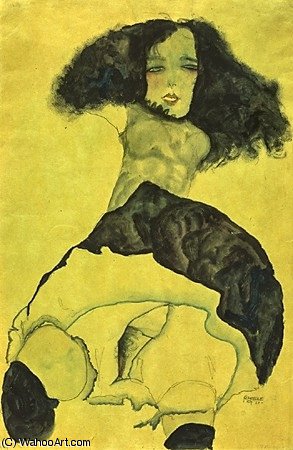
“Untitled (2350)” by Egon Schiele stands as a haunting testament to the artist's profound engagement with themes of mortality, vulnerability, and psychological torment—characteristics that define his signature Expressionist style. Painted in 1916 during the tumultuous period of World War I, this striking portrait captures a woman seated atop another figure lying prone, creating an unsettling juxtaposition of stillness and decay. The deliberate lack of facial expression on both subjects amplifies the emotional weight of the image, inviting viewers to contemplate unspoken anxieties and confronting realities.
Style and Technique: Expressionist Boldness
Schiele’s artistic vision is unmistakably rooted in Expressionism, a movement that prioritized subjective emotion over objective representation. He achieves this through masterful use of bold lines—thick, jagged strokes—that dominate the canvas, conveying palpable tension and dynamism. The palette leans heavily into muted yellows and ochres, lending an air of melancholic beauty to the composition. These colors aren’t merely decorative; they contribute to the overall sense of unease and symbolize the fading vitality of life itself. Schiele's technique involved applying paint thickly onto the canvas—a method known as impasto—further enhancing textural depth and emphasizing the physicality of his figures. This deliberate roughness mirrors the artist’s preoccupation with raw emotion and rejects academic conventions favoring smooth surfaces.
Historical Context: Trauma and Artistic Reflection
The painting emerged from a period marked by immense suffering – the horrors of World War I profoundly impacted European society, fostering disillusionment and questioning established values. Schiele's personal life was equally fraught with challenges; his marriage to Edith Harms coincided with the draft into military service, adding another layer of anxiety to his artistic endeavors. Yet, amidst this backdrop of crisis, Schiele channeled his emotional turmoil into art, producing works that grapple directly with existential concerns. “Untitled (2357)” reflects a broader cultural preoccupation with death and decay—themes prevalent in Expressionist art—demonstrating Schiele’s ability to transform personal trauma into universal artistic expression.
Symbolism: The Bird and the Vulnerable Position
The inclusion of a bird perched prominently in the upper right corner adds another layer of symbolic significance. Birds often represent freedom, aspiration, and transcendence – concepts juxtaposed against the vulnerability depicted in the reclining figure below. This deliberate pairing underscores Schiele’s exploration of duality—life versus death, strength versus fragility—a core element of Expressionist thought. The woman's posture, seated atop the prone man, symbolizes dominance yet simultaneously conveys a sense of helplessness and exposure. It speaks to the artist’s fascination with portraying human vulnerability in confronting circumstances beyond one's control.
Emotional Impact: A Window into Psychological Depth
“Untitled (2357)” transcends mere visual representation; it compels viewers to confront uncomfortable truths about human existence. Schiele’s masterful use of line and color generates a visceral response, capturing the essence of psychological distress. The painting lingers in the mind long after viewing, prompting contemplation on themes of mortality, isolation, and the complexities of human relationships. It remains an enduring masterpiece—a poignant reminder of Schiele's unflinching gaze into the darkest recesses of the human psyche and his ability to translate profound emotion onto canvas.