Egon Schiele’s “Woman with Black Hat”: A Portrait of Introspection and Modern Anxiety
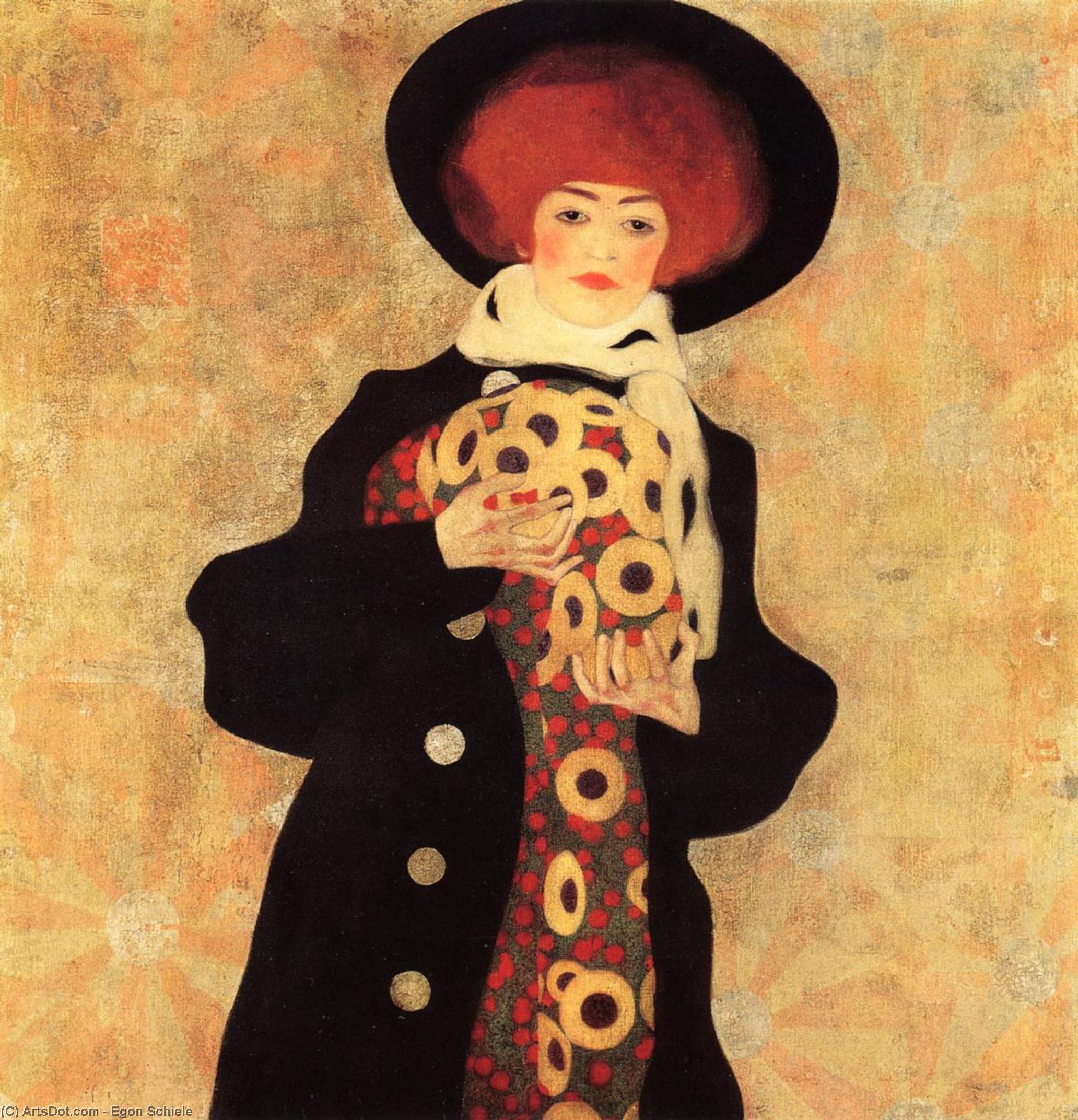
Egon Schiele's "Woman with Black Hat," painted in 1909, is far more than a simple portrait; it’s a hauntingly intimate glimpse into the psyche of a man grappling with mortality, identity, and the burgeoning anxieties of early 20th-century Europe. Created during his pivotal years within Vienna Secession, a movement dedicated to rejecting academic art traditions in favor of bold expressionism, this oil on canvas exemplifies Schiele’s signature style – elongated figures, intense gazes, and a palpable sense of emotional urgency. The painting immediately draws the viewer in with its dramatic use of color: a warm, yellowish background provides a subtle counterpoint to the cool tones of the woman's attire and skin, creating an atmosphere of both comfort and unease. The muted palette, characteristic of Schiele’s later work, speaks volumes about his preoccupation with decay and the ephemeral nature of beauty.
Art Nouveau Sensibilities and a Fragmented Reality
“Woman with Black Hat” firmly resides within the realm of Art Nouveau, though Schiele's interpretation diverges significantly from the movement’s decorative flourishes. While elements of flowing lines and organic forms are present – particularly in the scarf draped around her neck – the painting transcends mere ornamentation. The woman herself is rendered with a startling frankness, her features almost skeletal, reflecting Schiele’s fascination with the human form's vulnerability. Her pose, slightly slumped and turned downward, suggests introspection or perhaps even melancholy. Notice how the folds of her clothing are not idealized but rather depicted with a raw, almost brutal honesty – mirroring the artist’s own unflinching approach to portraying the realities of life and death. The black hat, a dominant visual element, isn't simply an accessory; it functions as a shield, a symbol of both conformity and a deliberate attempt to conceal or protect her inner self.
Symbolism and the Weight of Existence
Beyond its stylistic elements, “Woman with Black Hat” is rich in symbolic meaning. The woman’s hand clutching the donut – a seemingly mundane detail – can be interpreted as a representation of indulgence or perhaps even self-destruction. Donuts were often associated with fleeting pleasures and moments of excess, hinting at a deeper struggle within the subject. The downward gaze, coupled with her closed lips, powerfully conveys a sense of withdrawal and contemplation. Schiele frequently explored themes of death and decay in his work, and this painting is no exception. The overall composition evokes a feeling of arrested time, as if the woman is trapped in a moment of profound reflection on her own mortality. The background’s warmth offers a fleeting illusion of solace, but it ultimately fails to fully penetrate the darkness that surrounds her.
Schiele's Legacy and the Reproduction
Egon Schiele’s work profoundly influenced the development of Expressionism and continues to resonate with contemporary audiences. His ability to capture raw emotion, coupled with his unique visual language, cemented his place as one of the most important artists of the early 20th century. ArtsDot offers meticulously crafted reproductions of “Woman with Black Hat,” allowing art enthusiasts to experience the power and beauty of Schiele’s vision in their own homes. These hand-painted reproductions faithfully recreate the original's texture, color palette, and emotional intensity, ensuring that this iconic work of art remains accessible for generations to come. Consider how a reproduction of this piece can add depth and intrigue to any interior space – a subtle reminder of the complexities of human experience and the enduring power of artistic expression.